The day we left Fraser Island and headed up into Hervey Bay was one of those surreal sort of days where it is so, so calm and so, so still that it doesn’t feel real. Not a cloud in the sky nor a ripple in the water and no breeze whatsoever. Just a sheet of deep blue satin stretching out in front of us, merging into a matching backdrop of blue.
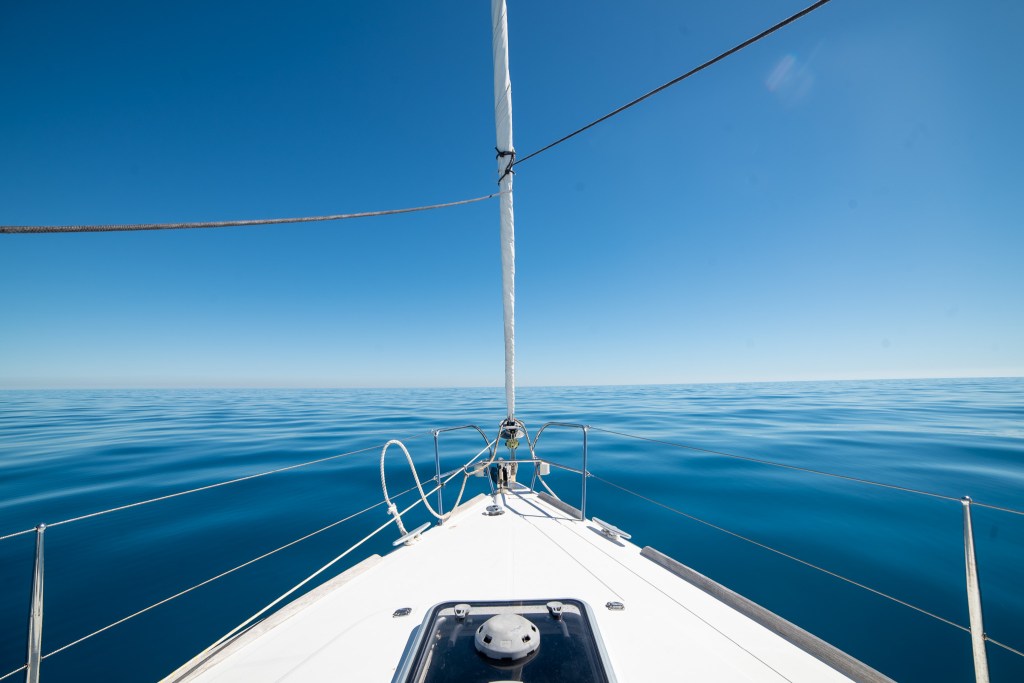
Surely we will see whales today in these conditions, we thought, visibility was at its best. Hervey Bay is famous for the thousands of whales that visit each year between July and November. Dubbed the whale watching capital of the world, the whales in Hervey Bay are known to be unusually curious, often approaching boats for a uniquely intimate encounter. We’d seen some amazing videos of whales swimming right up to boats, and we wanted to see if we could experience that for ourselves.
So we set off, full of high hopes, with our eyes peeled and Matt’s camera ready to go. How many whales do you think we saw? Nada, zilch, not a one. Not a single whale. Not even a spout.
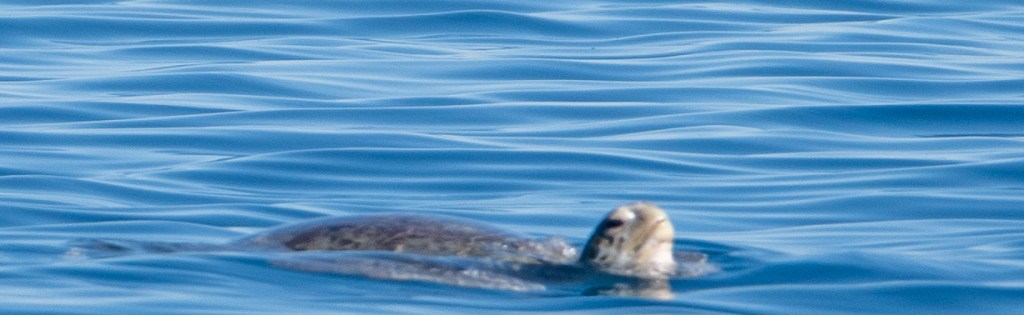
The only wildlife we saw in those eerily calm and smooth waters was a lone turtle, about two hundred metres from our boat. We very slowly turned around to try and see him a bit better, but as soon as he clocked us he was off. Matt managed to get a couple of photos, although a bit blurry. Still, we’d finally seen something, a turtle, pretty cool.
It was a long way from our anchorage at Kingfisher Bay across Hervey Bay and into Bundaberg, about 50 nautical miles. In our eagerness to see some whales, we detoured slightly in towards Platypus Bay, where mothers and calves are commonly seen. But with the long distance to cover, the distinct lack of whales and a forecast predicting a weather change, we soon gave up and headed straight for Bundaberg. Conditions deteriorated over the last few hours as a front approached and we had a pretty choppy and swelly last part of the passage. It was with a huge sense of relief that we dropped anchor in the relative calm and safety of the Burnett River. We were both exhausted. It had been a long ten hours.
The winds continued overnight, and when the tide changed at 1am we were up, and resetting our anchor, as we’d been pushed over towards the river bank instead of out into the river, as Matt had expected. The stern of the boat was a bit too close for comfort, and in the dark it was hard to tell just how far from the bank the back of the yacht and the all important rudder was to grounding itself. Better to be safe than sorry. As we were moving our boat and resetting our anchor, one of the cats near us was doing the same.
The following day saw the wind still blowing strongly, so we decided to sit tight where we were, instead of venturing further upstream into the main town of Bundaberg. We did hop off the boat and walk in to the Port Bundaberg Marina to buy some oil and oil filters for the yacht engine. The strong winds meant it was a wet ride in the tender, with waves splashing over the bow and all over me. Never mind, it was so lovely and warm that I dried off pretty quickly. It was a long walk in the heat of the day, but we were loving it, finally some sunshine and some warmth!!
Arriving back at the tender, we discovered that the tide had gone out and we had to walk across thick mud, sinking in right up to our knees at times. It was very hard to step out of. And so with both of us and the tender thoroughly coated in thick grey sludge we made it back to the yacht. Who said yachting was glamorous? Matt then changed the oil in the engine and that also turned out to to be a very messy job, there was engine oil everywhere!
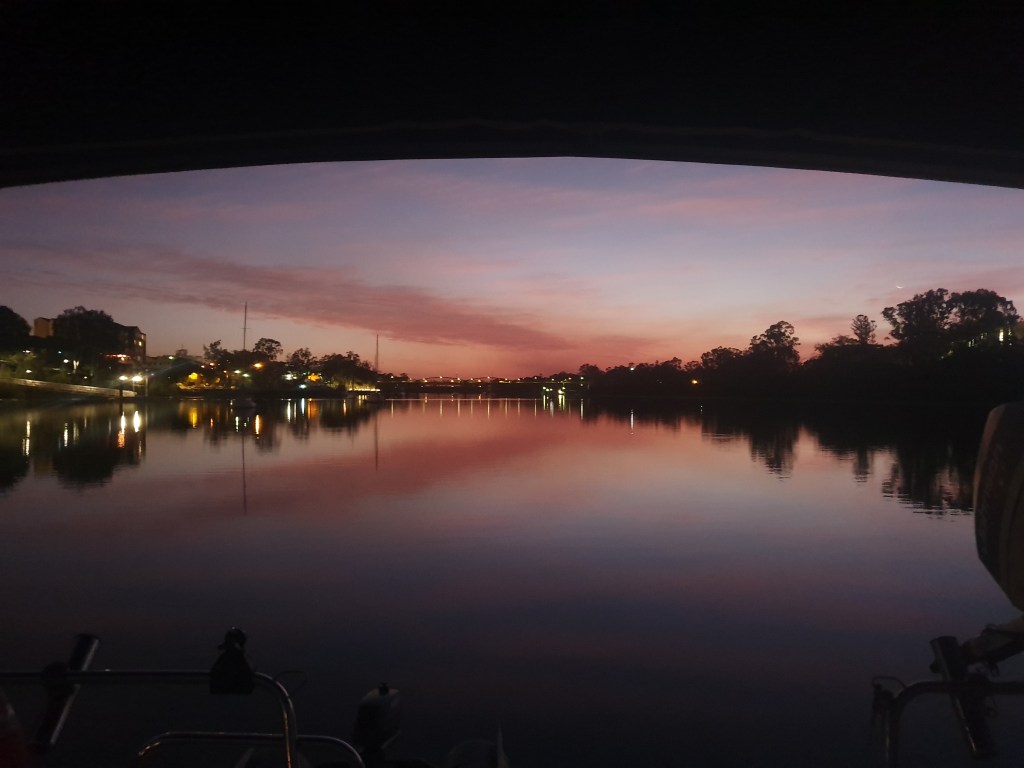
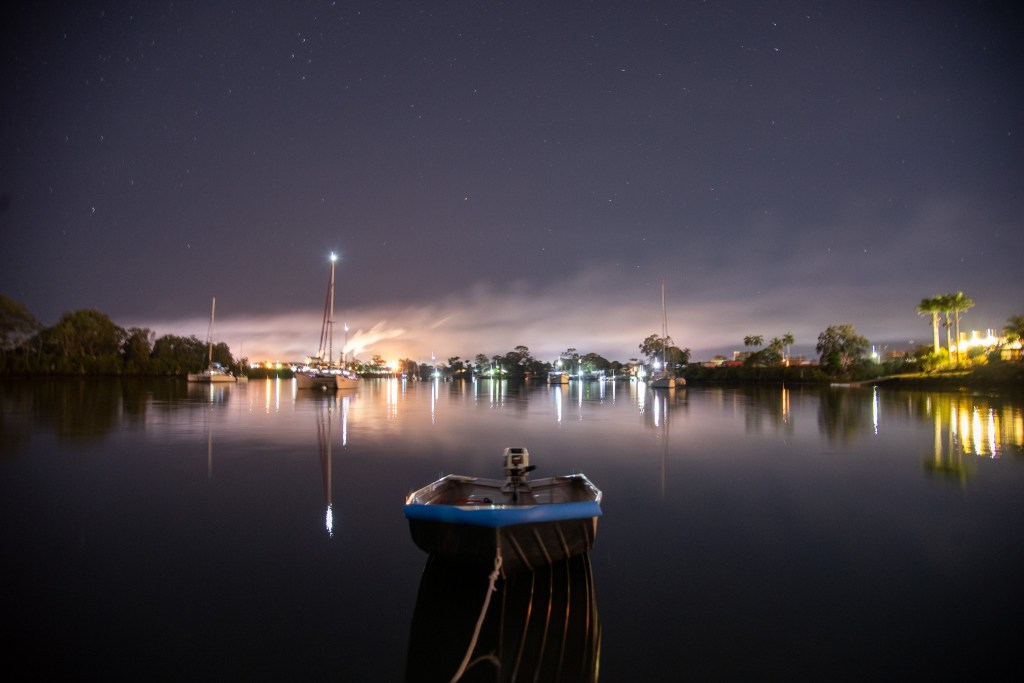
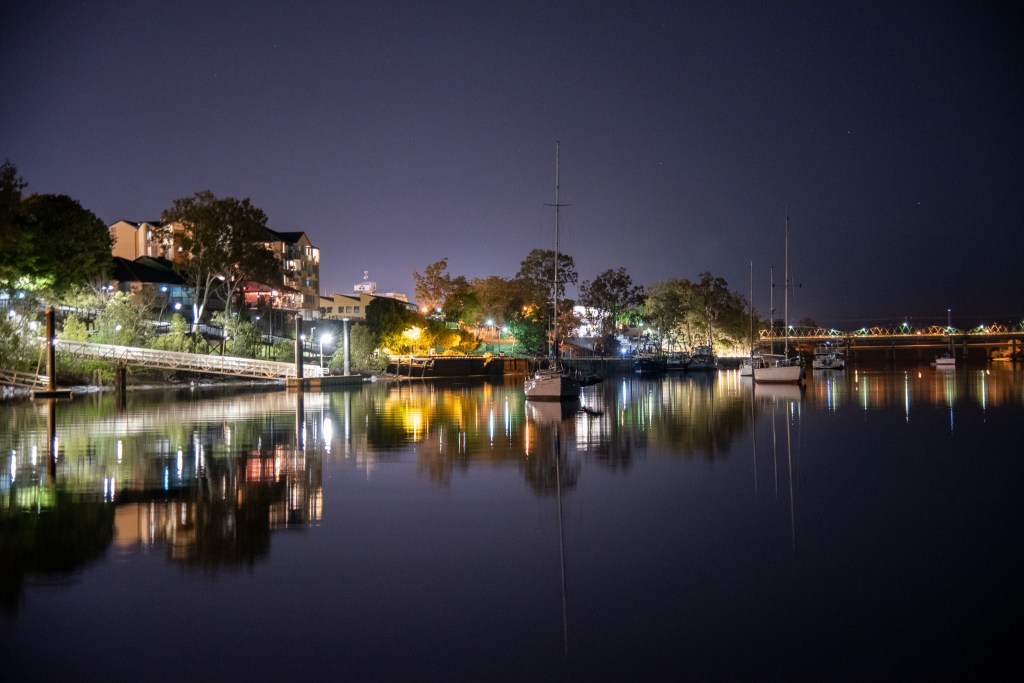
The next day we filled up our diesel and water tanks and moved upstream. There were a few shallow patches to negotiate and we were pushing a bit of current, but it wasn’t a long trip. The Town Reach area where we anchored, right next to the main part of Bundaberg, was lovely. There were lots of other boats there, but plenty of swinging room. We watched a beautiful sunset and had a great sleep in the lovely, still river water.
We spent six nights here and during the days we walked all over Bundaberg, ticking errands off our list. Most days we clocked up over ten kilometres on foot. New tinny, mooring line, anchor and anchor rope for the tinny, zoning maps for QLD marine parks, new reef shoes for both of us, bolts for the mast, padding for tender, plastic tub, oil, glue, laundry, groceries, replacing gas bottle, filling our fresh water tanks, petrol, ratchet straps, part for spear gun. The only item we couldn’t get were the ratchet straps.
One of the jobs that needed doing was replacing all the bolts in the mast. Over the last few months, during regular maintenance checks, Matt had been tightening the bolts in the mast as they can work their way loose. On finding a few bolts with rounded heads, he decided to replace them and when he put the new bolts in, he found that they fit much more securely. So he decided to replace all the bolts in the mast, all 180 of them.
Actually getting a hold of the right bolts took a while, but in Bundaberg we hit jackpot with the appropriately named The Bolt Place. We’d also been waiting until we were in a nice, calm anchorage because it involved Matt going up the mast for quite some time. In this way, Bundaberg was perfect too. So we were up relatively early to make the most of the calm morning, before the winds picked up, as seemed to be the weather pattern at the time.
Matt prepared himself to be hoisted up the mast, and I went to turn on the engine so that I could use the electric winch. Nothing happened. I turned the key again. Nothing. Ok, turn it on, Matt yelled to me. I’m trying!! Still nothing. Uh-oh!
So that was the beginning of a morning spent trying to figure out what was wrong. By Matt, of course. This is solely his department. My knowledge of engines and mechanical things is pretty much non-existent. His first thought was that it was a fault with the starter motor, so he removed it and took it to a nearby mechanic shop to be checked out. The click of the solenoid on the starter could be heard but it was not turning the engine. Nope, no problem there, it was tested and given the all clear. After trying a few more things and narrowing it down to likely being an electrical fault, he discovered that the master battery switch had come loose. Having already checked the battery terminals on the battery, it was a relief to find the issue was so simple. The master switches are located in the main bedroom at the back of the boat. Turning the lever on the switch ended up with the lever on the floor. Once tightened, the engine fired up, good as gold. Phew! What a clever boy!
By then though, the winds had picked up a bit, so we postponed that job until a few days later. Once again, we were up early and Matt was successfully hoisted to the top of the mast. After replacing a few bolts, however, he dropped the Allen key into the water. His back-up Allen key didn’t really work, so down he came and off he trotted to get two brand new Allen keys. Might as well buy a spare! Thankfully ‘third time’s the charm’ and he set to replacing the bolts, with me lowering him down a bit every so often. 180 is a lot of bolts, so we did it over several days, when it was really calm in the early mornings, stopping when the wind picked up too much.
On Friday night we went out for dinner at the Bundy RSL. On producing my Victorian Driver’s licence when asked for ID, we were given the tenth degree about how long we’d been in Queensland. They were very polite but also very insistent at seeing some proof. Since our permits were on Matt’s phone which he didn’t have on him, we settled for showing them my online banking app. Success, we were allowed in! It was the first time that being a Victorian in this weird coronavirus world had been an issue for us. A strange feeling.
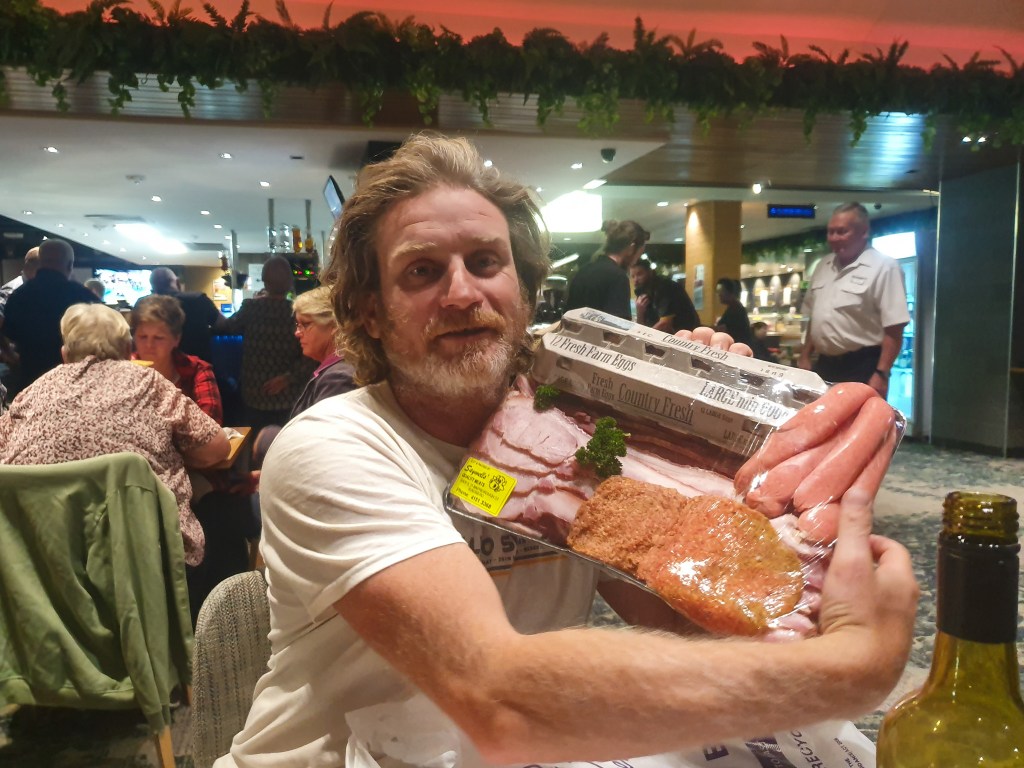
The RSL was busy and we had a nice meal. Always happy to support a good cause, we bought some tickets to the meat tray raffle. We joked about the odds of winning. There were approximately 2700 entries, 10 trays to be won, and we had 20 entries. We couldn’t be bothered to figure out the actual odds, but they seemed pretty high! Not a chance! Still, Matt declared that he was going up to choose if we won. What confidence! Well, it must have worked, because about halfway through the draw, 2657 was called. Holy sh££, Matt, that’s us! We were winners! Matt went up to choose his tray, as promised, but bless him, came back with the eggs and bacon tray, the one I’d liked.
One of the most important reasons for going in to Bundaberg was to pick up the new aluminium tender we had ordered. Cool Change came with a small inflatable dinghy, which had been fine up until now, but we’d always known that we’d have to get something a bit stronger and tougher as we progressed north. Why??Crocodiles!!
Matt did the research and settled on a 3.2 metre punt style aluminium tinny. He wanted it to sit on the bow of Cool Change, and this was the biggest we could fit there. He’d already sourced two second hand motors and serviced them, so now we were good to go. Thankfully, the boat shop offered to deliver the tinny to the river for us, saving us a 5 km walk through the streets of Bundaberg, pulling the tender behind us. That would have been quite the adventure!
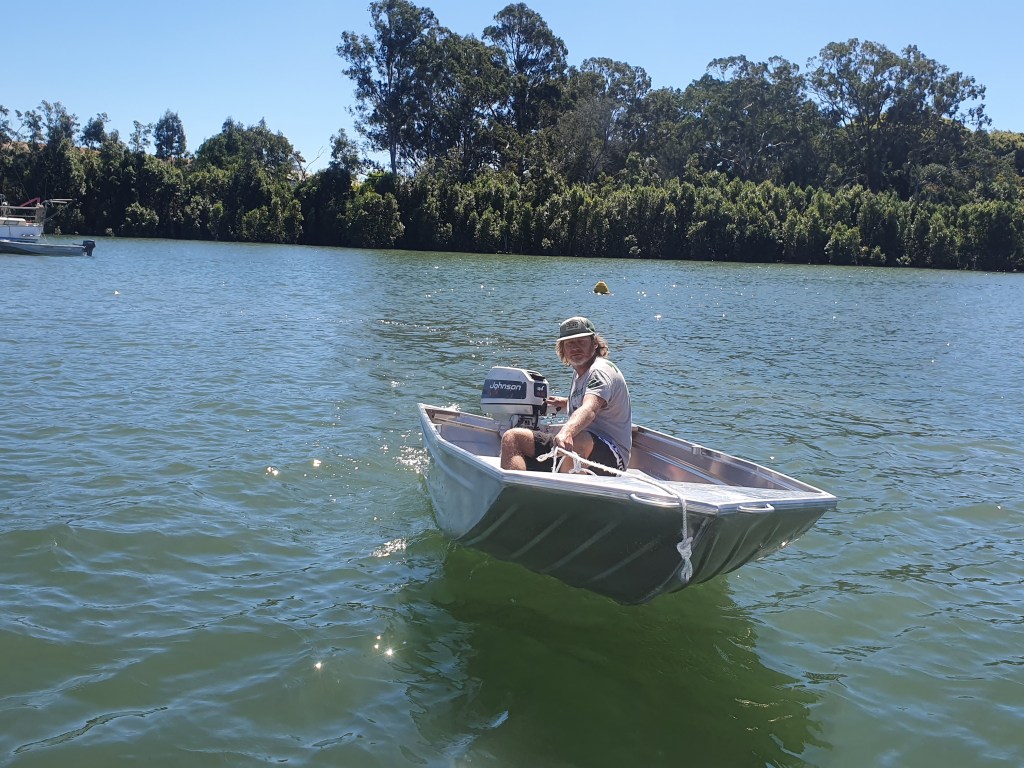
We are very pleased with our new little tender; it certainly feels a lot more secure, and it definitely goes a lot faster!!
Here’s Matt in our new tinny:
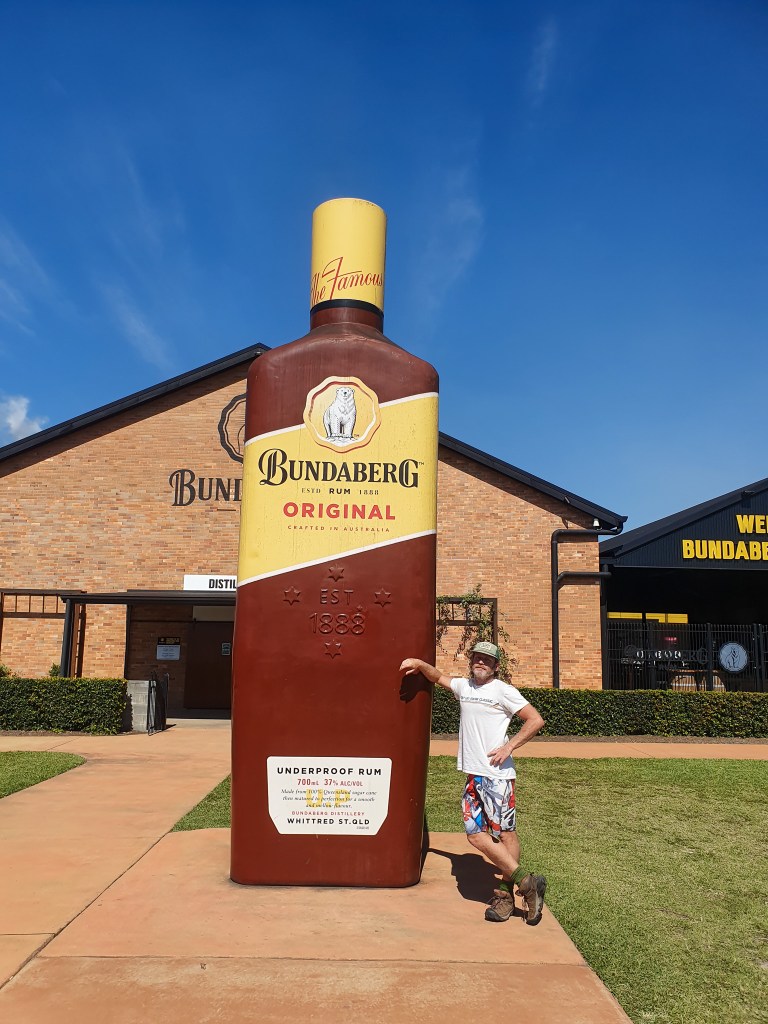
We did a little bit of touristing and walked over to the Bundaberg Rum Distillery. Unfortunately, the distillery tours were still not being run (another casualty of the coronavirus) so there wasn’t a lot to see. They didn’t even have the bar open so you could sample the specialties. It was pretty much just a shop. Feeling quite disappointed, we left and stopped in at a nearby cider house, the Ohana Cider House and Tropical Winery. Served by the very friendly owners, we shared two tasting paddles and sampled their entire range of ciders, wines and liqueurs. Yum yum!! We walked out with a bottle of delicious Limecello.
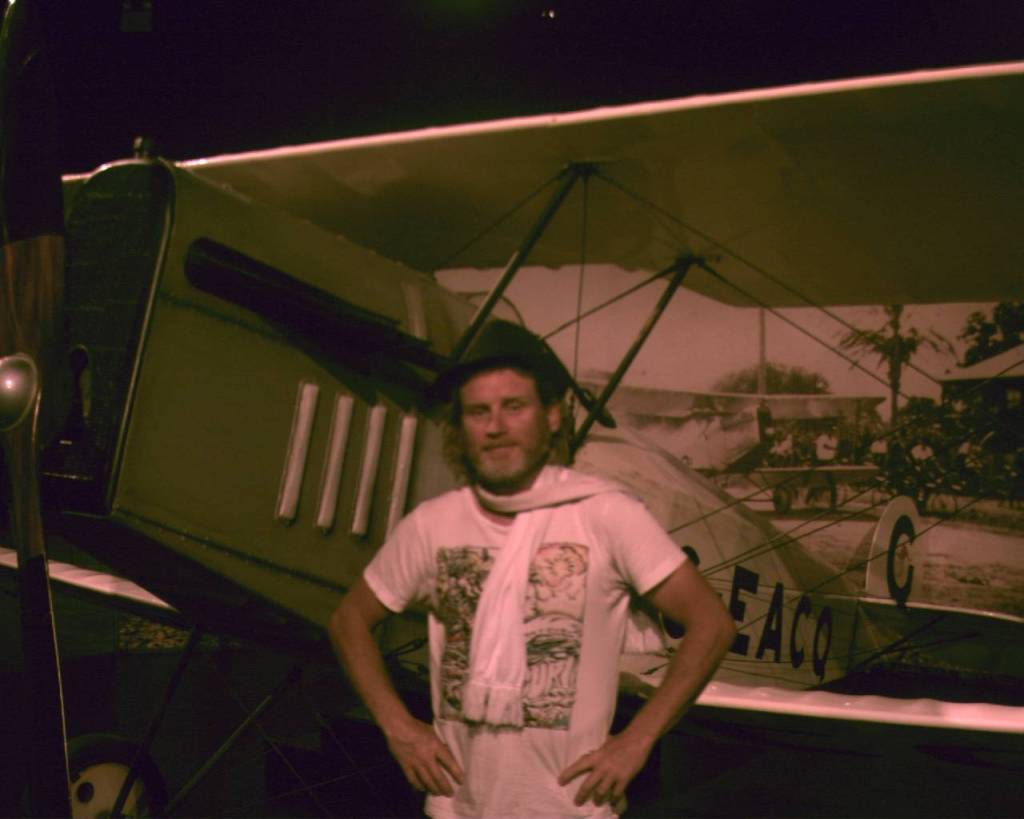
We also hiked over the bridge to the Hinkler Aviation Museum. It was a fascinating museum all about Bert Hinker, a Bundaberg local, who was a pioneer in the aviation industry in the 1920’s and 1930’s. The museum had plenty of interactive displays, including a flight simulator. Turns out I am completely rubbish at flying! Who would have thought!
Our anchorage at Town Reach was beautiful at night. Here’s a couple of photos:
After our week in Bundaberg we headed back out into Hervey Bay and over to Platypus Bay. We were determined to see some whales, god dammit!
It was a yucky day sailing across the bay to Rooney Point. The waves were big, there was some swell and I felt pretty seasick the whole trip. Also, no whales. Again. Actually, we did see one whale, after sunset, just after darkness descended. We could just make out his dark body against the dark water. So, they are out here, we told ourselves. We had three days to spend in Platypus Bay. Surely the whales would come and say Hello.
Over the next few days, we sailed and motored around Platypus Bay, constantly searching for the tell tale puff of water and air spraying up. We put our marine radio onto the same channel as the whale watching charter boats, and tried to figure out where they were. According to the one of the many, many skippers out there, it was ‘whale soup.’ Well, not quite sure about that, but we did manage to spot quite a number of pods cruising around. We saw lots of whales at the surface, a few tail dives and pec slaps. A couple of times we saw breaching in the distance, but unfortunately never very close to us. Still, it was pretty exciting, the water was flat and the sun was out. Life is good!
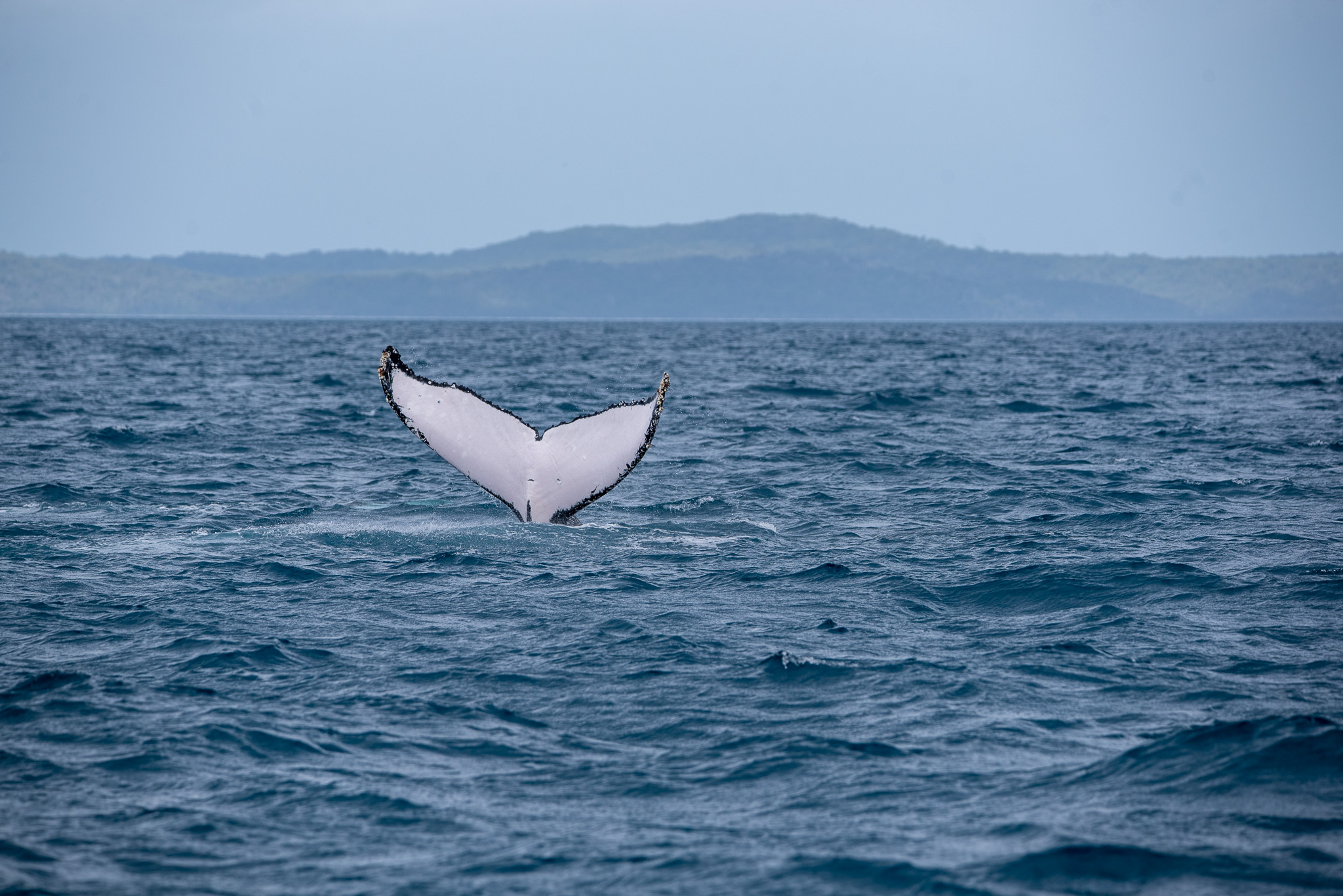
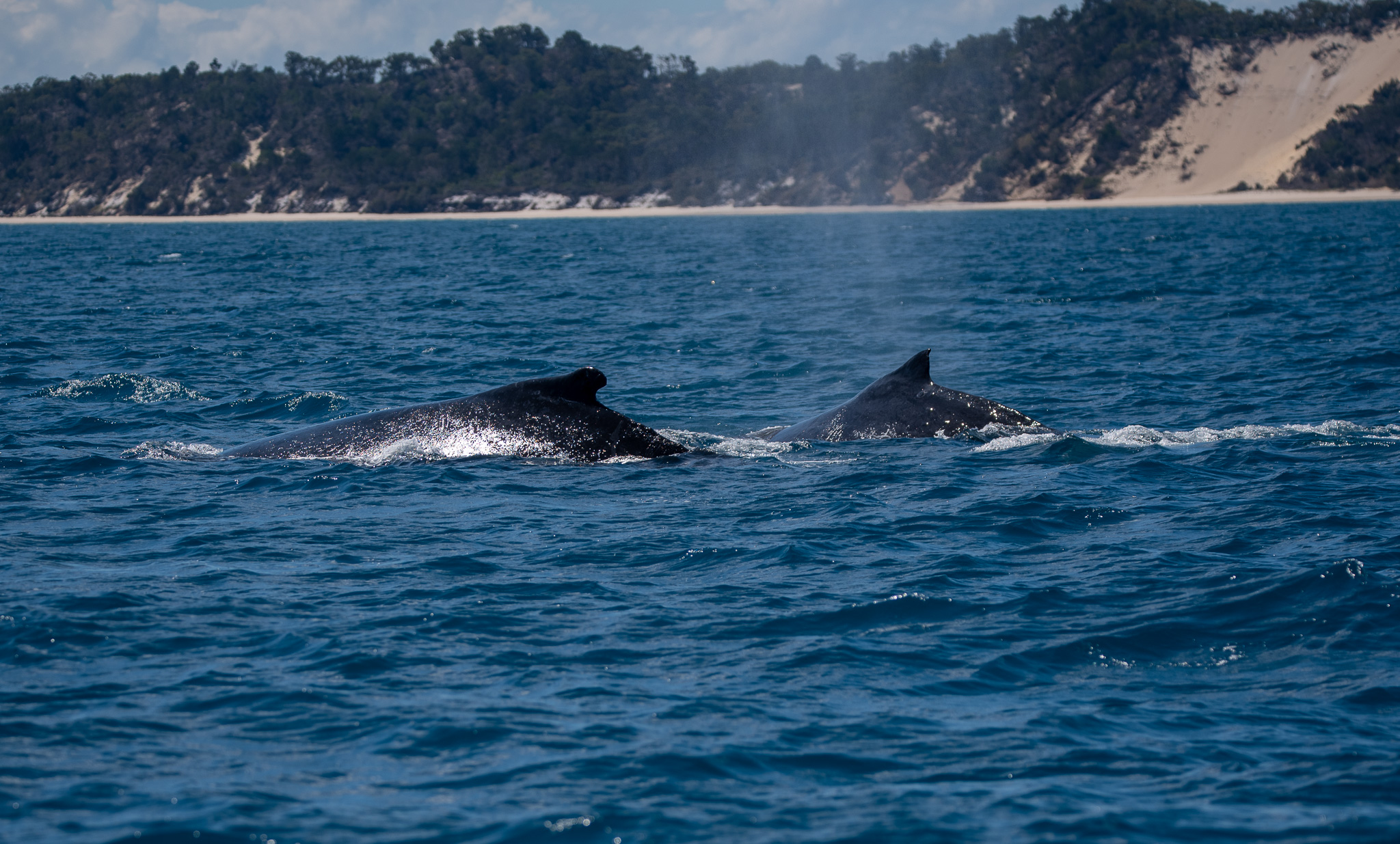
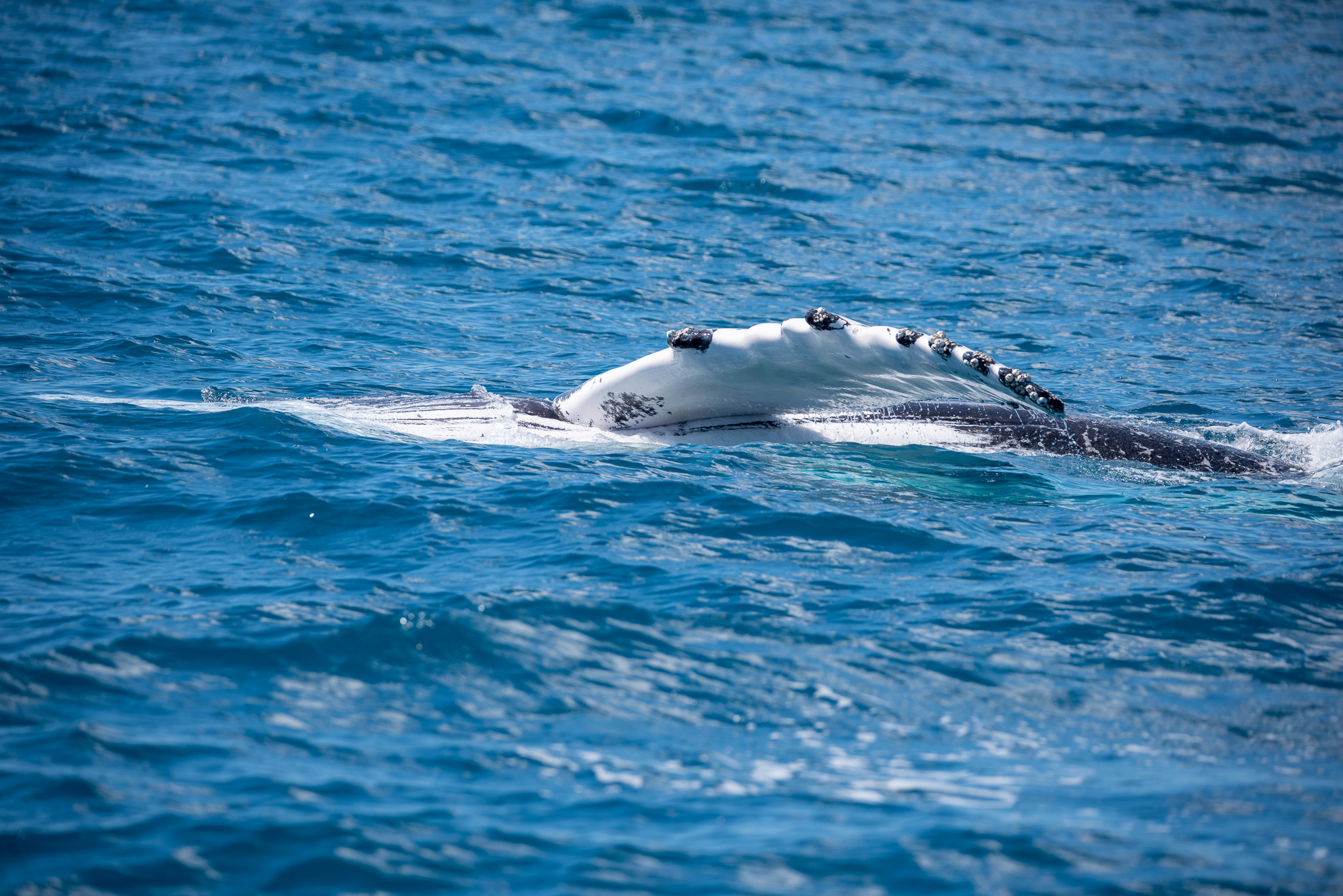
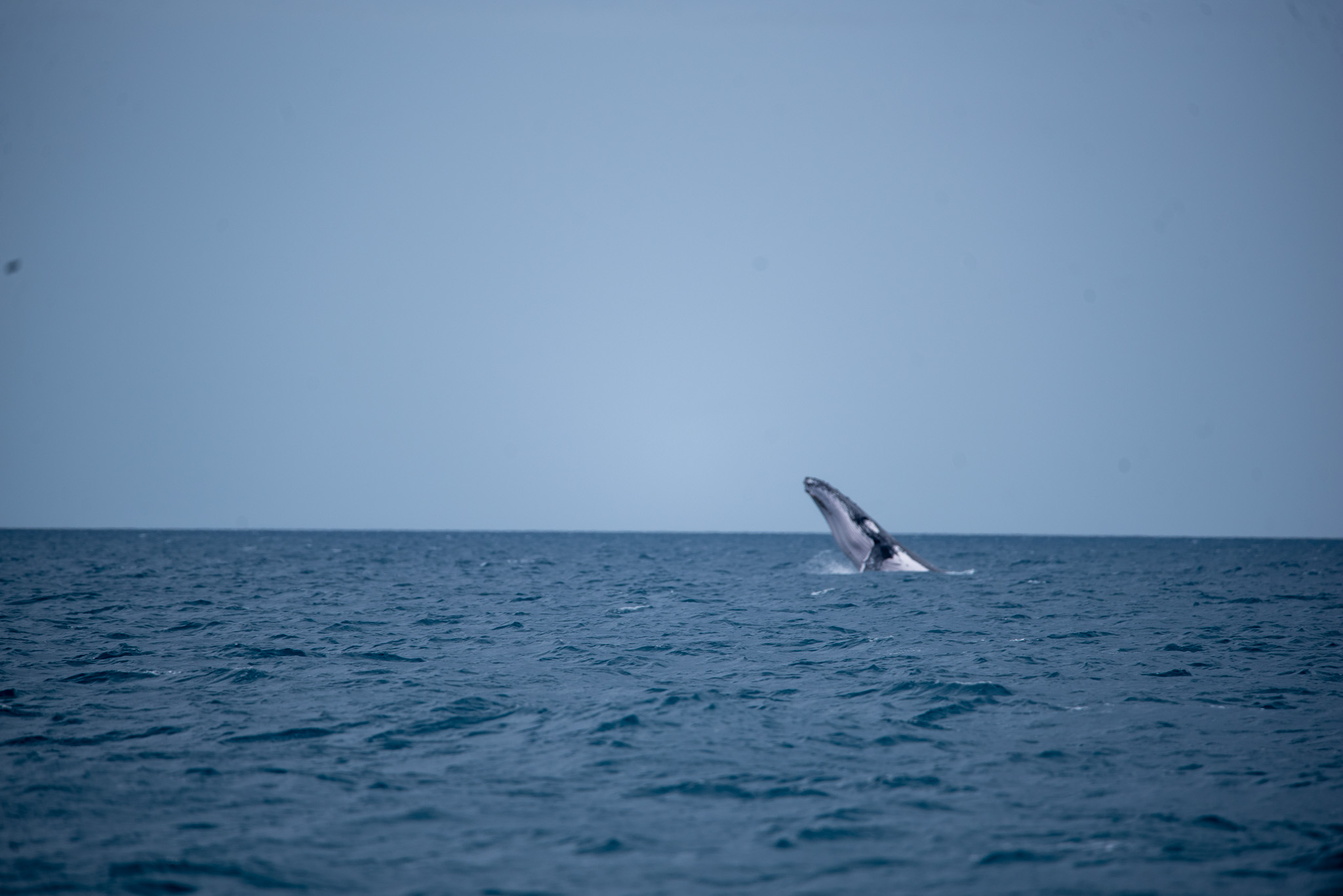
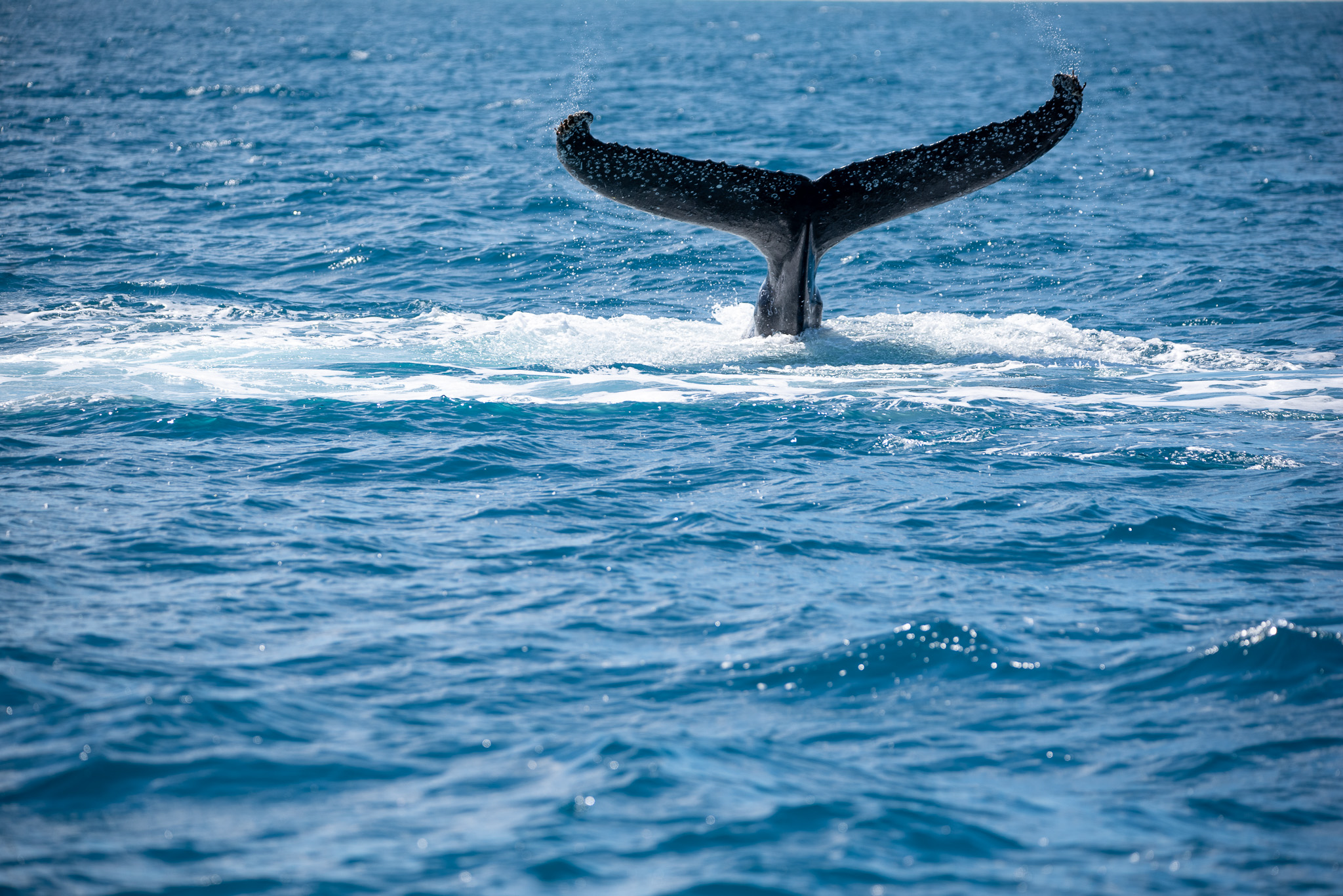
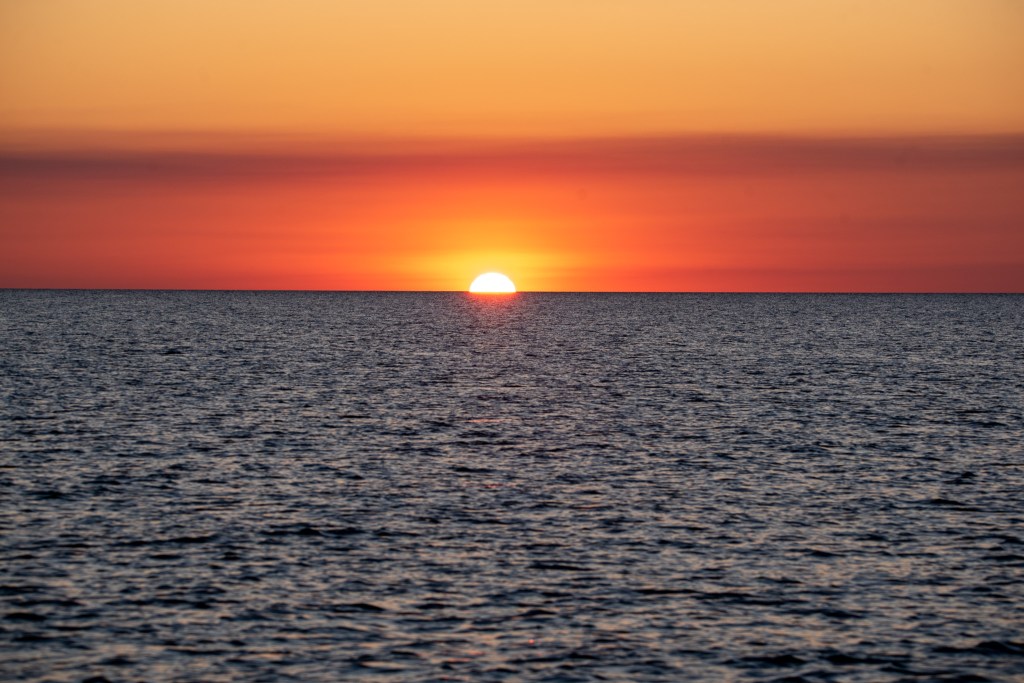
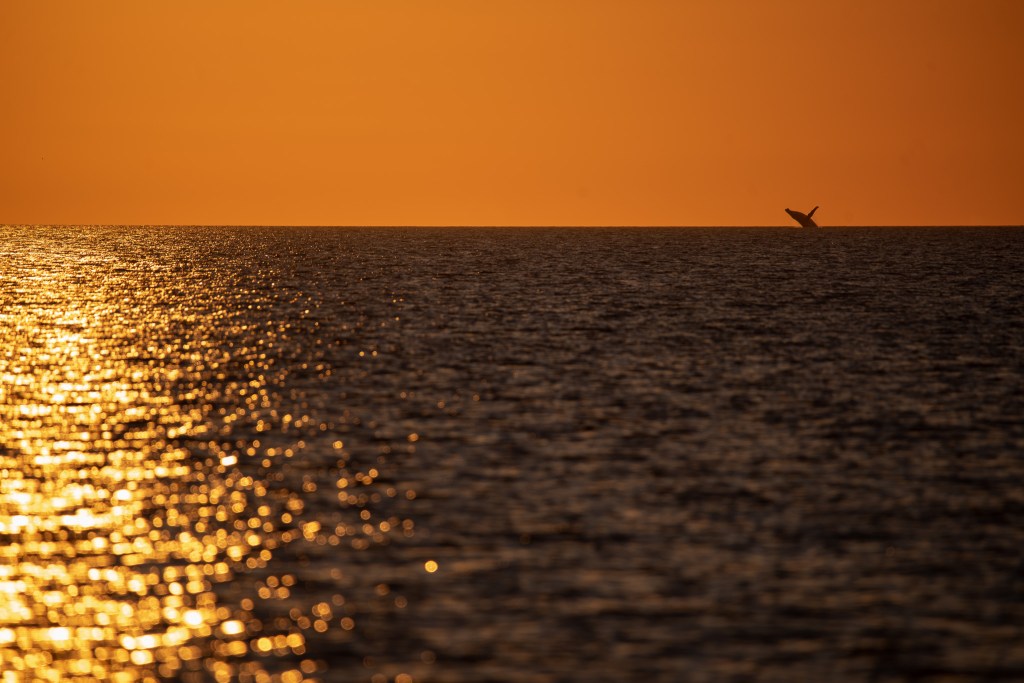
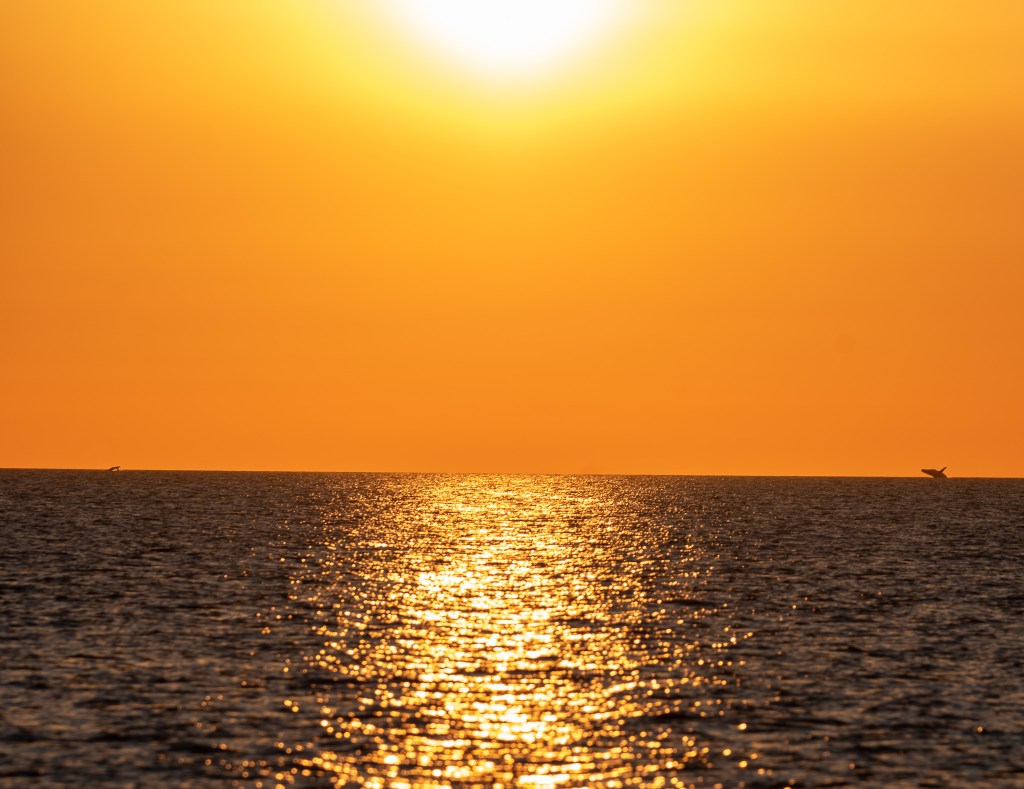
One evening, sitting on our boat at Lagoon Anchorage, we watched an incredible sunset. Then we noticed that far out in the distance, right on the horizon, were two whales breaching. They breached and breached, frolicking against the setting sun for over twenty minutes. Matt managed to get a few photos with his long camera lens, the whales silhouetted against the brilliant orange backdrop. It was a pretty special moment.
Our time in Hervey Bay was over, as the conditions we had been waiting for had finally arrived. It was finally time for our overnight passage to Lady Musgrave Island. We were both super excited to be heading out for our first taste of a coral lagoon, at the bottom of the Great Barrier Reef.
The pessimist complains about the wind; the optimist expects it to change; the realist adjusts the sails.
William Arthur Ward
 Cool Change