We departed the Montebellos mid morning, prepared for an overnight passage of about 20 hours. Brian and Sandra were heading straight to Exmouth marina, but we were going to stop at a little island on the way. I had read that sea turtles nest on Serrier Island, at about this time of year, and was keen to see if we could spot some.
Big swells and a lumpy sea greeted us as we motored out of the narrow passage between Dot and Daisy Islands. I felt pretty crappy and nauseous for most of the day, but thankfully the seas had calmed a bit by the time it was my turn for the night shift. I was on watch from 12.30 am to 5 am, singing songs aloud to help me stay awake. I went back to bed and woke just before seven as Matt was pulling into the anchorage on the east side of Serrier Island.
The bay was calm and flat, and it was very pretty. Not long after we’d arrived, Matt spied something in the water. What the?! It was a snake with a huge fish in its mouth. It appeared to be swimming along as it tried to ingest its massive catch. Definitely not something you see every day!
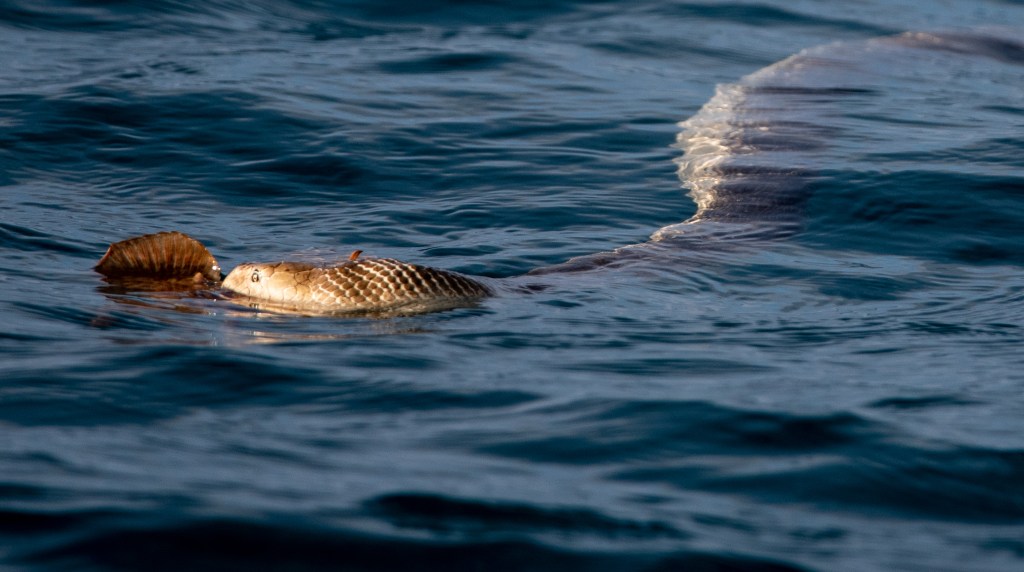
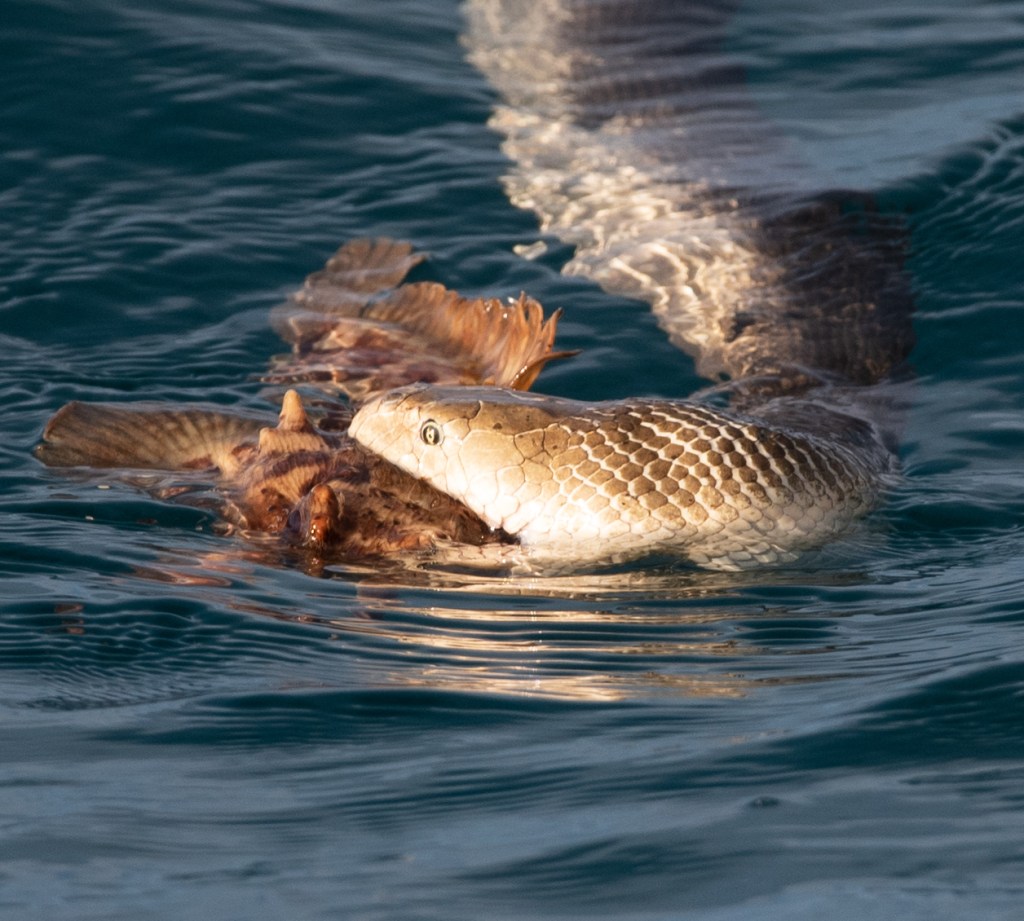
There were six yachts already anchored in the bay. Maybe everyone has heard about the turtles, I thought. Matt wasn’t confident that we’d be seeing turtles, however. ‘I can’t see any tracks on the beaches here,’ he said, sounding quite disappointed. But I wasn’t to be discouraged and after a nap and some coffee, we tendered over to the beach and hiked over the sand dunes to the bay on the west side of the island.
The water was a crystal clear aqua colour and there were heaps of big dark blobs in the water near the shoreline. As we watched, we could see that many of the dark shapes were in fact slowly moving around. Turtles!! Everywhere!!
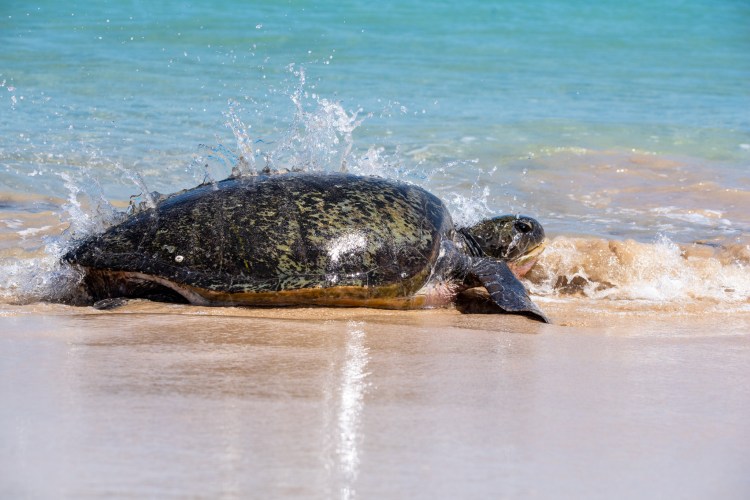
In the distance, we saw what we thought was a big rock on the sand, and dismissed it. After a while, Matt looked down the beach through his long camera lens, ‘That’s not a rock’, he said, ‘it’s a huge turtle!’ We hastened down the beach and slowly approached the massive turtle. She wasn’t moving and her head was buried in the sand. ‘Oh no,’ we thought, ‘she’s dead.’ Not knowing what to do, I reached out and gently touched the turtle’s neck. It moved! ‘Thank god, it’s not dead,’ I called to Matt and backed off. We watched as she slowly made her way back into the water.
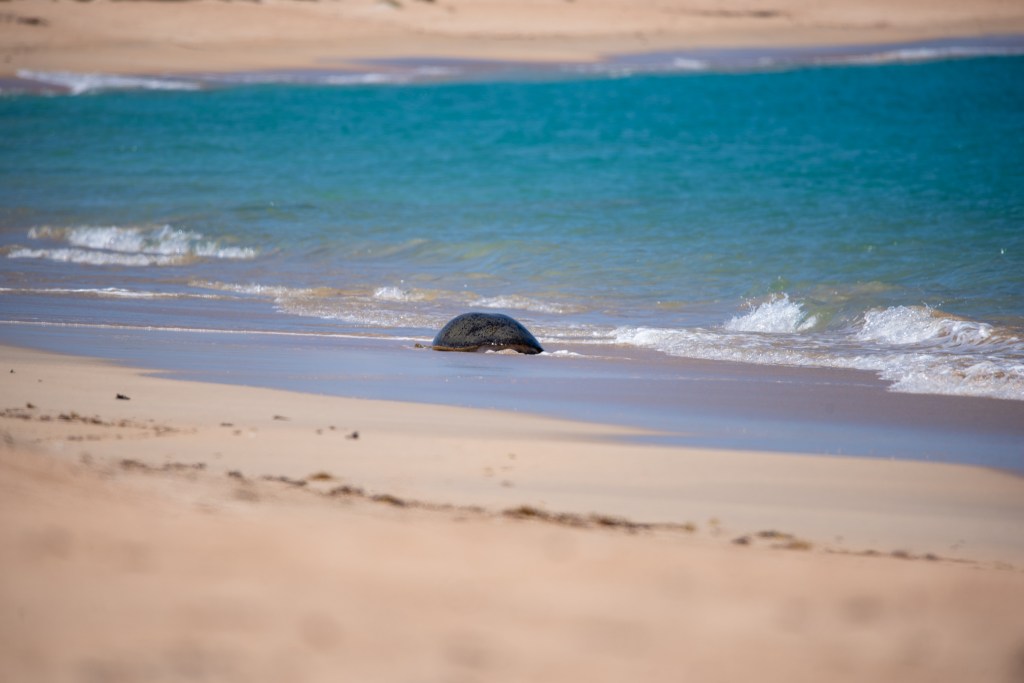
We sat on the sand for a while, watching in awe. There must have been thirty or forty turtles, all swimming around and occasionally approaching each other. Turtles are usually solitary creatures and it is rare to see so many together. It must definitely be mating season. They are also usually incredibly flighty and I have never been that close to a turtle before, let alone one so big. She must have been many, many decades old, a really beautiful old gal.
After a while we wandered on down the beach, spotting another big ‘rock’ in the distance. I slowly approached the turtle so Matt could take a photo with me in it for some perspective on the sheer size of these magnificent creatures.
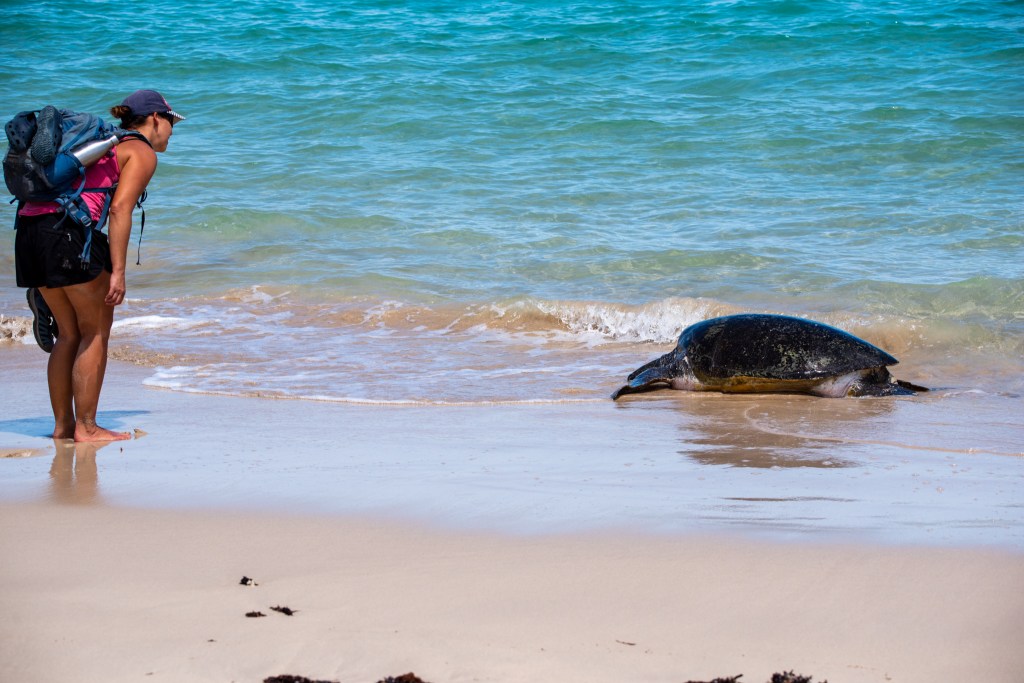
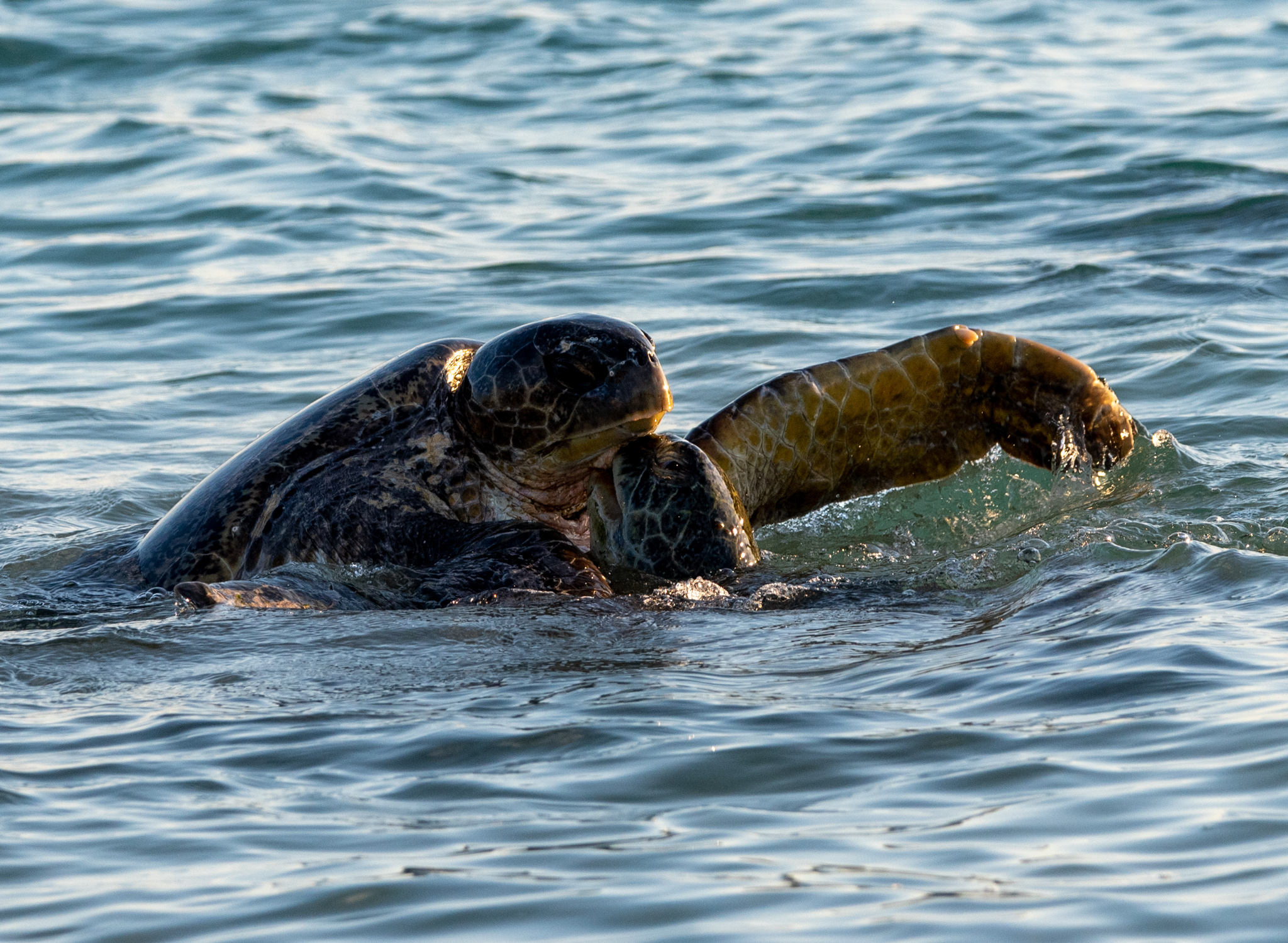
But I must have startled this old lady because she turned in fright and quickly heaved herself back into the water. And then it was on! A male, who had obviously been waiting nearby and biding his time, flew after her, chasing her out into the deeper water. He came right at her and they began what looked like fighting; swatting each other with their flippers and biting each other on the neck. Soon he was on top of her, pushing her down into the water. ‘It looks like they’re trying to drown each other,’ Matt said, as he peered through his long camera lens for a closer view. But soon we realised that they were just mating. It had all been very aggressive and violent.
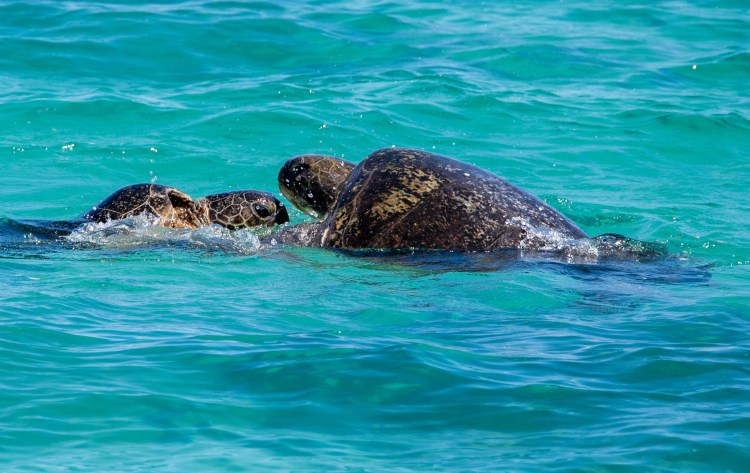
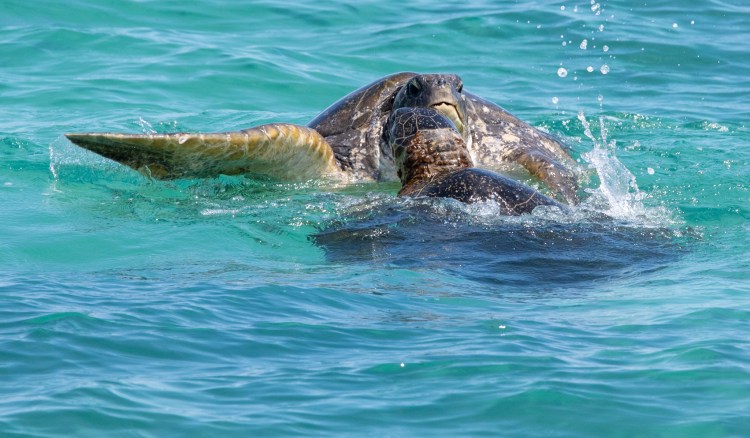
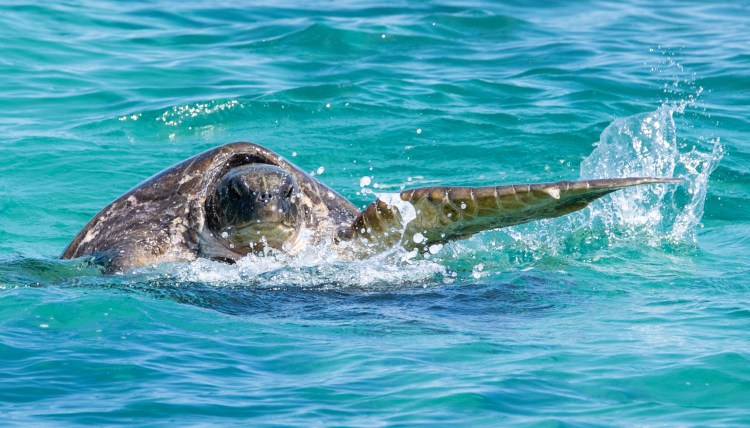
They drifted into the shallows where we could see them clearly. For about an hour the male stayed on top, the poor old lady poking her head up occasionally to grab a breath of air.
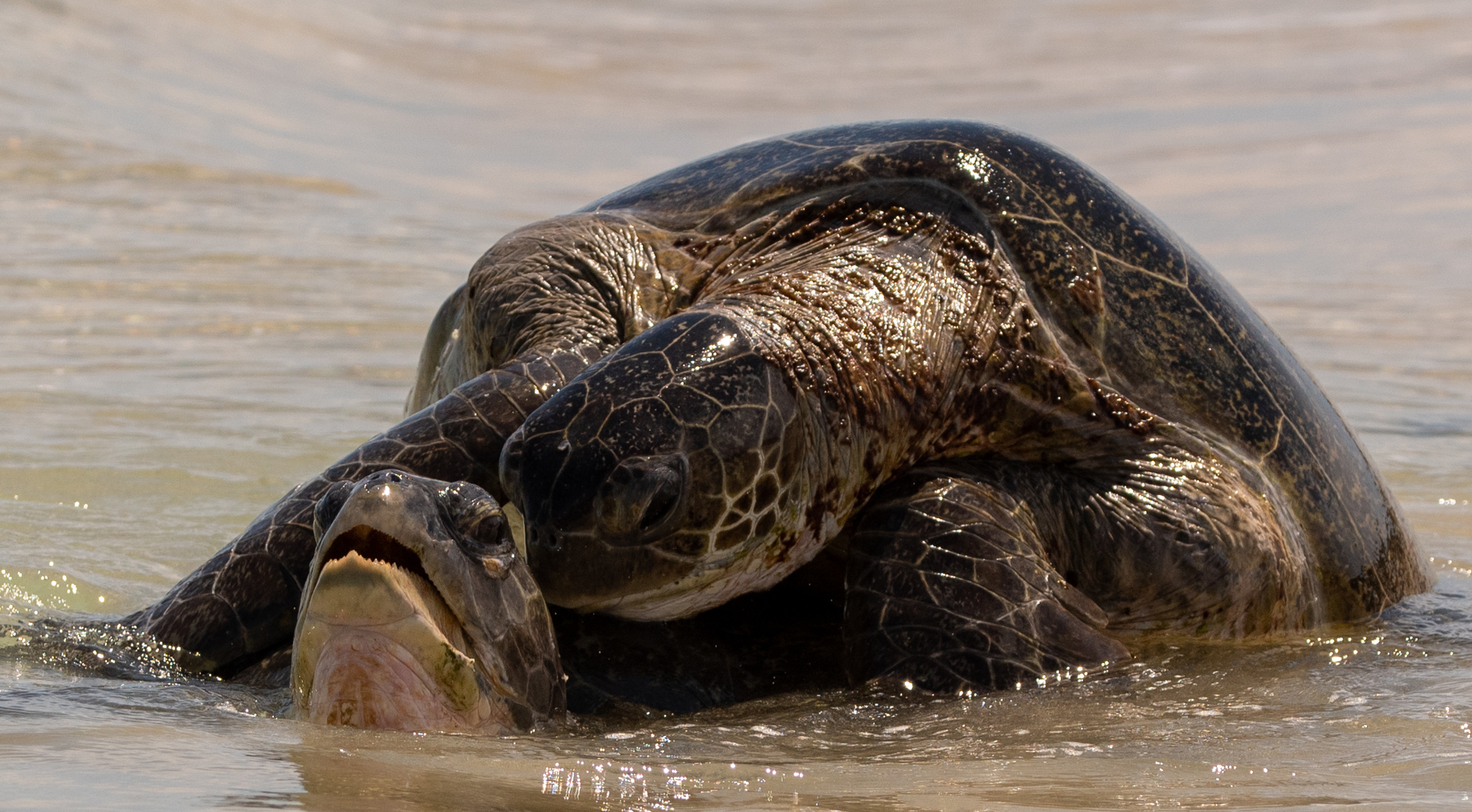
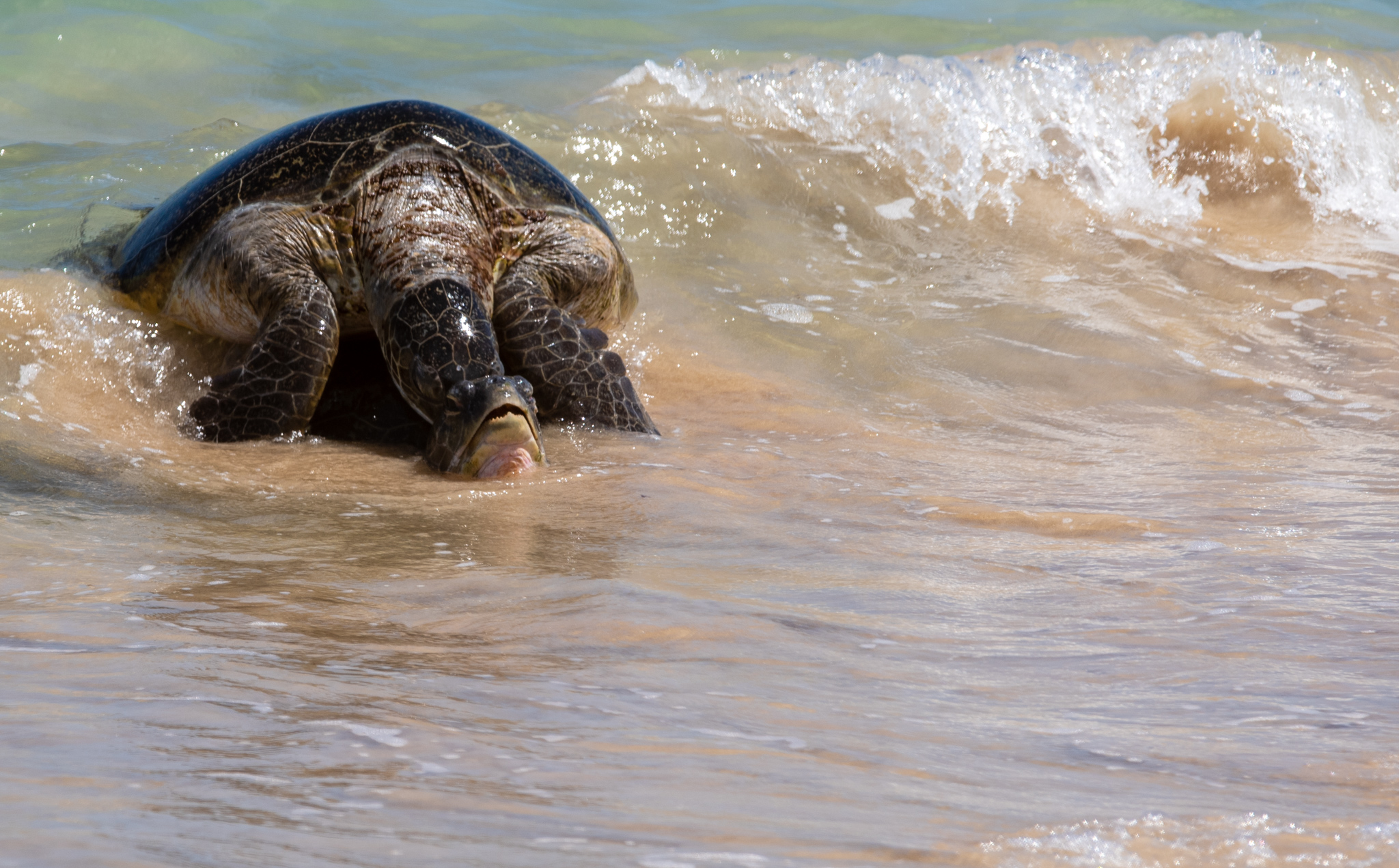
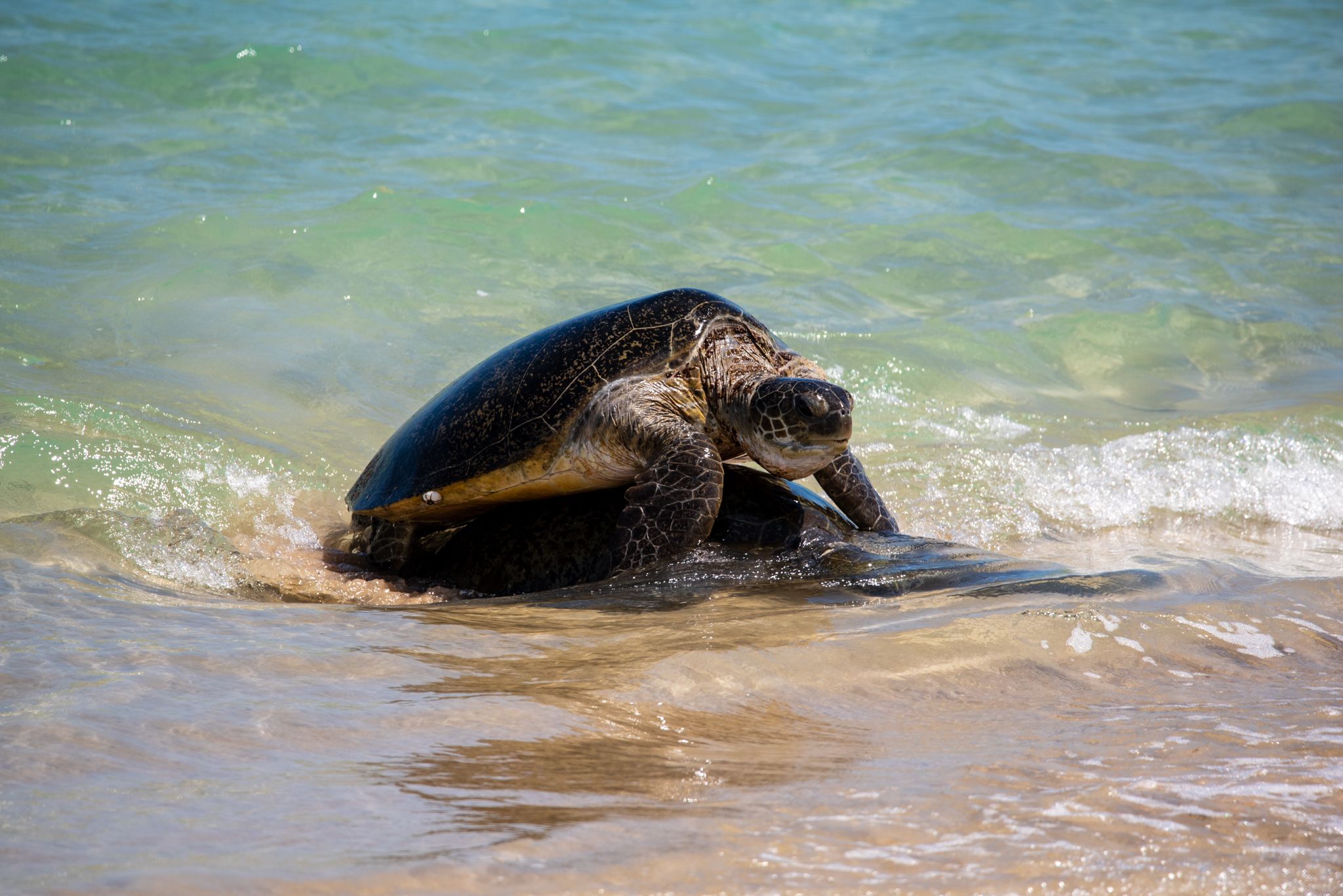
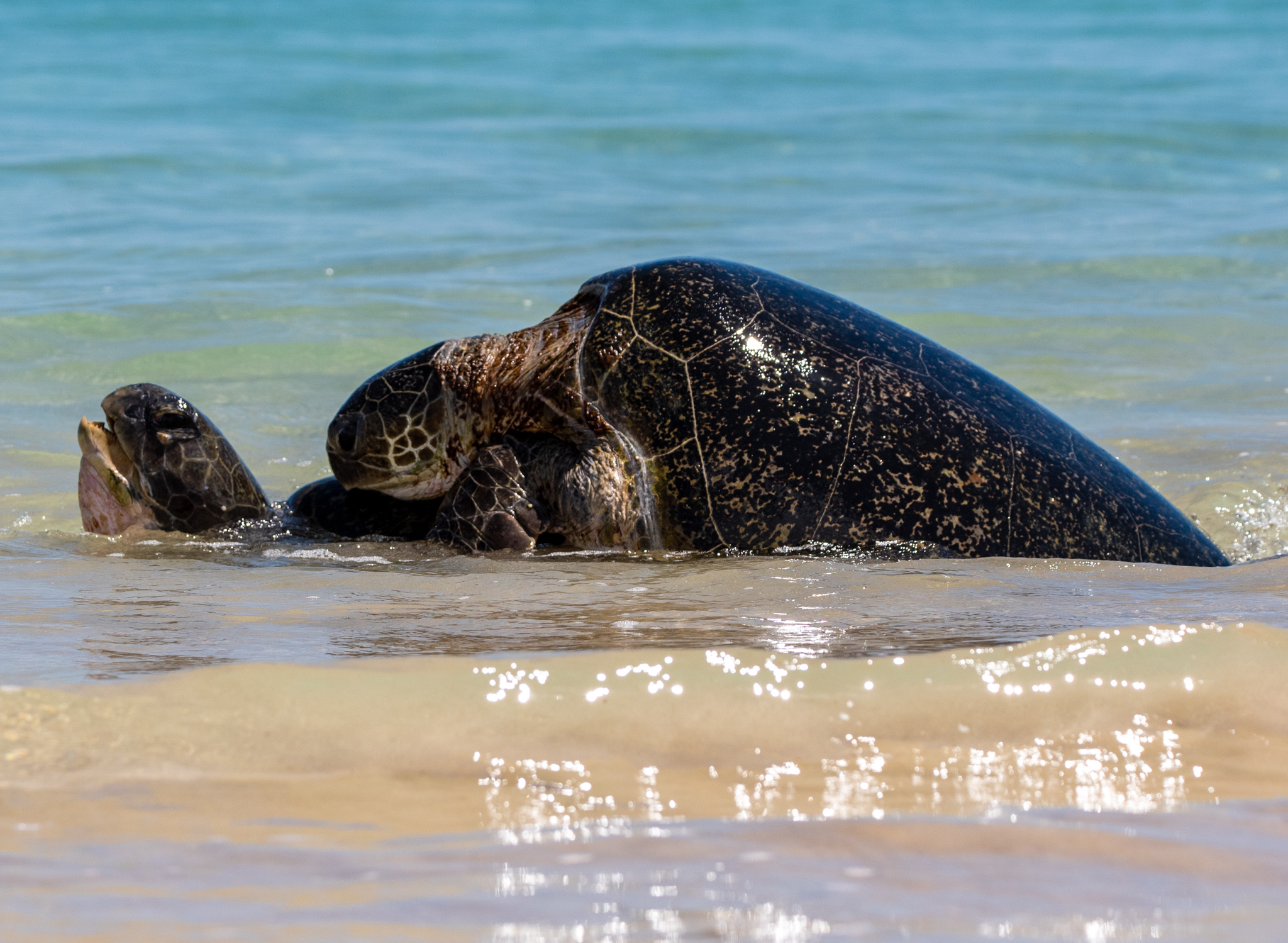
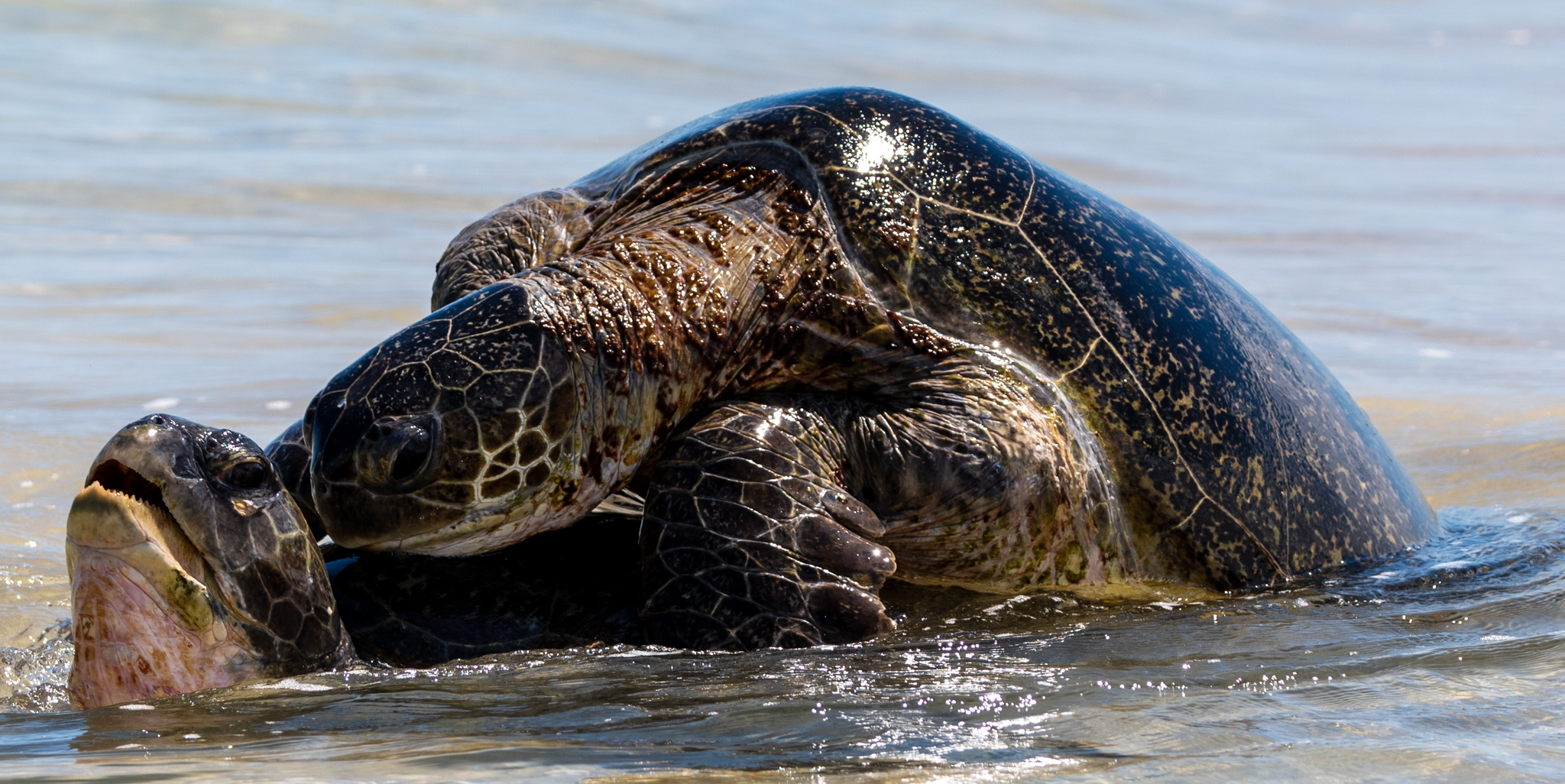
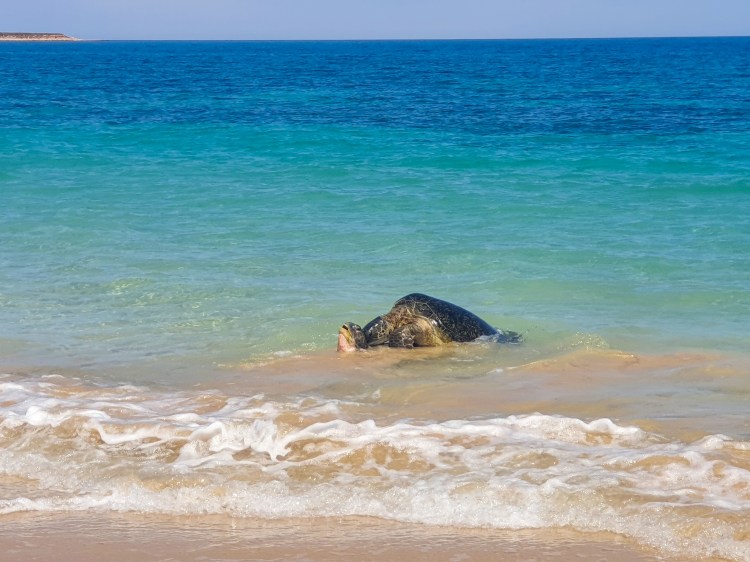
I read later that mating can often take several hours, and that the male will try to hang on to his partner’s shell to prevent other males from mating with her. You can see the spur on the male’s flipper that he has attached to the female’s carapace.
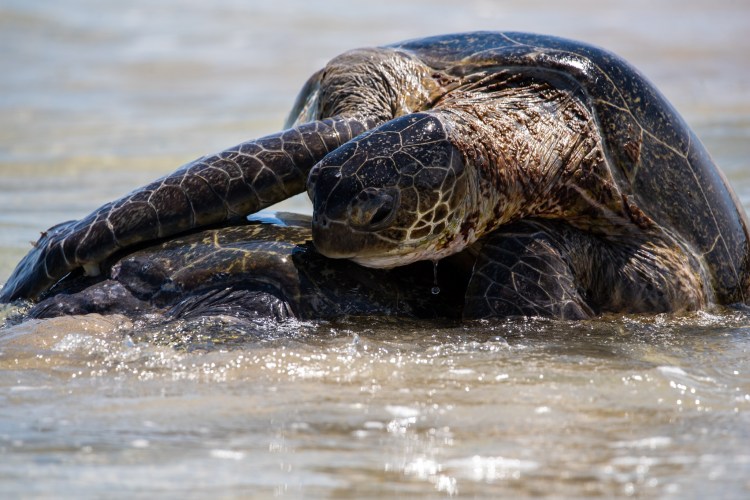
After a while, she’d obviously had enough and began trying to flip him off. She’d roll right over but he was holding on for dear life. It took her many tries over about twenty minutes before she finally got him off her.
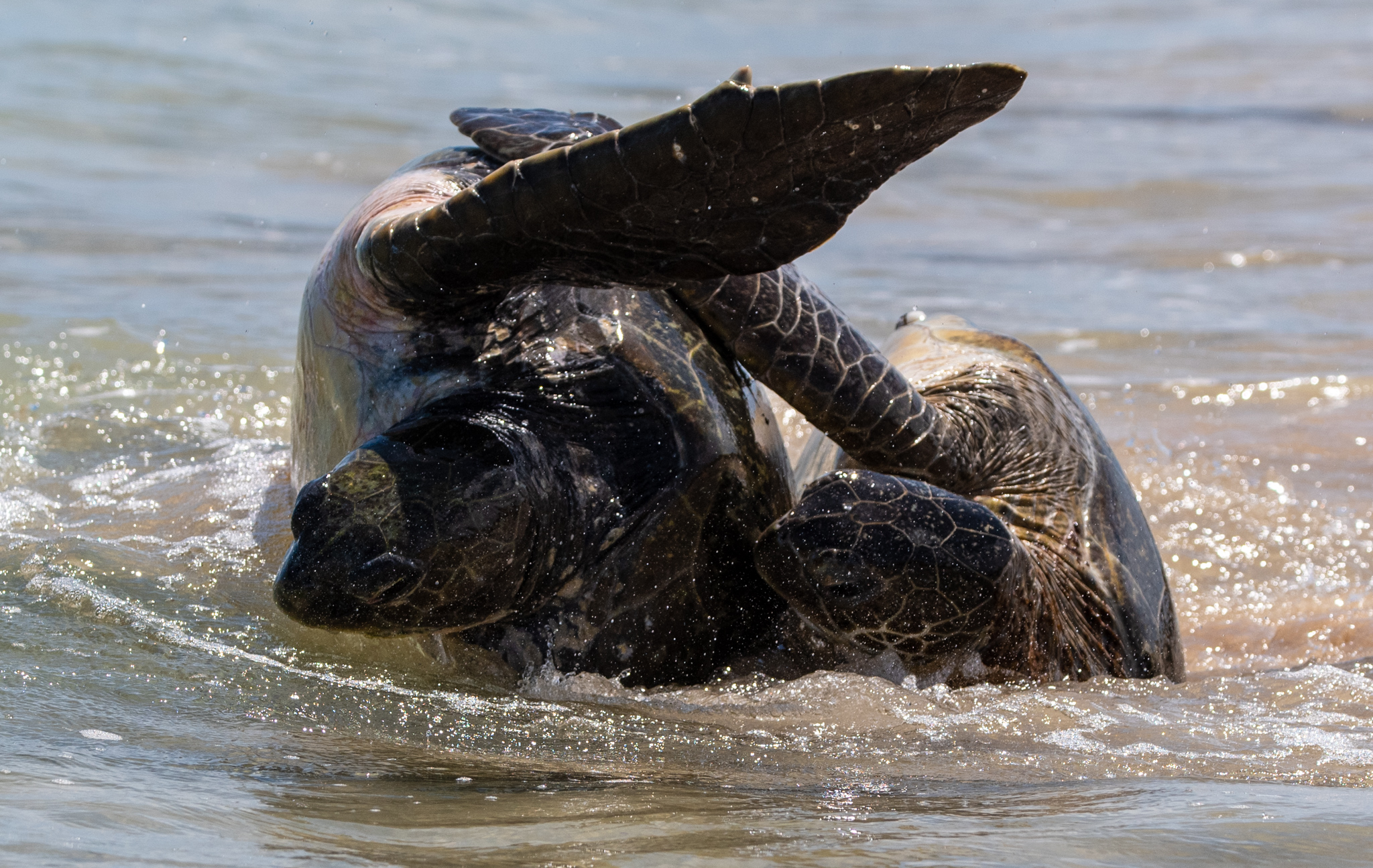
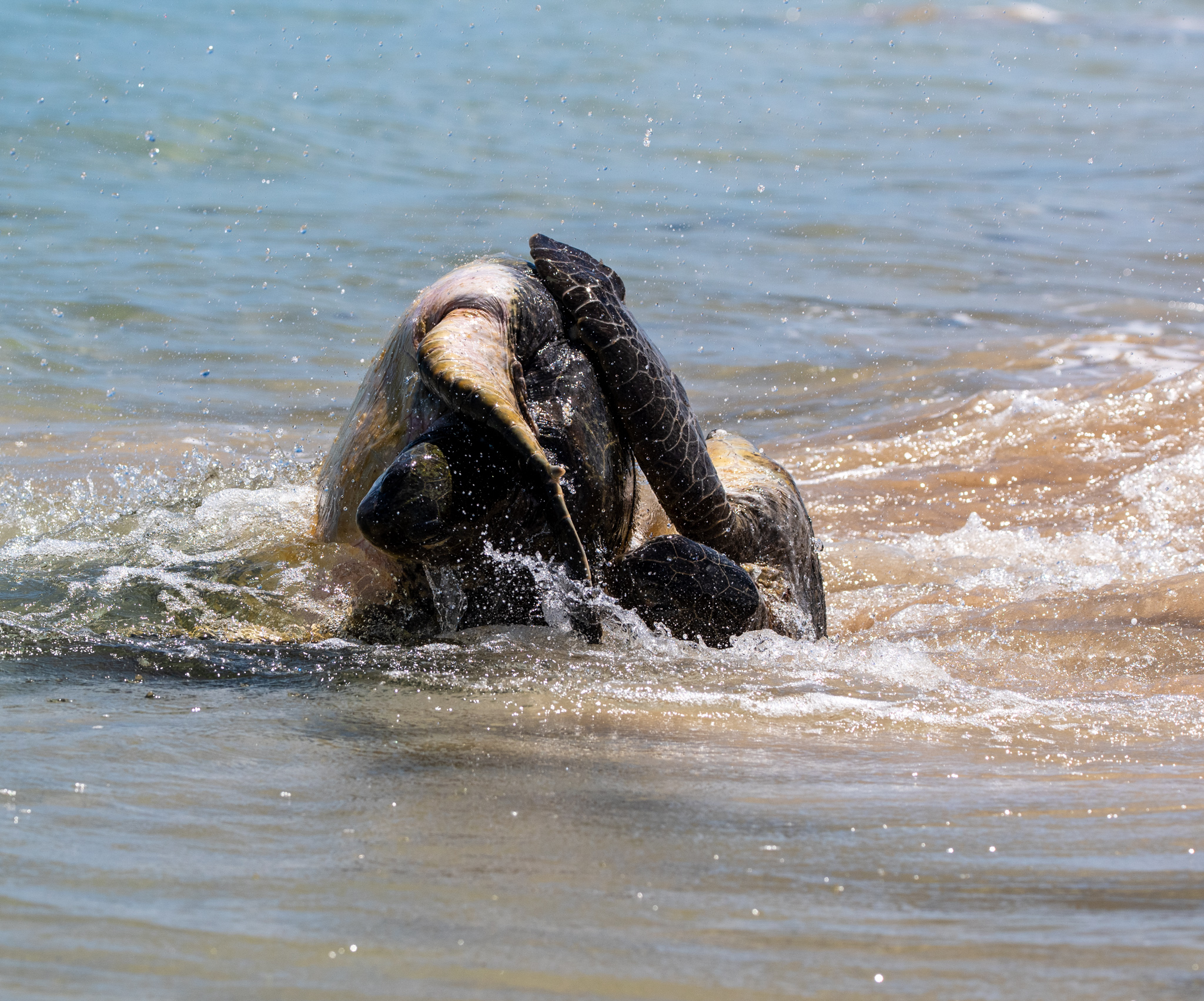
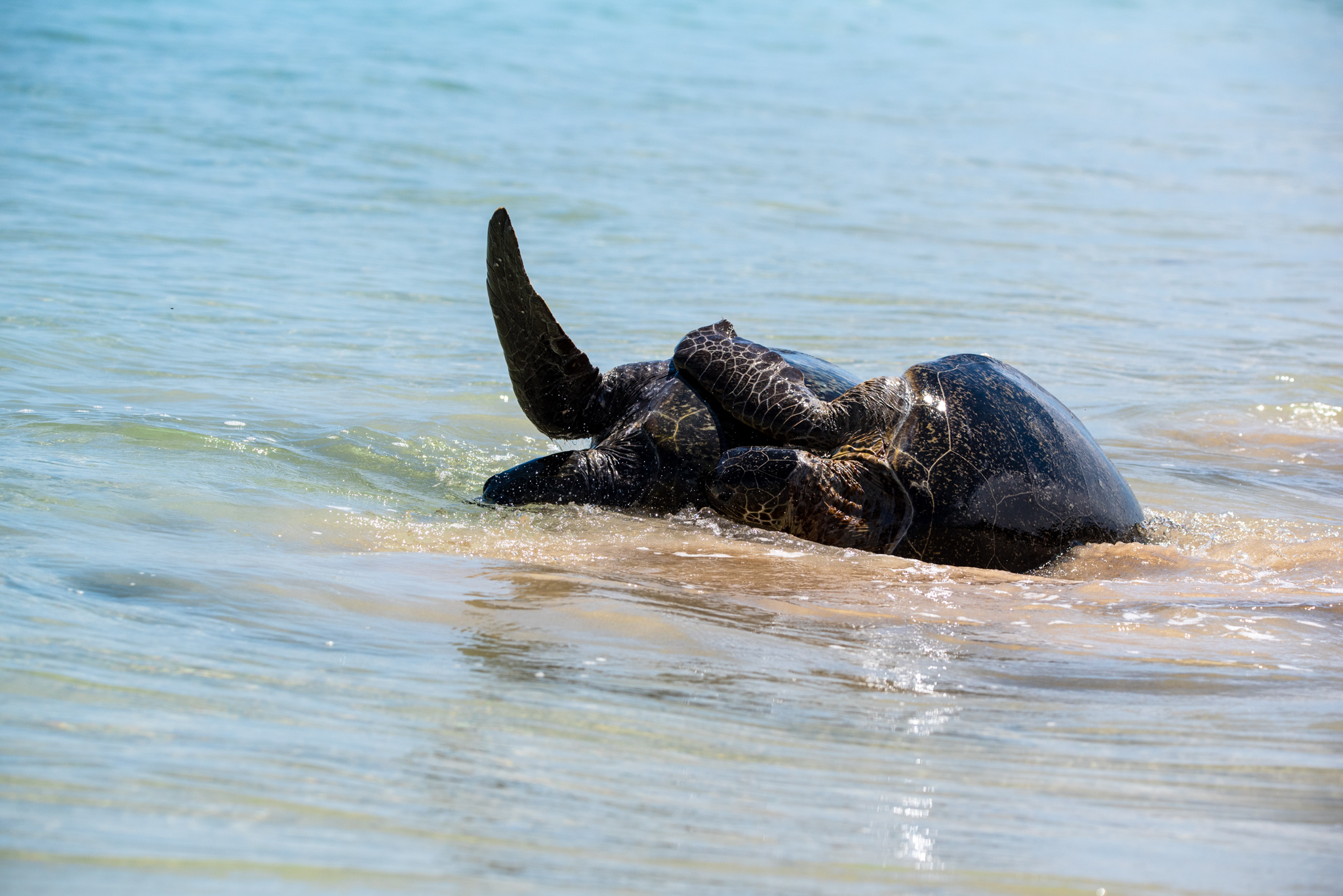
We sat on the beach watching these turtles in awe and fascination. I couldn’t believe we were witnessing this raw act of nature. When we returned to the yacht I did some research on the courting and mating rituals of sea turtles, to better understand what we had seen. The website of the Olive Ridley Project contained a wealth of information.
Green sea turtles reach sexual maturity at about 20 to 25 years of age, depending on several factors such as food availability. When sea turtles reach maturity and are ready to reproduce, they migrate from their feeding grounds to the beach where they were born. Female turtles swim back every two to three years, while male turtles migrate annually.
The way to identify the sex of a turtle is by the length of its tail, and only once they are around twenty years of age. Males have a very long tail while females have a short tail. Both the male and females’ reproductive organs are located at the base of their tails in their cloaca – a combined intestinal, urinary, and reproductive organ.
The information I read suggested that as part of his courtship behaviour, a male sea turtle will approach a female sea turtle and gently bite her neck and flippers. If she does not try to get away, the male climbs onto the female turtle’s back and holds on to her carapace with the long, sharp claws of his front flippers. This is slightly different to what we actually witnessed, where the male was aggressively pursuing the female as she tried to swim away from him.
After the male and female separate, they mate again with other turtles. A female will mate with several males and store the sperm for several months until she is able to fertilize all of her eggs and start nesting. A female sea turtle can lay several clutches of eggs in one season, and the eggs are all fertilized by a variety of males, which contributes to the genetic diversity of the population.
Female sea turtles are very vulnerable when they come on land. They are not well adapted for life out of water and therefore move very slowly. As she starts laying her eggs, she goes into a trance-like state and once finished, she covers the egg chamber with sand. On average an egg chamber can contain anywhere between 70 and 125 eggs. She then crawls back into the ocean and leaves the hatchlings to fend for themselves.
We had seen turtle tracks on the sand leading up to a nest in the dunes. We decided to head back to the beach around dusk and see if we could possibly watch a female turtle laying her eggs.
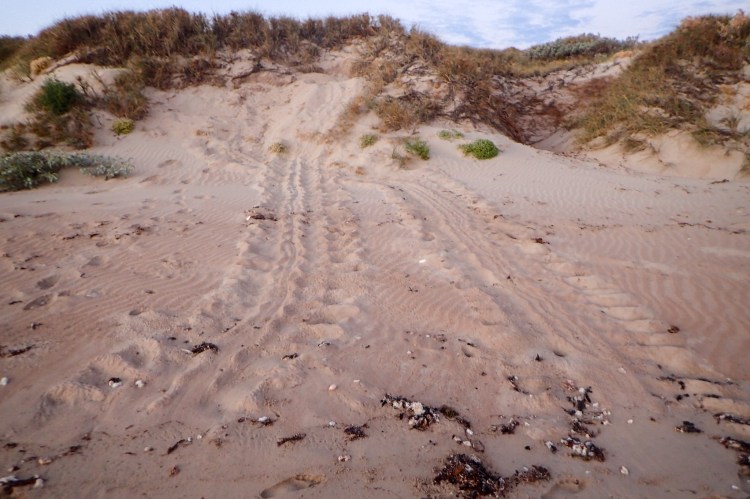
When we arrived back at the beach, there were more turtles than ever and they were even more active. Courting and copulating turtles were everywhere! Groups of turtles were dotted all along the shoreline. Many of the groups consisted of three or four turtles lying fairly still in the shallows. In each group there appeared to be a large female, surrounded by several smaller males. We were able to walk up very close and the turtles were not bothered by us; their attention being otherwise engaged.
We could see the smaller turtles nudging and nibbling at the shell of the larger female. It seemed to us that they were trying to annoy the female to move out of the shallows and into the deeper water. For once she did that, it was back on, and they were biting each others necks as the male tried to crawl on top of the female.
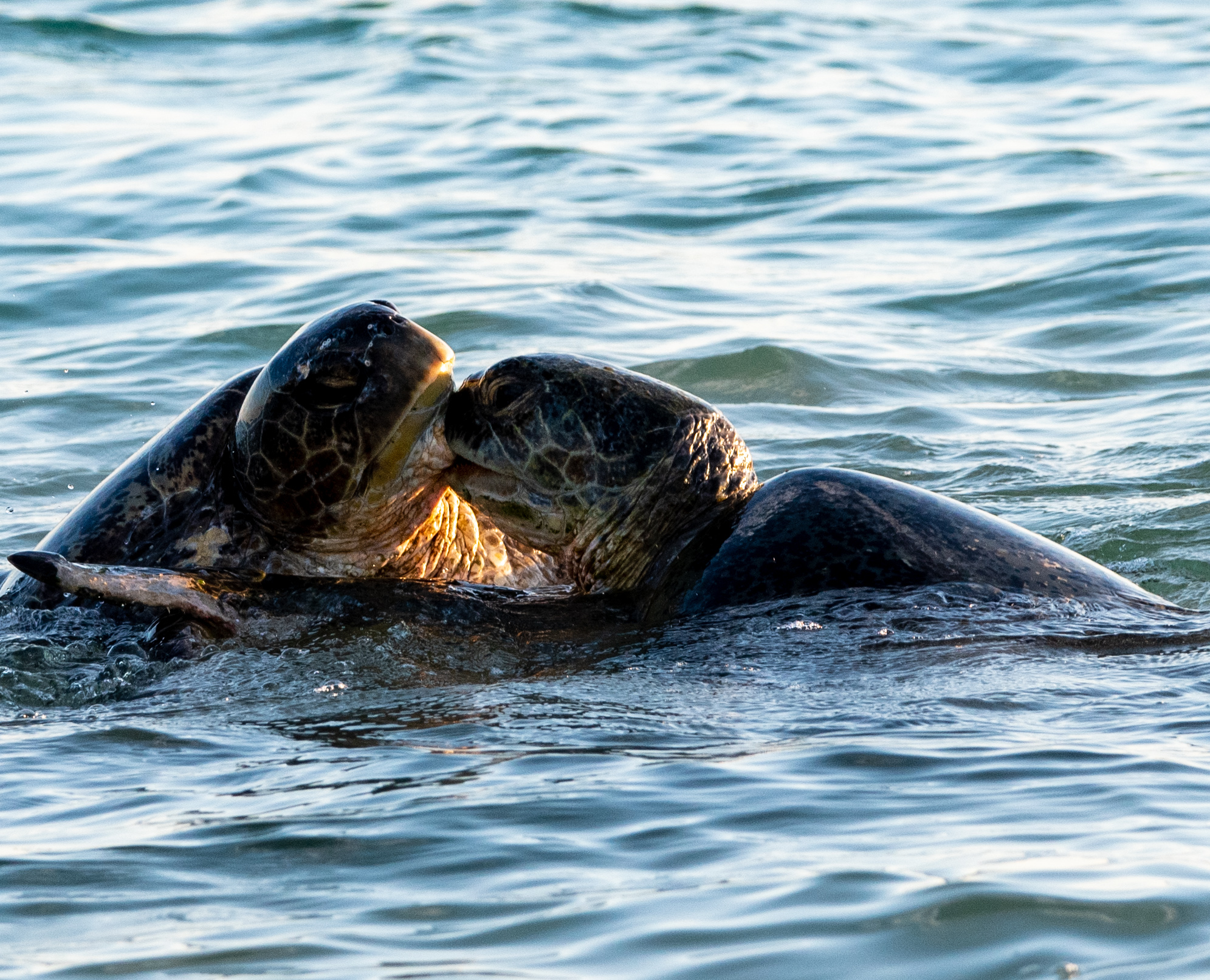
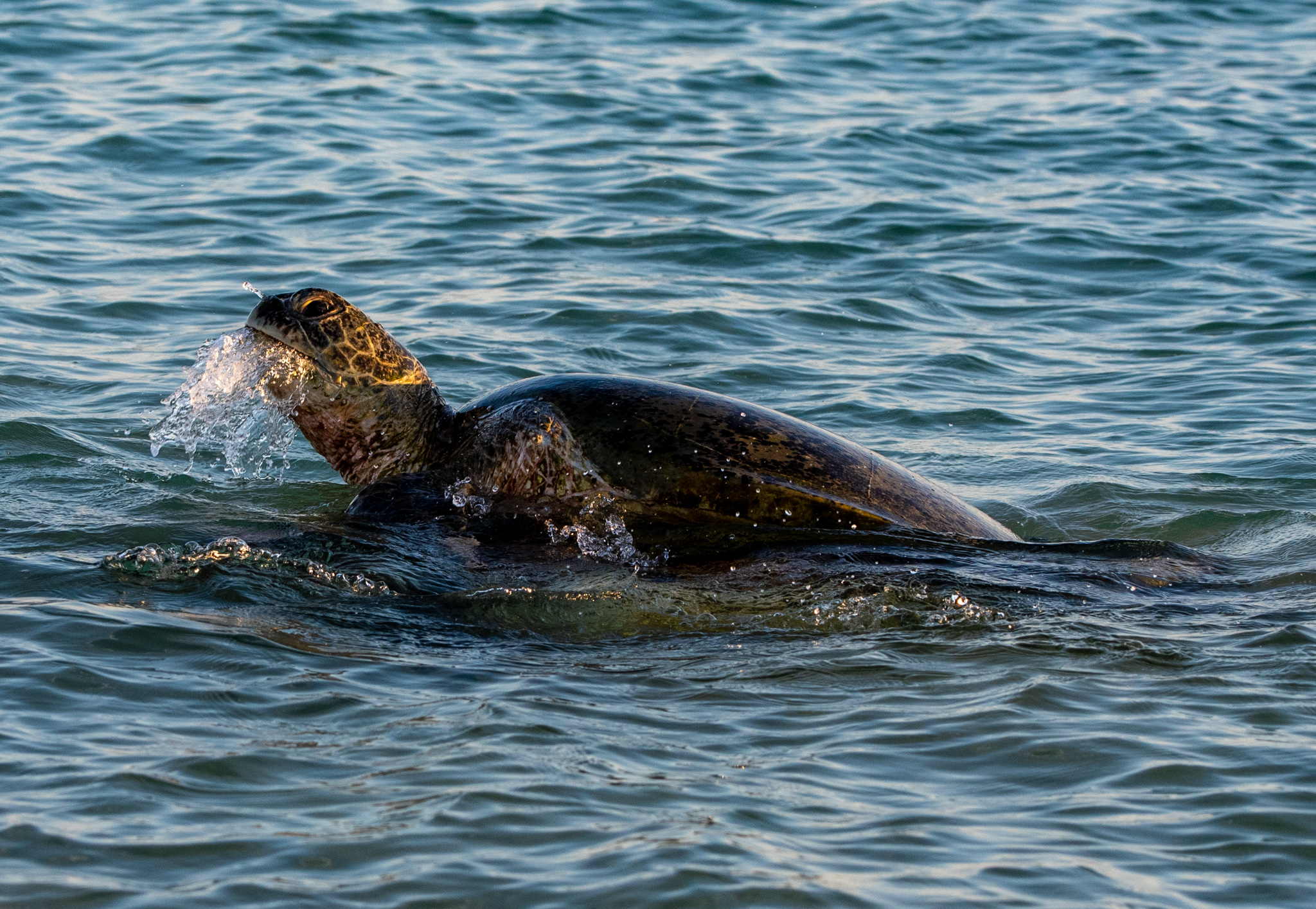
We watched until the sun set, turning the sky an incredible glowing orange. I was dancing around with the sheer joy of witnessing something so rare and special in such a beautiful place. What an amazing experience!
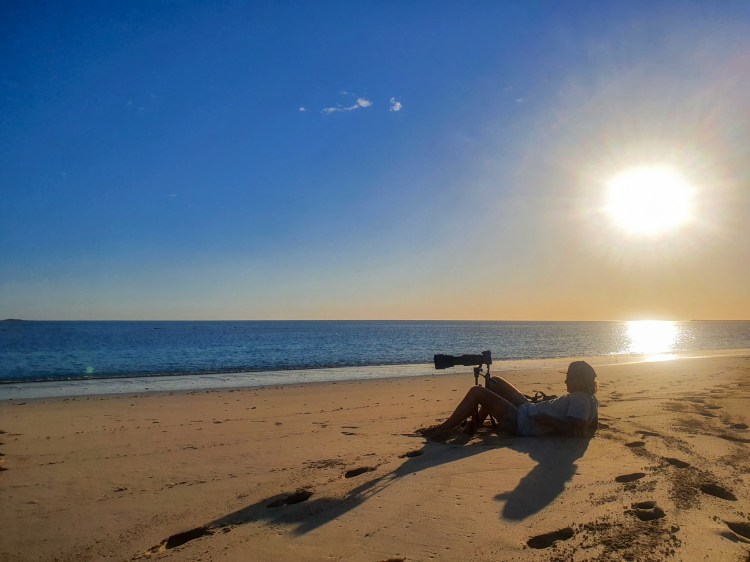
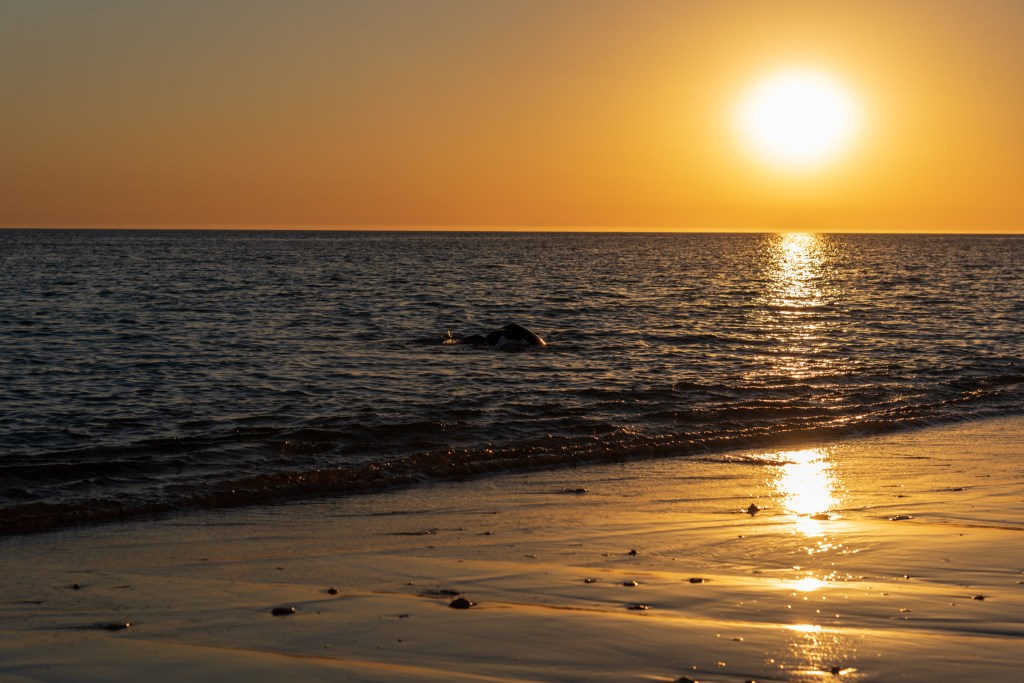
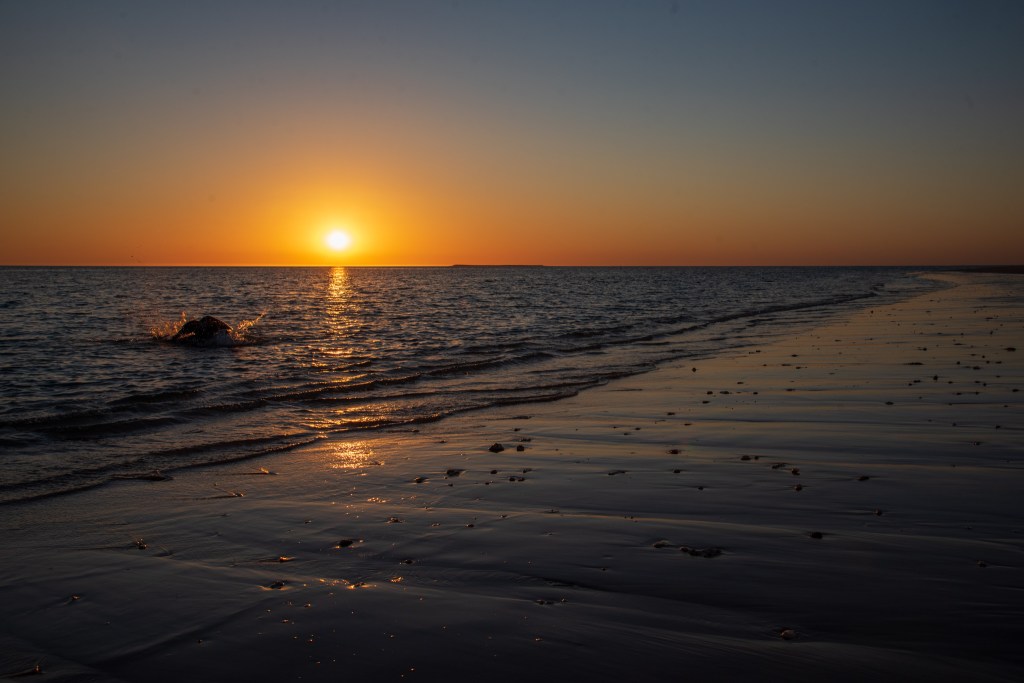
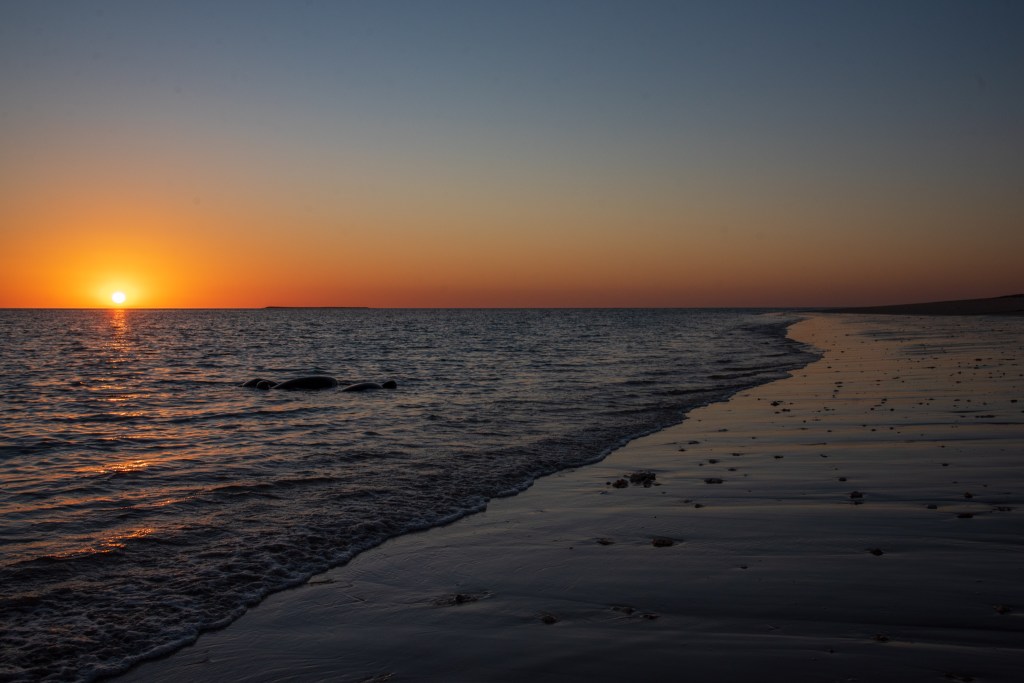
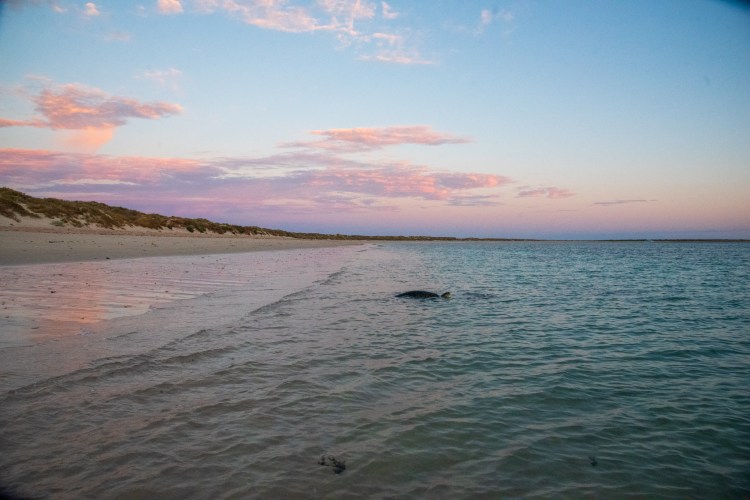
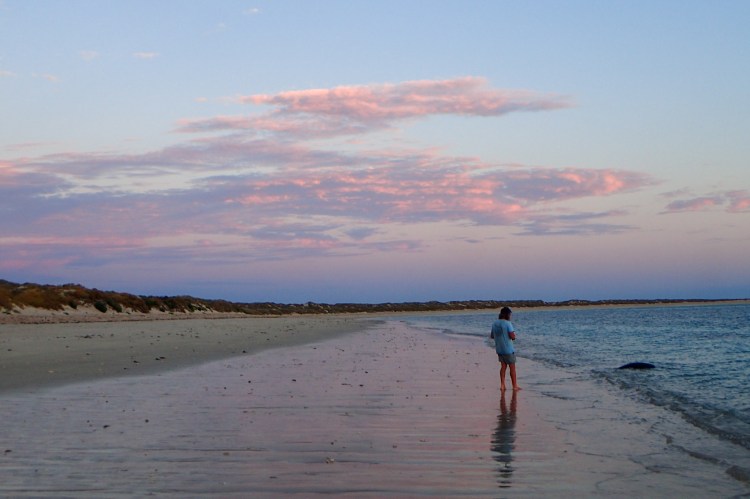
Unfortunately, it was now low tide and we realised that the turtles would probably not be making their way up the beach to nest until the tide was higher. That way they would have a much shorter distance to crawl and be vulnerable for a lot less time. We did see a set of tracks from a ‘false crawl’ in the wet sand, where a turtle had obviously tried to nest, but aborted the attempt, as she realised that she was not in the right place. High tide wasn’t going to be until two am, so this wasn’t the day that we would be witnessing turtles nesting. Hopefully we would get that chance another time.
But what an incredibly special experience we had had. I have always been so fascinated by sea turtles and so excited when I got even a fleeting glimpse of one. To have been able to get so close and to watch them for so long was truly special.
All my life through, the new sights of Nature made me rejoice like a child.
Marie Curie
 Cool Change
Thanks for sharing Lisa and Matt.Fantastic!
LikeLike