The day was finally here. We were actually going to do this. Sail our yacht across the Great Australian Bight. On our own, just the two of us. I wasn’t nervous, instead a strange mixture of excitement and calm had descended upon me. I knew we could do this.
We woke to grey skies and drizzling rain, but the winds were light and the sea calm, just as the forecast had predicted. It was incredible how accurate our weather guy, Kingsley’s predictions were. The two days of strong 30 knot easterlies before we left had been just as forecast and although it had been hard to believe that we’d have such calm conditions in the morning, when the wind was howling through last night, here we were, with light winds. It was comforting to see just how spot on the forecasting was.
Dead bugs lay everywhere in the cockpit as a result of Matt’s attack with the fly spray the previous night. After hosing down the bugs and hoisting the tender, we were off. Our clocks had already been changed to South Australian time and the engine was turned on at 8.38 am.
We motored out of Cape Arid and aimed east. The route plan from Kingsley had us motoring until early afternoon when the wind should kick in. He’d sent Matt two weather models and it quickly became apparent that one was much more accurate than the other. We ended up motoring for 10 hours, a bit longer than predicted. Unfortunately, our wind instruments were still playing up. They definitely displayed the correct angle that the wind was coming from, but the strength was all over the place. For the rest of the passage, they continued to fluctuate between seeming to be fairly correct to being wildly inaccurate, and therefore pretty useless.
I felt pretty crappy for the first part of the day, drugged and drowsy, as often happens when I first take the seasickness medication at the start of a long passage. After two hours I went back to bed for a while and left Matt to it. We were motoring into a swell from the east which was leftover from all those strong easterlies. It was about two metres at ten second intervals.
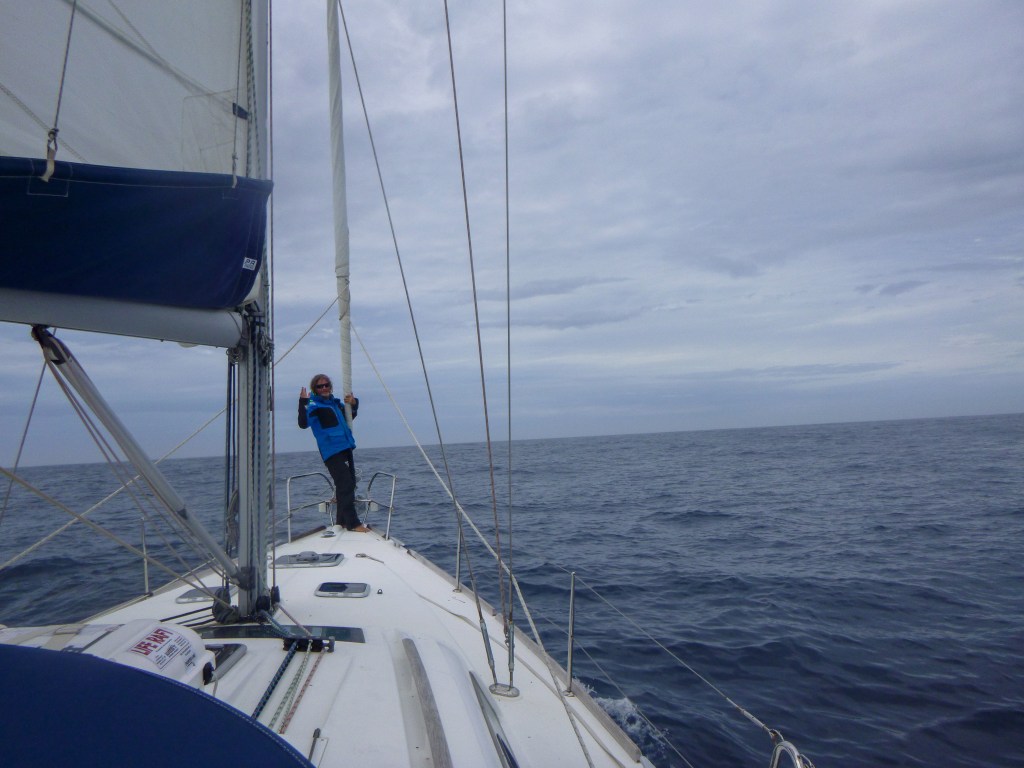
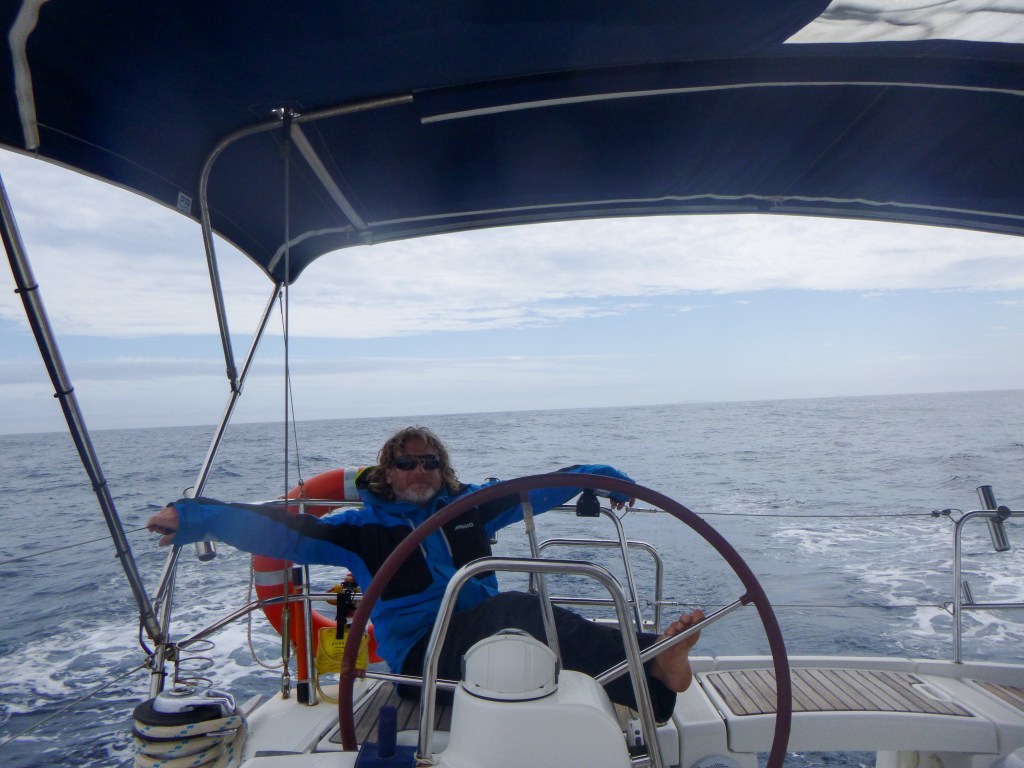
When the winds finally filled in from the south we began to sail, and soon we were flying along, averaging seven to eight knots. Matt was in his element, happy and content, exclaiming ‘How good is this, sailing our own yacht, just us, across the Bight!’ We were out past the continental shelf, in very, very deep water.
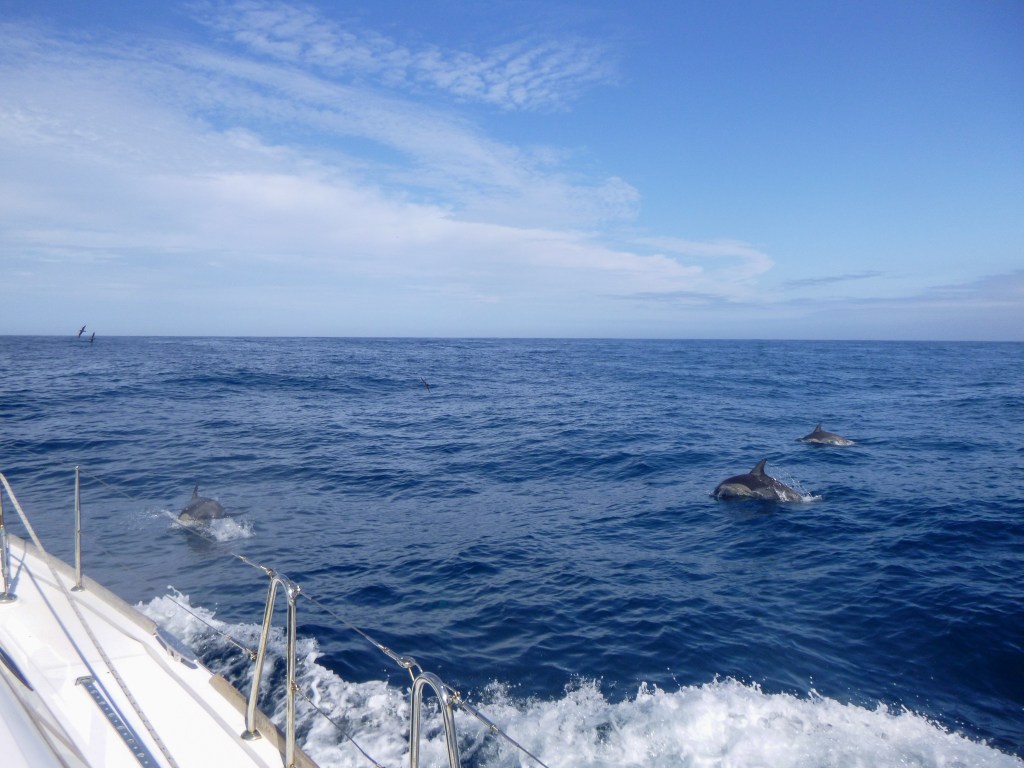
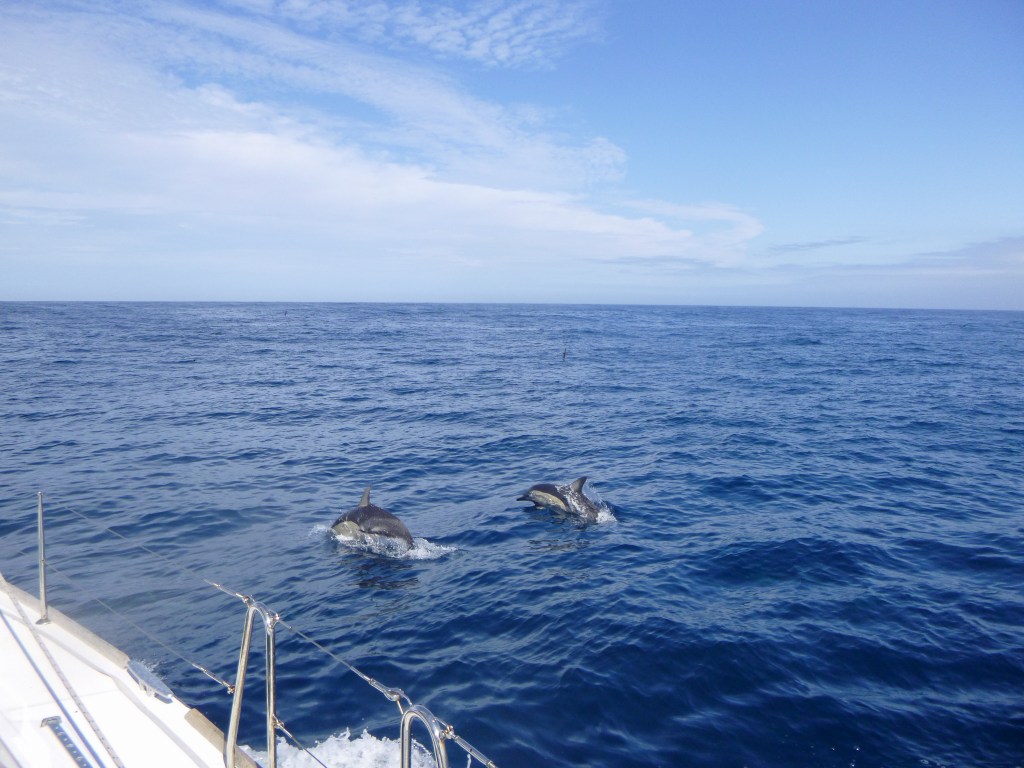
A pod of dolphins joined us for a while, leaping high out of the water as they raced to the front to surf the bow wave. It was all going pretty well, but unfortunately, the comfortable sailing conditions weren’t to last.
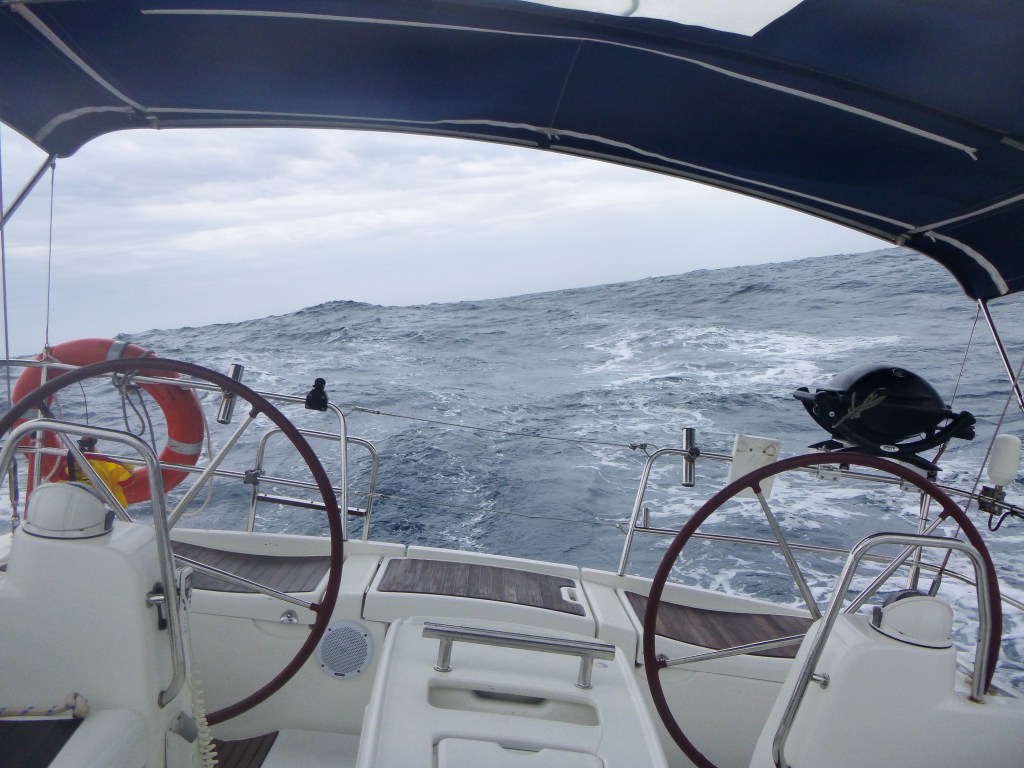
As the wind strengthened we put the first reef in, and then the second. The boat was heeled pretty far over. The sea state became confused and bumpy. With the southerly winds, the easterly swell still lingering and the usual south westerly swell, a washing machine effect was generated with the boat being thrown about for most of the first night and into the second morning. It was pretty yuk. Neither of us got much sleep. Lumpy waves were coming at us from the side and the boat lurched and jerked, rocked and bounced. It was cold during my night watch, with a strong wind chill. I was not happy. ‘Horrible’ was how I described the night in my notes; like a nightmare you couldn’t wake up from or being stuck on a rollercoaster you couldn’t get off.
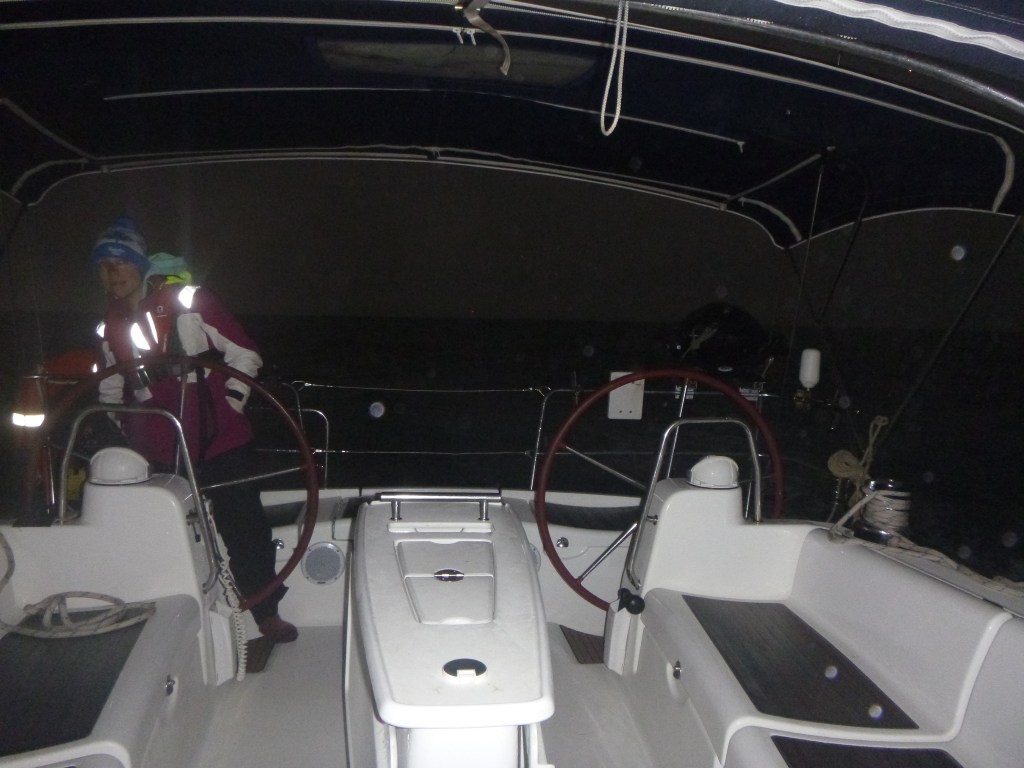
We both wore life jackets most of the time when we were in the cockpit, especially at night or when it was rough, or when we were on our own. We also tethered ourselves to the boat during night watches. It would be a terrifying thing to go to bed and get up to find the cockpit empty. Every time I woke I would listen out for Matt to make a noise, or pop my head up to make sure he was still there. That first night, I was sitting in the cockpit at the end of my shift, calling out readings to Matt for the log, when a violent jerk of the boat threw me across the seat and I went flying to the other side. Fortunately I was tethered to the boat and the strap caught me, but it was a pretty scary moment.
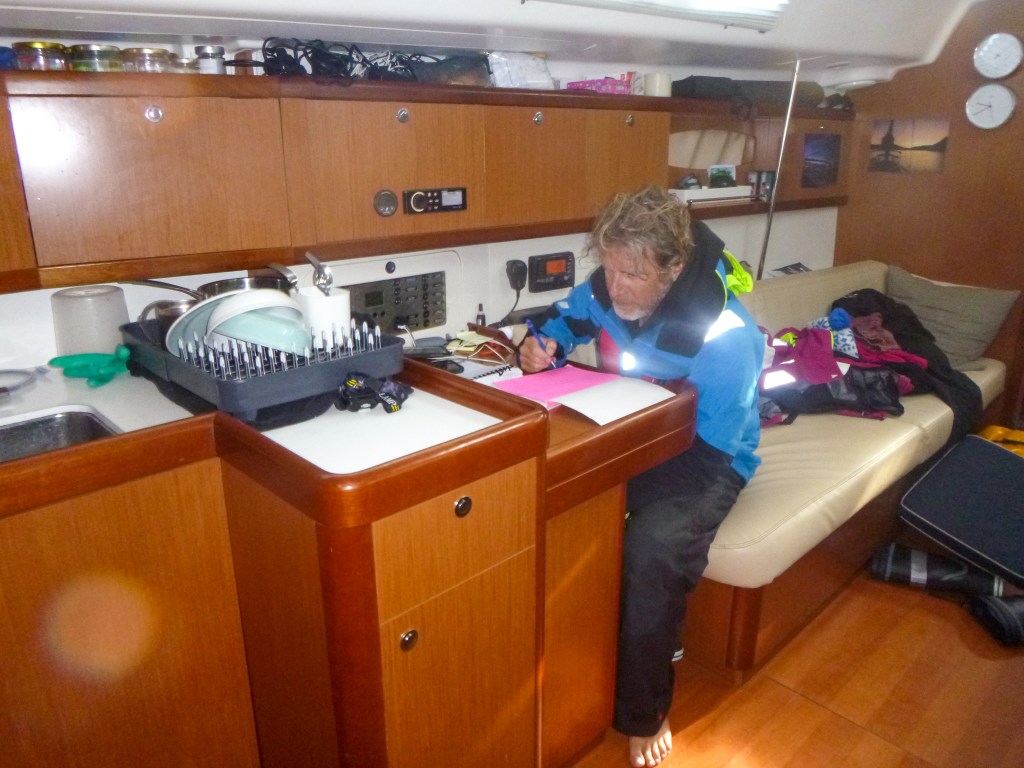
So we were both not too happy on the morning of Day Two. It was not the conditions that Matt had expected. Although the winds were right on track with the model, the sea state was significantly more confused than he’d hoped. Thankfully, however, by the afternoon the easterly swell had dissipated and was all but gone. That left the south westerly swell coming from the starboard stern (our back right corner) and the winds off our starboard bow (right front) and the boat settled into a more comfortable motion. We shook out the second reef and were able to sail quite well at a reasonable pace. When off watch, we both managed to get some sleep.
The sea smoothed out a bit more overnight and lighter winds had us turning on the motor for my shift at 12.30 am. We didn’t mind switching on the motor whenever we couldn’t sail at a reasonable enough pace. Our navigation instruments, especially the radar, are very power hungry so we had to run the motor regularly anyway, so we figured we may as well be running it when the winds are light. I was able to turn the motor off at 4 am but by 5.45 am the winds had shifted again, so the motor was back on for Matt’s shift.
At midday we were back sailing and if it wasn’t exactly champagne sailing then at least it was bearable. The sun came out and things were better. Gorgeous colours streaked across the sky as the sun set on our third day at sea.
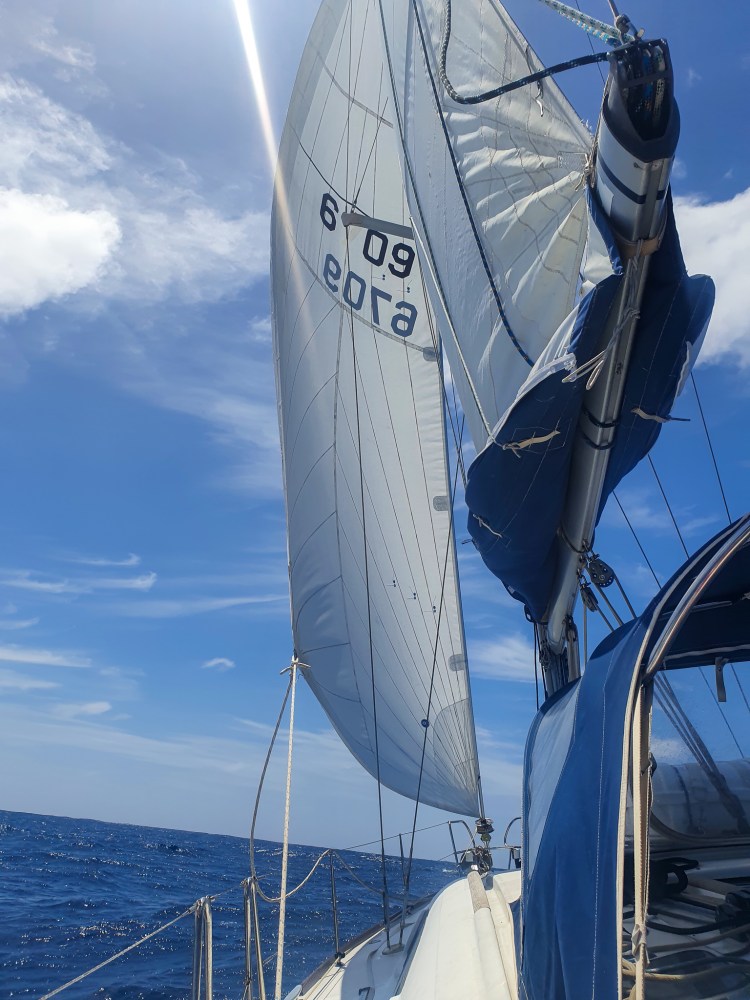
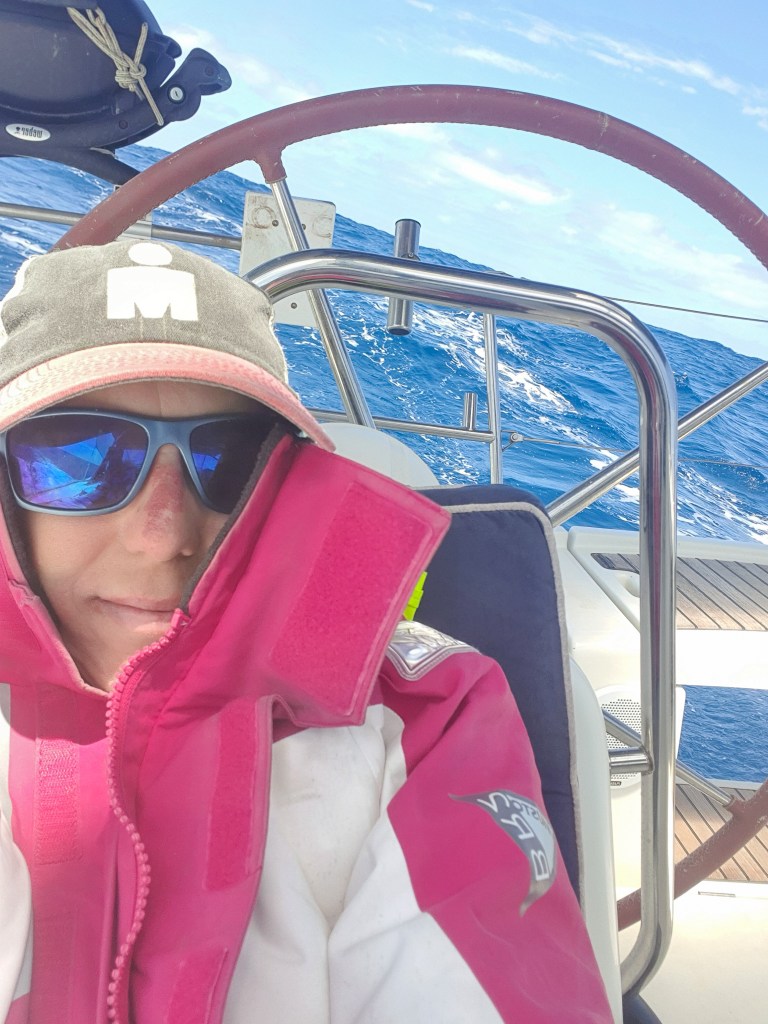
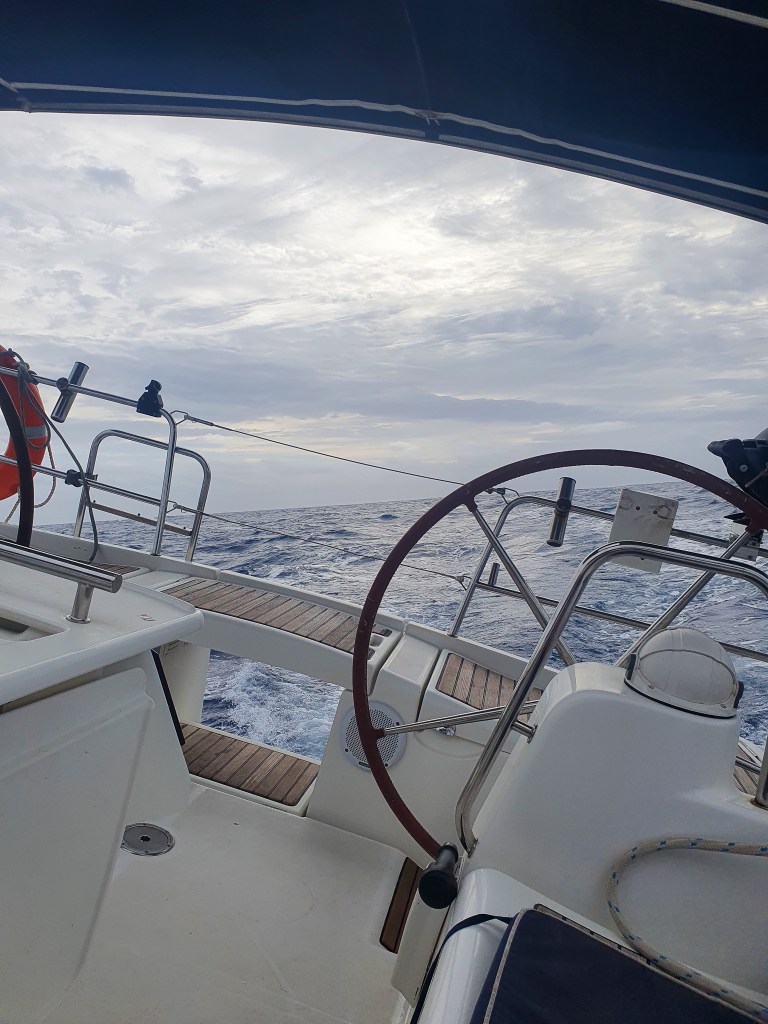
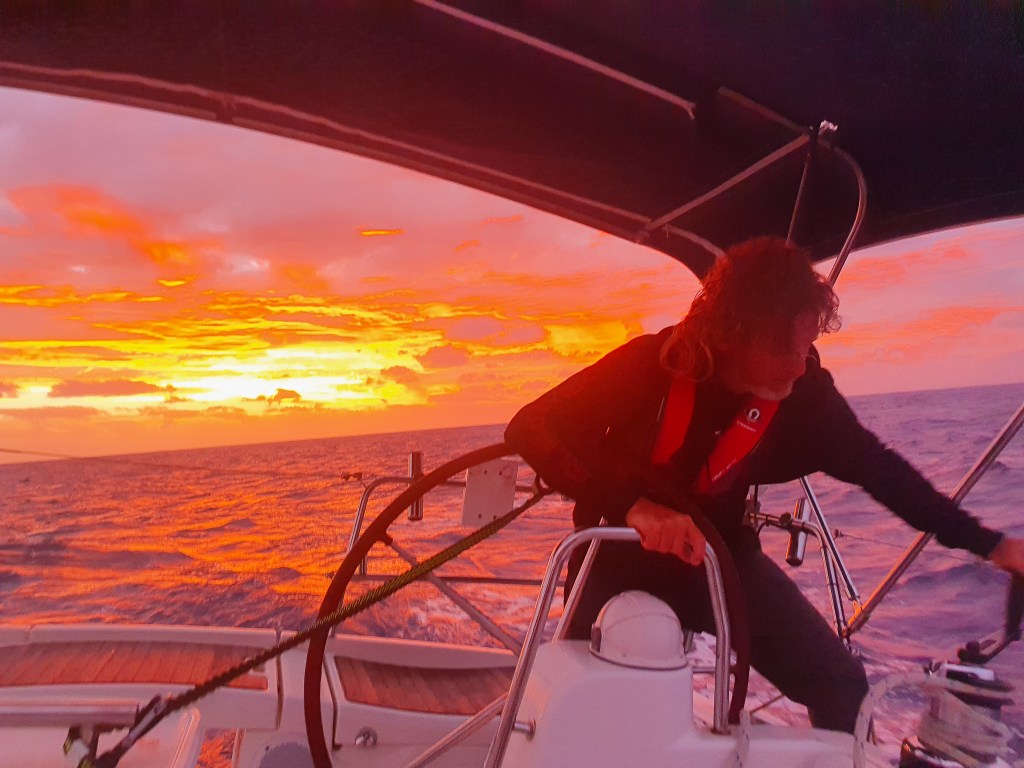
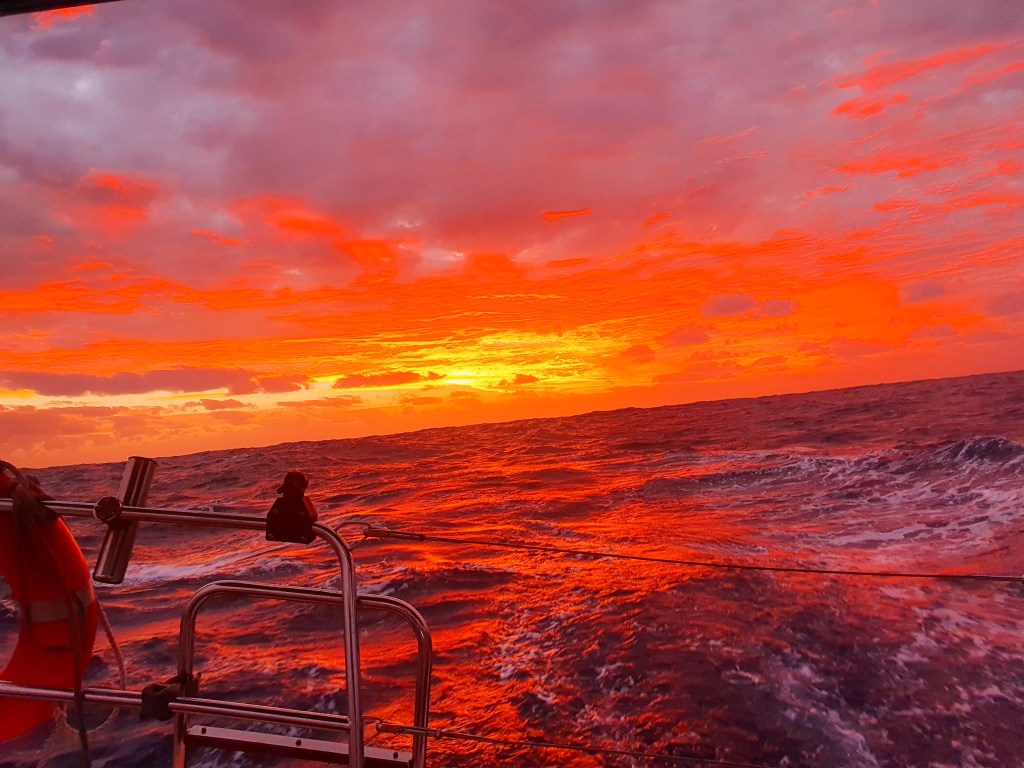
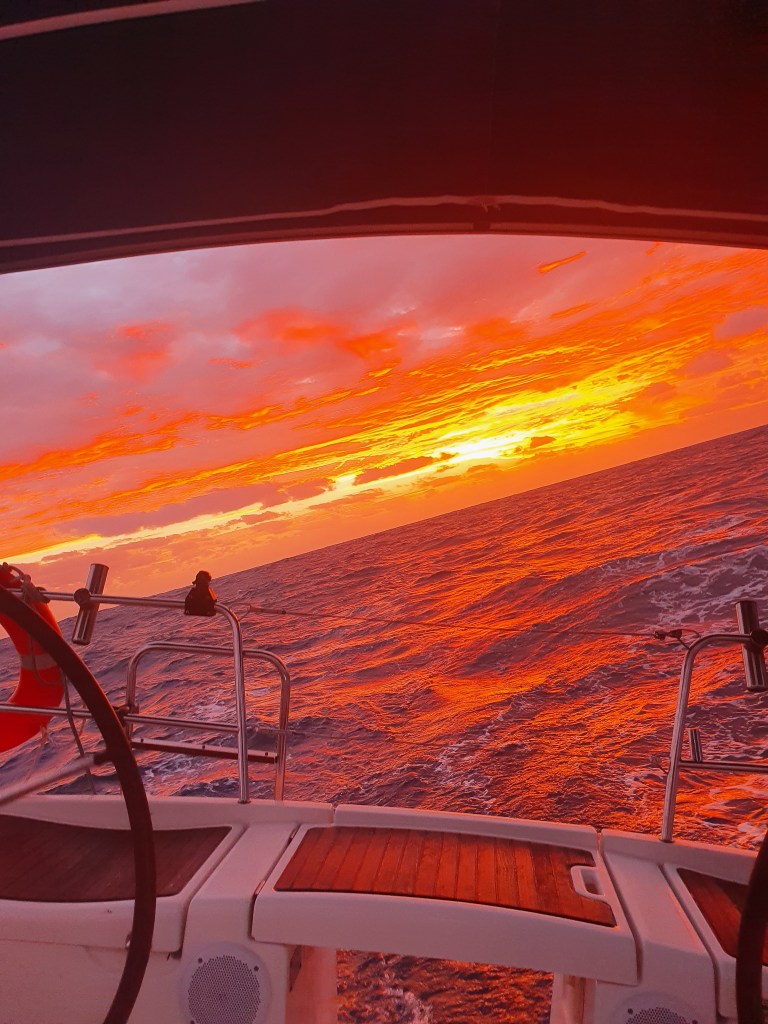
But that evening we were back to the nightmare. The original forecast had the winds swinging southerly on days three and four, which would put them at 90 degrees to our boat, a fairly comfortable angle for us to sail at. Instead, we found the updated forecasts predicting more easterly winds. Not exactly ideal for us, trying to head east. This put them closer to 30 degrees in relationship to our boat, and which means the boat is heeled over heavily. While sailing this far heeled over might be fun for short trips, being at an angle like that for long passages gets very tiresome, very fast. It’s difficult to move around the boat. It’s difficult to cook. It’s difficult to sleep, as you’re effectively standing up, with weight on your feet, even as you’re lying down. In short, it’s not the most pleasant experience. And it looked like we would have another 24 hours of it. The thought was horrific. I had to draw on all my mental strength. This is what makes you resilient, I told myself. This is what builds your strength of character. There’s nowhere to hide, so you’re gonna have to ride it out. Just suck it up, deal with it and put on your big girl pants. Grit your teeth and hang on. I told myself that what doesn’t kill you makes you stronger. It was uncomfortable, but not dangerous. I was unhappy and frustrated, but I wasn’t scared.
Matt was constantly furling and unfurling the headsail to try and find a balance. The wind wasn’t overly strong, there were no gusts over 25 knots, it was just the angle of the wind on the boat. We reduced sail so that we wouldn’t heel over so far. It slowed us down, but we didn’t care. We were happy to sacrifice speed for a bit more comfort.
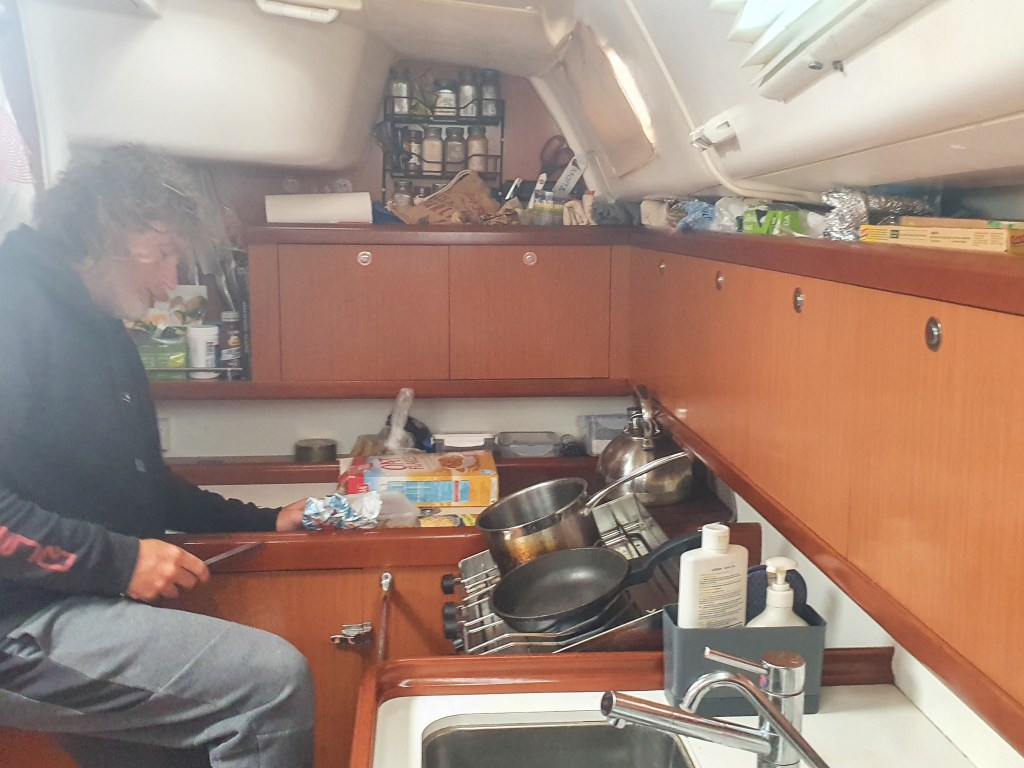
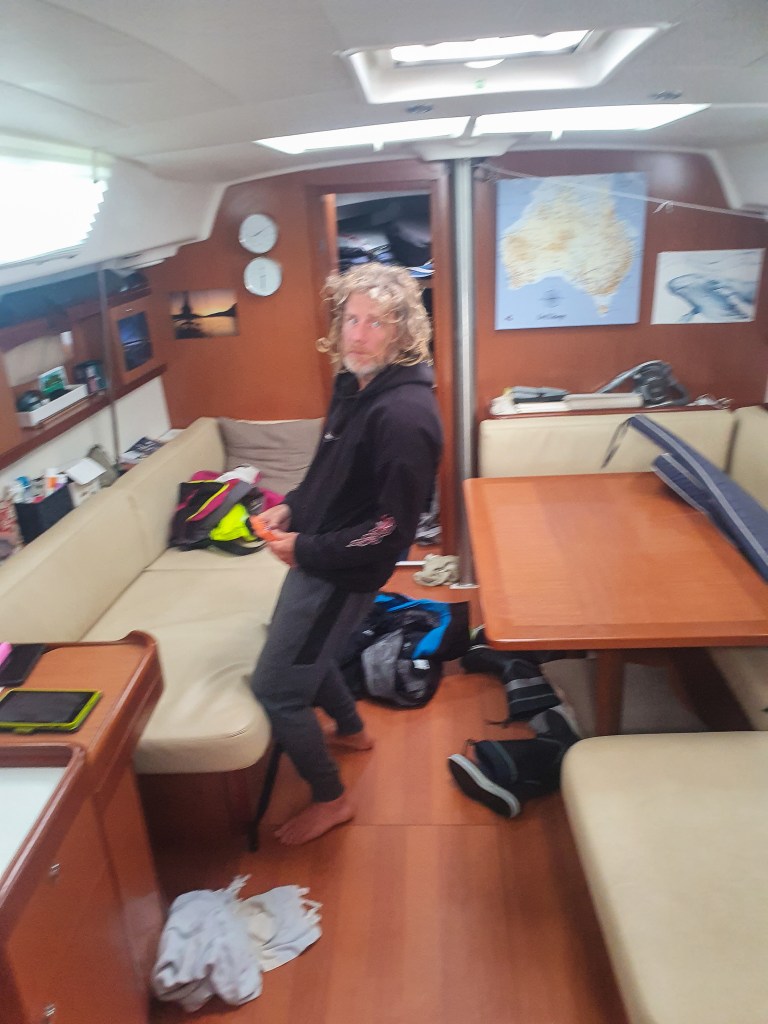
That night I sat downstairs during my shift. Matt had rigged up our tablet to be a repeater screen of the chart plotter in the cockpit, and although we couldn’t make adjustments from the tablet we could now monitor the chart plotter from the warmth of the cabin. It made a huge difference to the comfort of our night watches. I’d never before been able to stay below for long without getting queasy, but I managed fine. Maybe there is something to the belief that the longer you are at sea, the more you adjust. Perhaps I was finally adjusting?? Was I becoming a sailor?! Regardless, I kept taking my seasickness pills!! As I popped my head up into the cockpit on regular intervals to check for lights, I was thankful. There was no moon or stars, just a thick blackness and a howling wind. It was good to be in the warm cabin.
Day Four brought a new level of crap. 30 knots blowing right on our nose. We had been sailing and making good progress, but now we dropped the headsail and turned the motor on. It was cold and overcast and we were smashing into the big seas. ‘Sail, they said, it’ll be fun, they said,’ I commented wryly to Matt. It soon became clear that with the changed weather conditions, our reduced speed meant that we wouldn’t be arriving at St Francis Island or Ceduna before dark and we would be out at sea for a fourth night.
Thankfully, after a few hours, the wind shifted back to the south and we again had a favourable wind angle to sail. Overnight the winds calmed and we had light southerlies for our sail into Ceduna. I was on watch at 2.30 am, guiding us to the channel and Matt joined me at 5.30 am for our final approach. It was cloudy and overcast and the sunrise was highly unimpressive, but we had calm and still conditions as we finally puttered into Murat Bay in Ceduna and dropped our anchor. How good it felt to arrive! We had done it! We had sailed non-stop for 96 hours and crossed a 600 nautical mile stretch of water. Unbelievably, we turned the motor off 96 hours to the minute from when we’d turned it on in Arid Bay.
My phone had began pinging as we neared Ceduna. Ping, ping, ping. Not only was there the normal number of missed messages and calls from eight days without reception, but there was also plenty of extra birthday messages for me. Once safely anchored, we began making calls and returning texts to family and friends, letting them know that we’d made it safely across.
It took a little while for us to process the enormity of what we’d accomplished. Sailing across the Great Australian Bight, a passage that had seemed so far out of the realm of our ability, just two years ago when we began this circumnavigation. It was a definitive indicator of just how far we have come as sailors and how effective and important our teamwork has been. We were both incredibly proud of ourselves and each other. We are now sailors!
And how would we sum up the experience? Matt says, ‘The trip sure had its moments, but overall it was a great crossing.’ My own take is is to say that in polite company I would refer to it as a ‘lively’ crossing. I’m glad to have done it, but I won’t be putting my hand up anytime soon to repeat the experience.
Many people have asked if we were scared out there. I can honestly say that at no stage, no matter how uncomfortable we felt, were either of us scared or worried for our safety. As Matt says, this is the reason we bought a boat that would far outlast our own breaking points. Cool Change was never stretched beyond her means and in fact could have coped with a lot more. But our natural inclination is toward caution. There were times that in order to maintain the speed predictions from Kingsley the boat was heeled right over and the rigging was shaking with strain. At these times, we made the decision to adjust our sails to bring the boat more level, which slowed us down, but gave us less concern about the possibility of damage. We definitely could have maintained certain speeds but so far from any help we were reluctant to stress the boat, just in case. It was not a race, and it didn’t matter how long it took us.
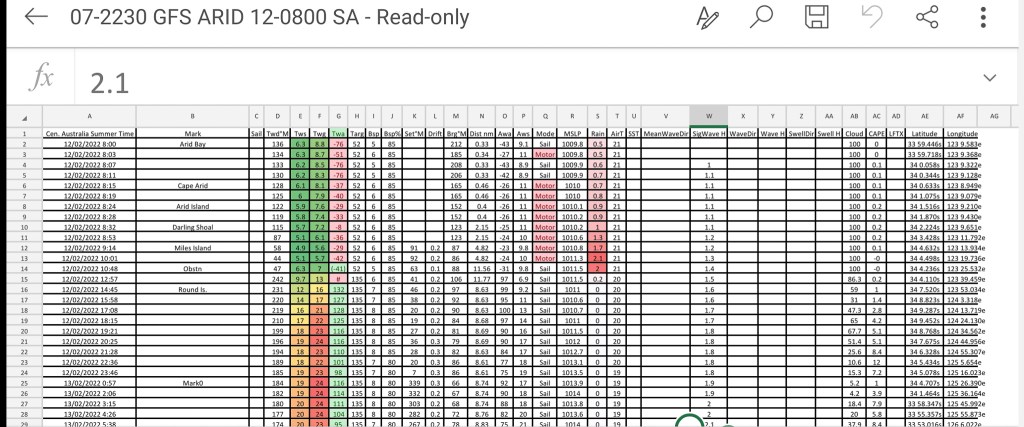
Having the assistance of a weather router was invaluable. The detail provided by Kingsley was incredibly accurate and detailed and a huge source of reassurance for us. It enabled us to embark on this trip, something that we’d been apprehensive about, with much more confidence as it eliminated the big unknown of the weather. The conditions in the first few days were pretty accurate and aligned with the original forecast and route plan, but as we ventured into days three and four we encountered more variability. The daily Excel spreadsheet that Kingsley emailed Matt via the SAT phone enabled us to stay up to date with changes in weather predictions and to understand the conditions we would be facing. To be forewarned is to be forearmed and so the daily updates helped us to stay mentally and physically prepared for the upcoming conditions.
And so, just like that, it seemed, we found ourselves in South Australia. We had crossed the Bight and survived and were now ready to cruise through the final state in our circumnavigation of the mainland of Australia.
Achievement does not require extraordinary ability. Achievement comes from ordinary abilities applied with extraordinary persistence.
Ralph Marston
 Cool Change