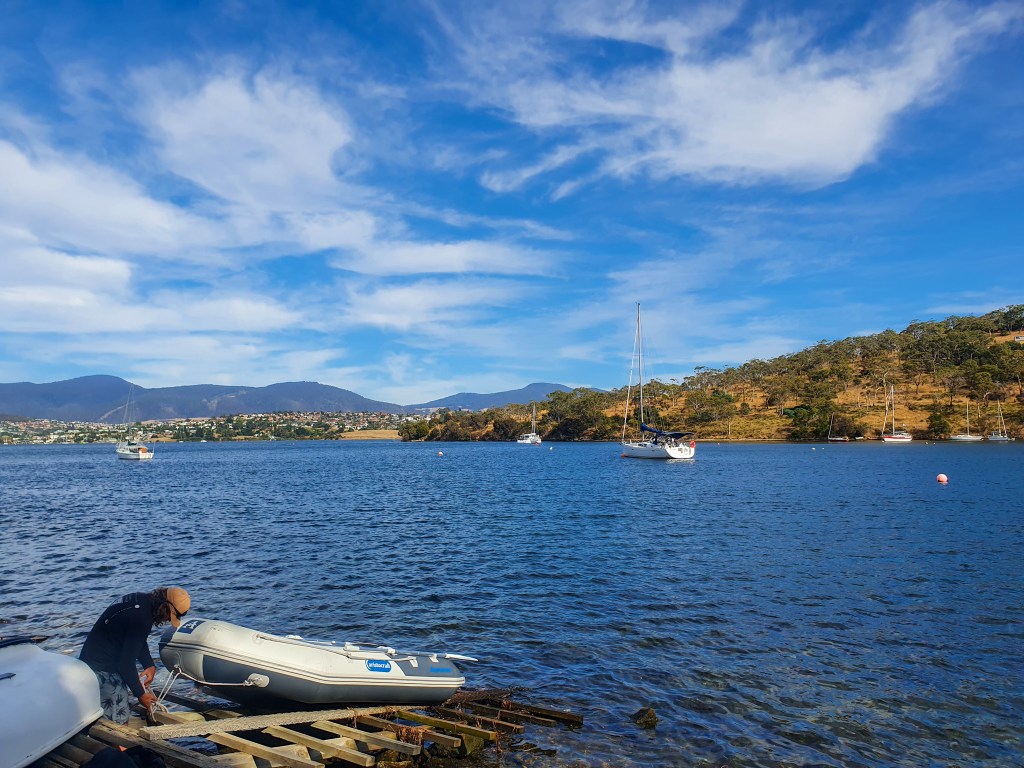
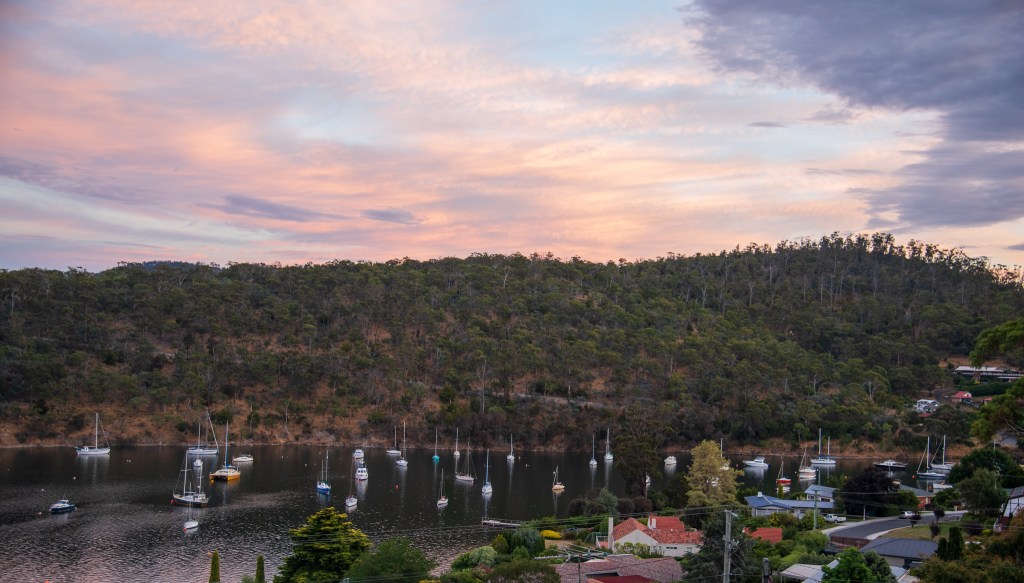
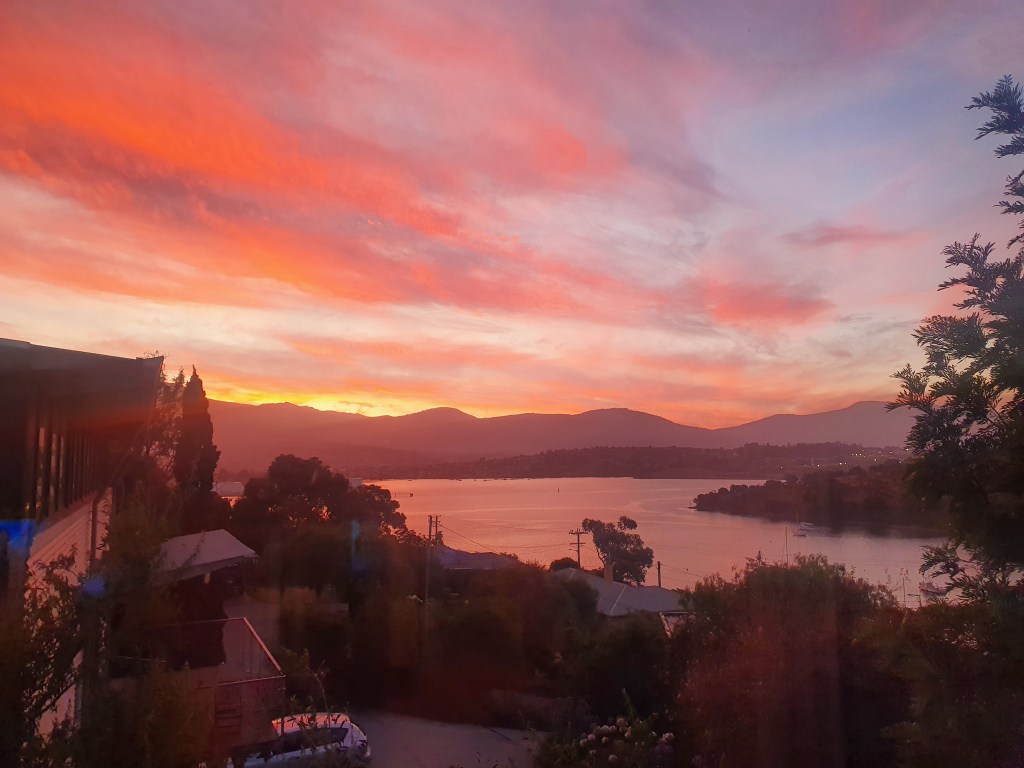
With Cool Change tied up safely on Chris and Anne’s mooring, we spent a week staying in their house, enjoying the luxuries of life on land and exploring Hobart and its surrounds.
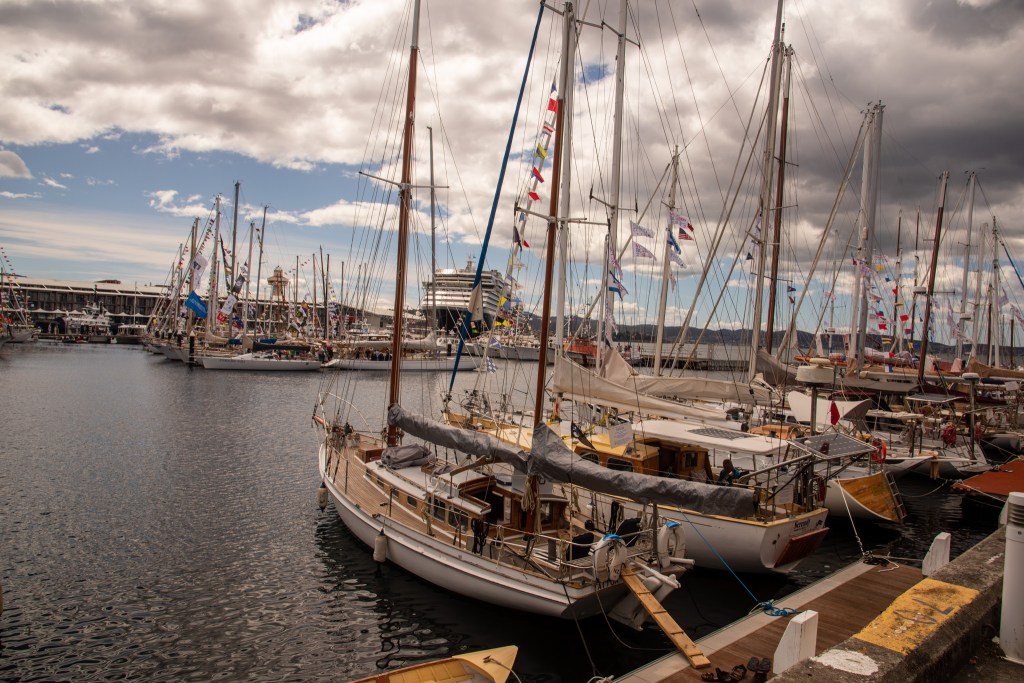
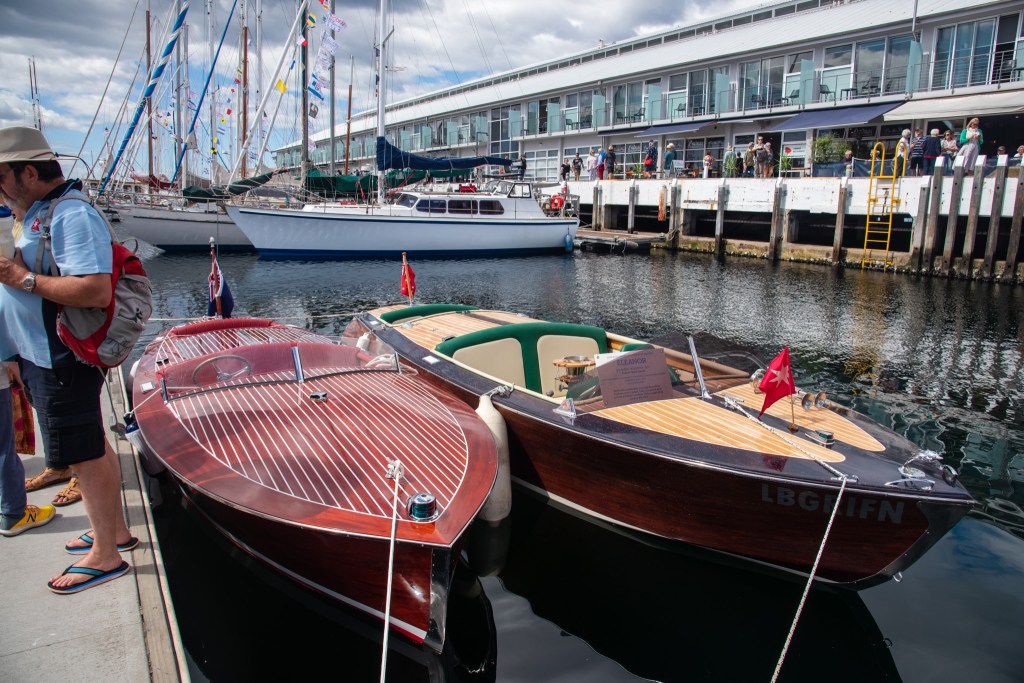
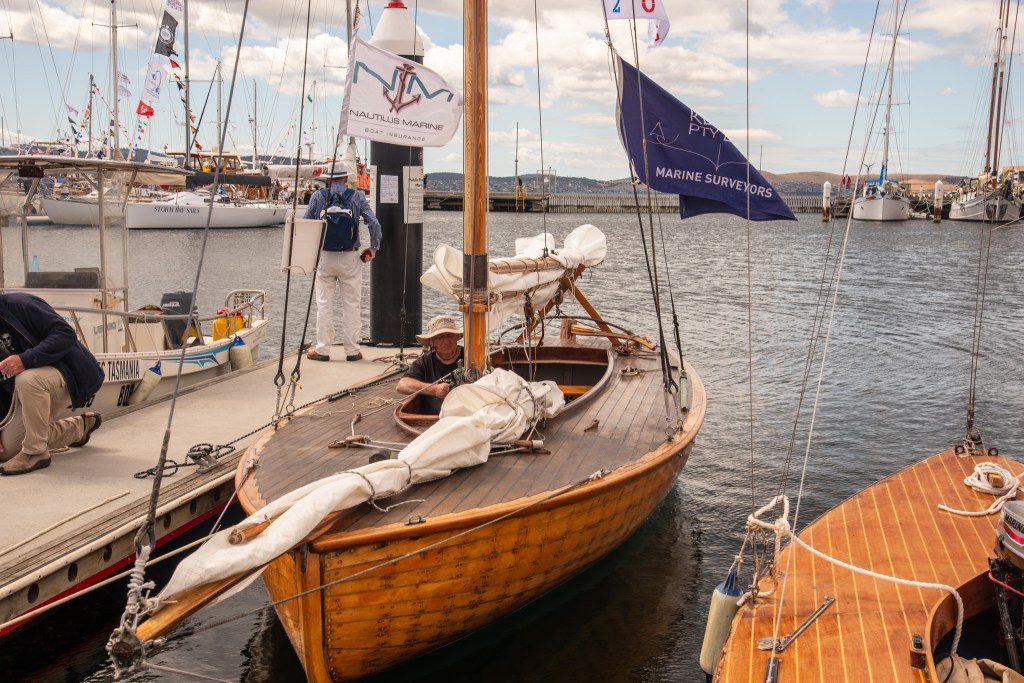
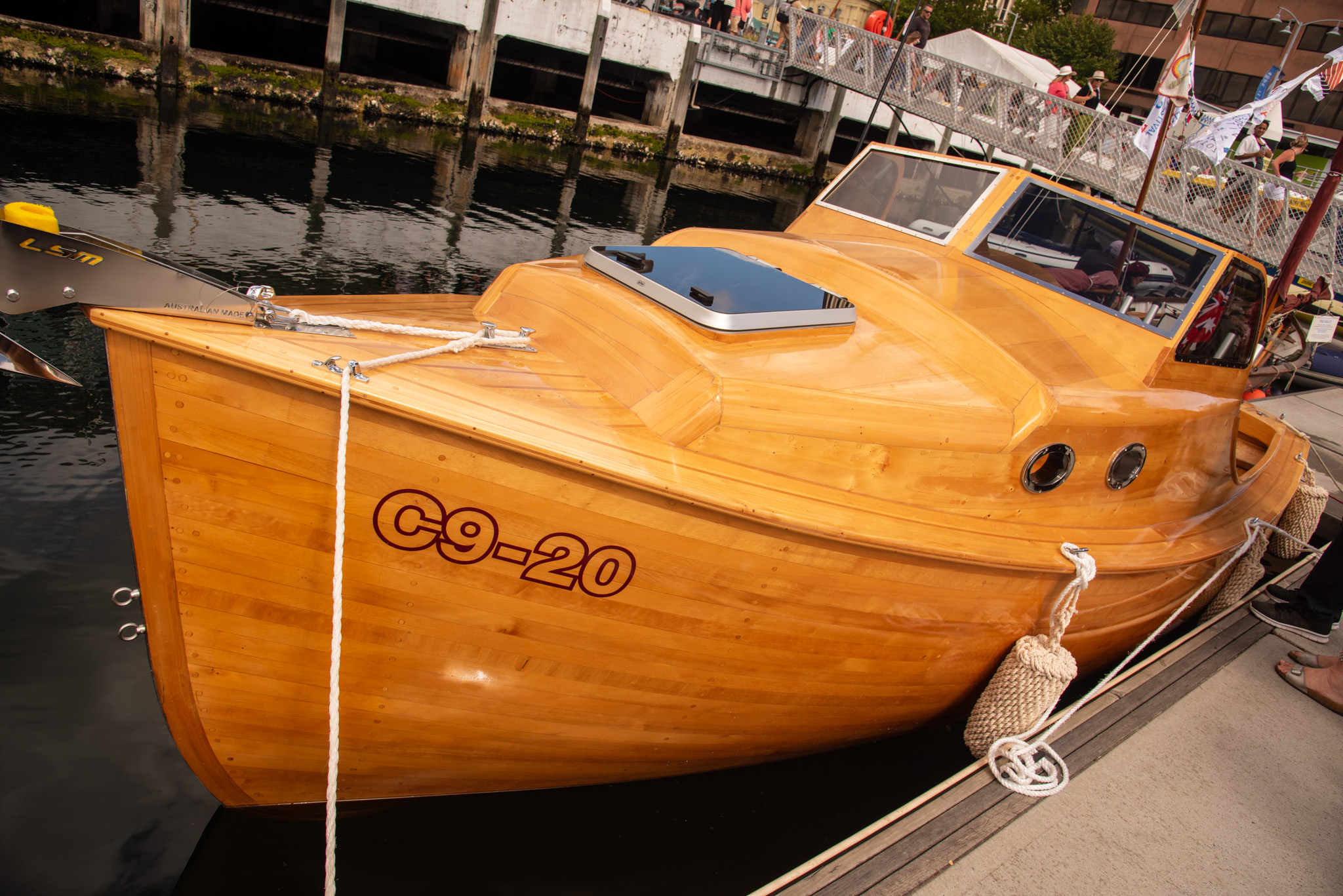
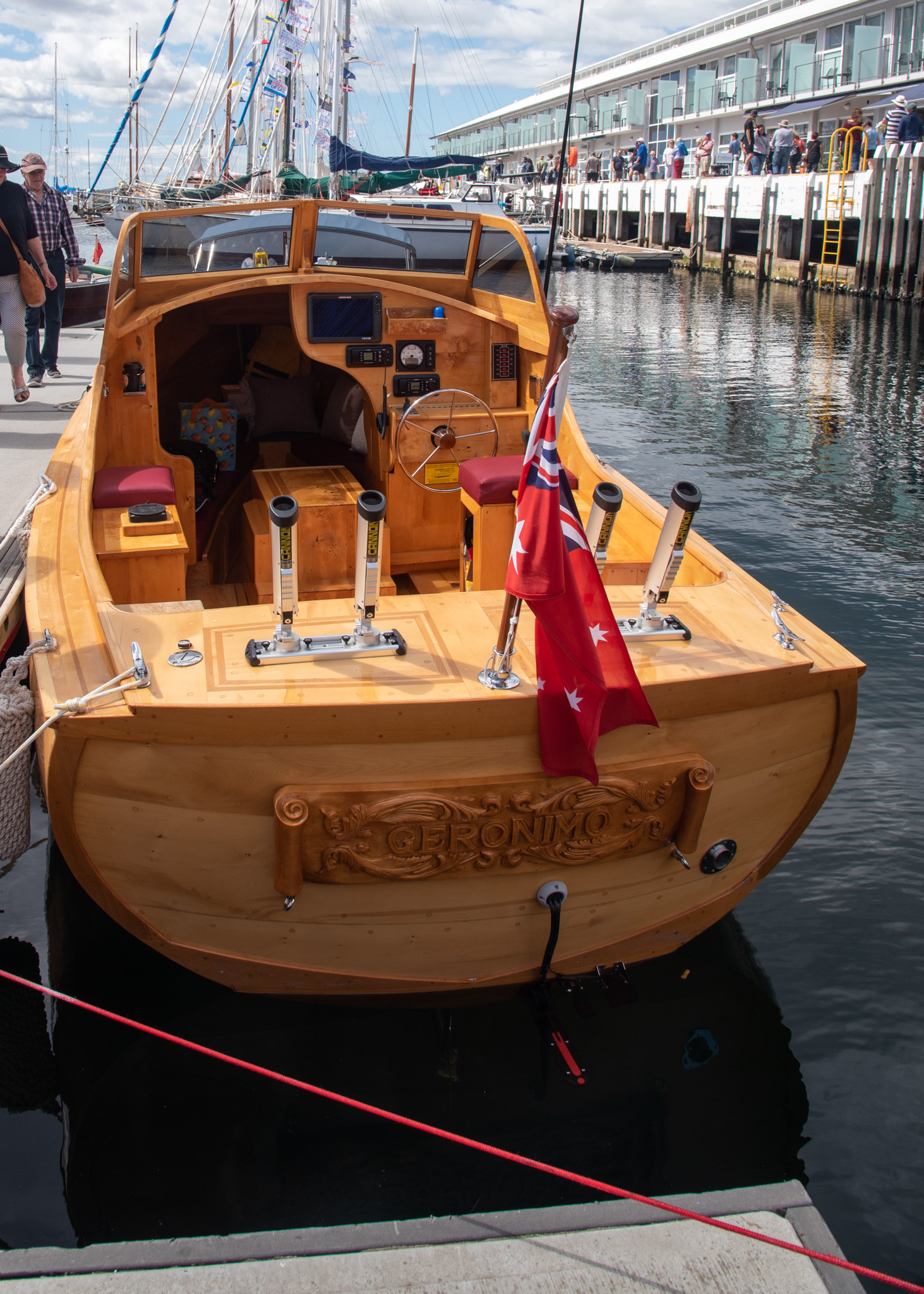
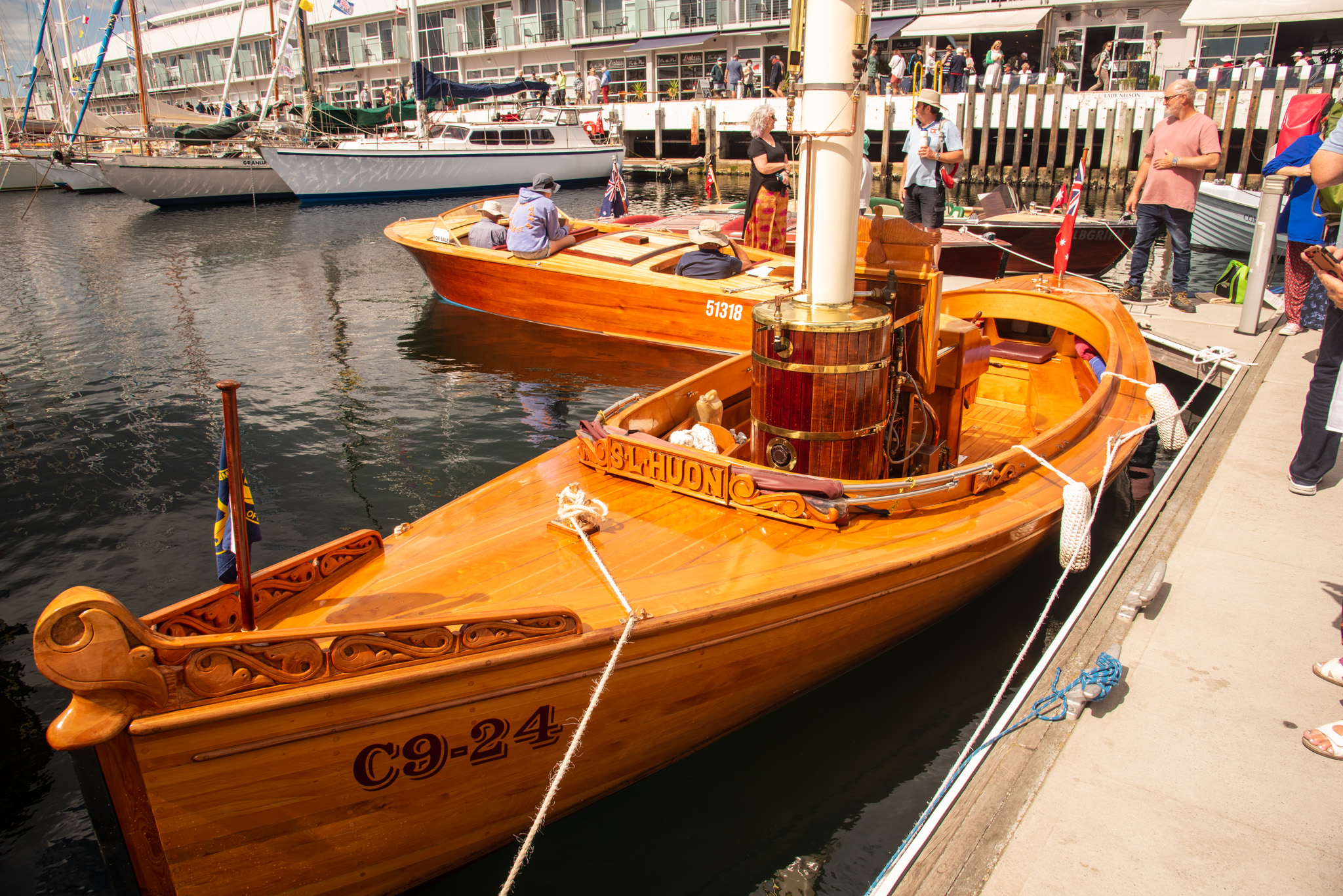
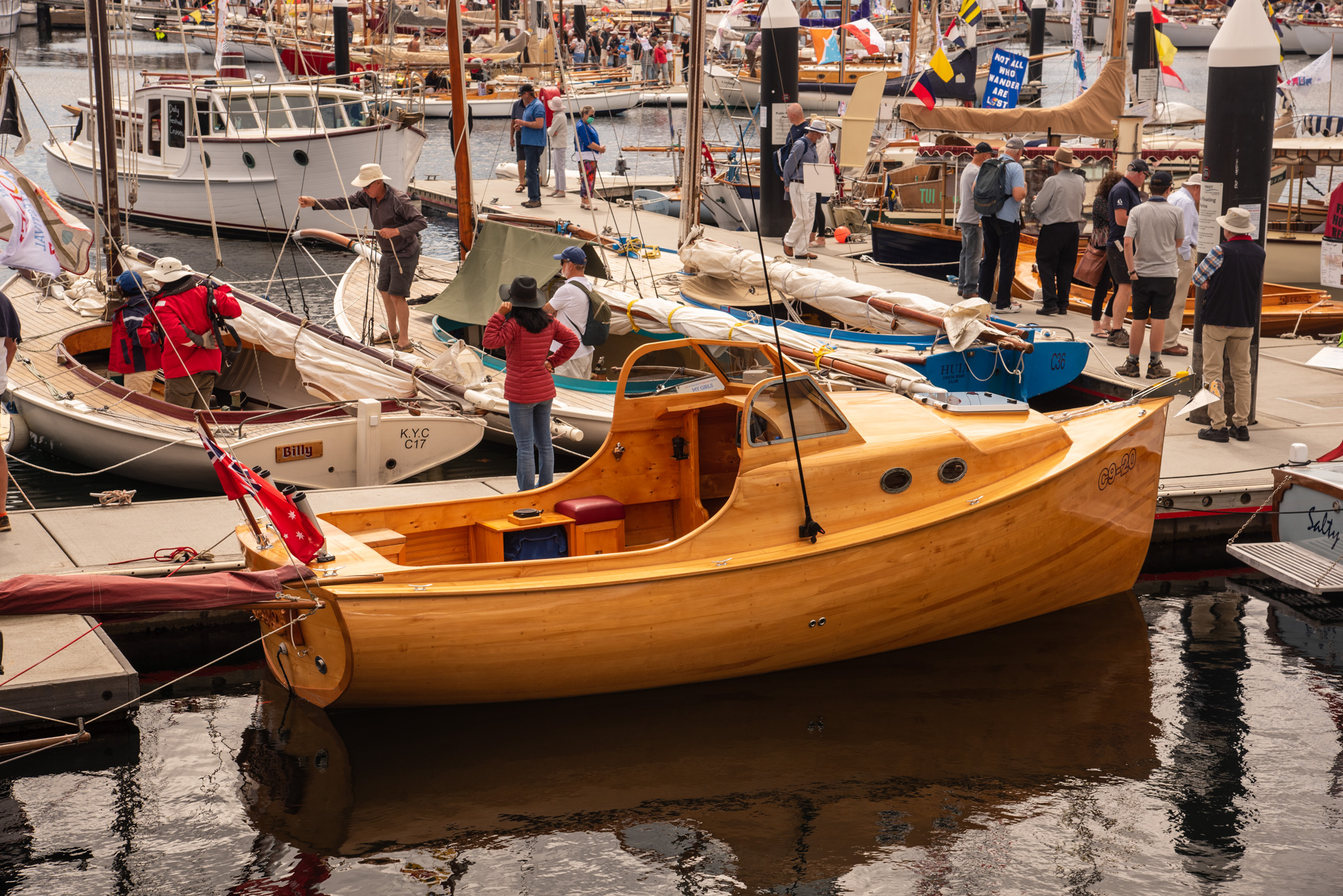
First up was the Wooden Boat Festival, which we had arrived just in time for. The Hobart waterfront had been turned into all things wooden. Boats, boats and more boats, of all sizes, shapes and ages were lined up together. We wandered along the docks, marveling at the skill and knowledge on display. Knowing just how much effort the small amount of wood on our yacht took, Matt was especially impressed by the work and commitment needed to restore and maintain these wooden boats.
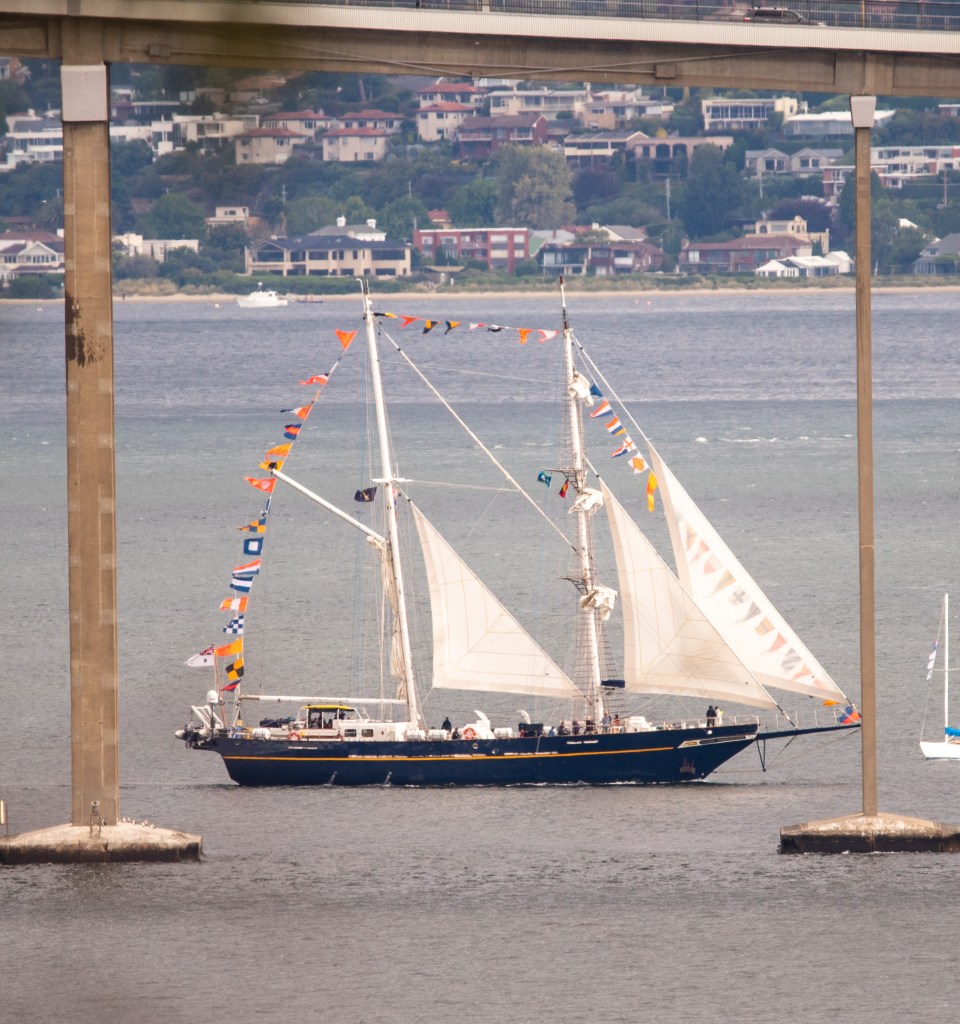
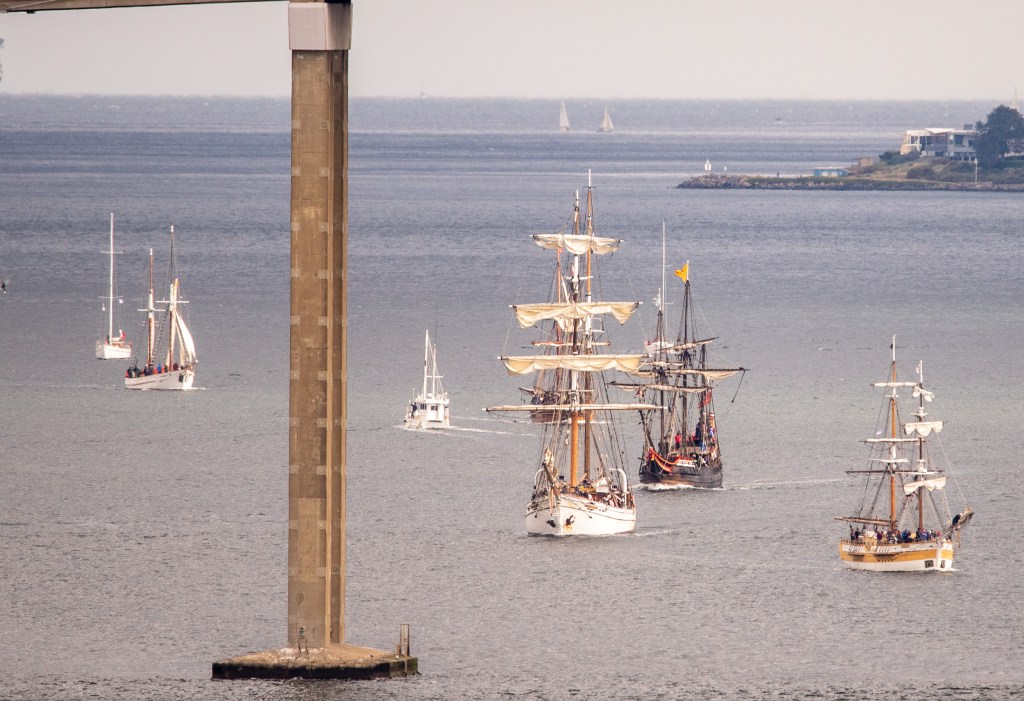
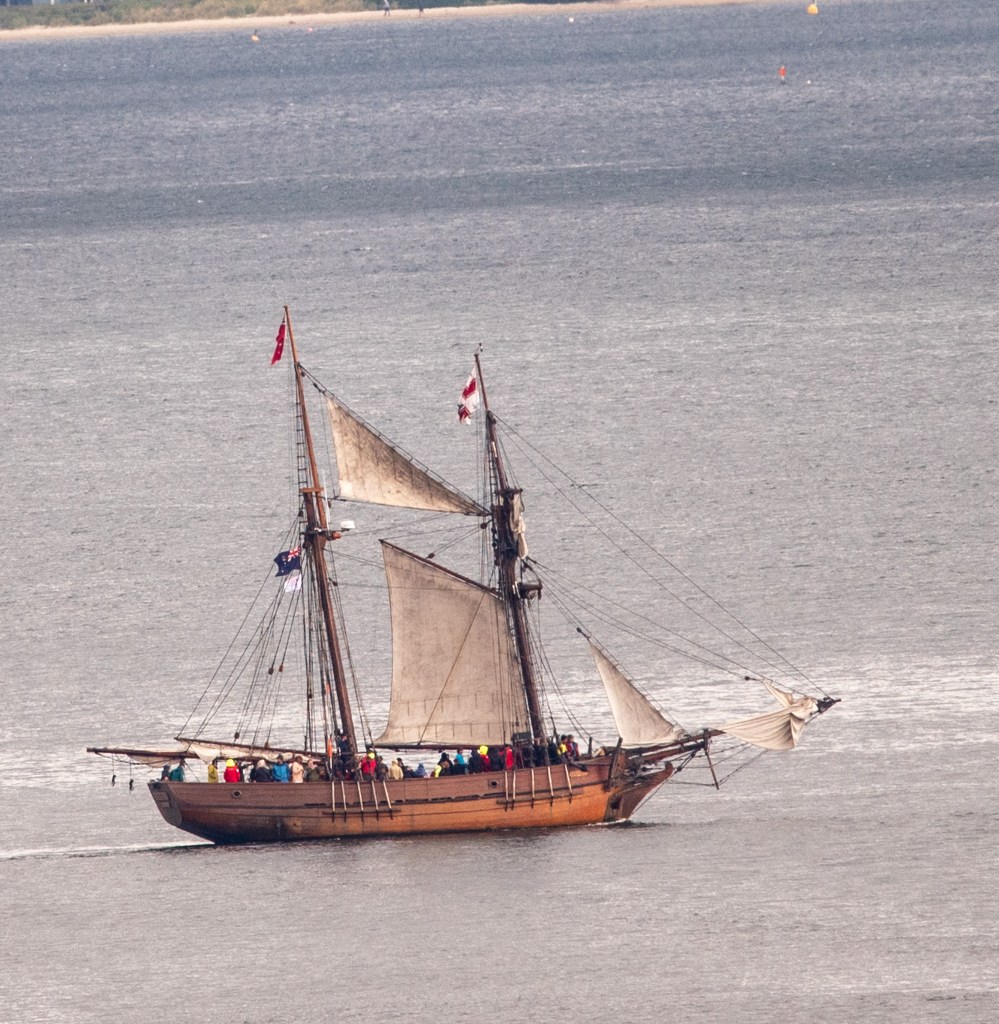
The eleven Tall Ships, which had come from all over Australia for the festival were an amazing sight. The mass of rigging and maze of lines seemed incredibly confusing to me. It was hard to believe that these were the vessels that our ancestors had sailed all the way from Britain on several hundred years ago. What on earth had life been like?! It boggles the mind!!
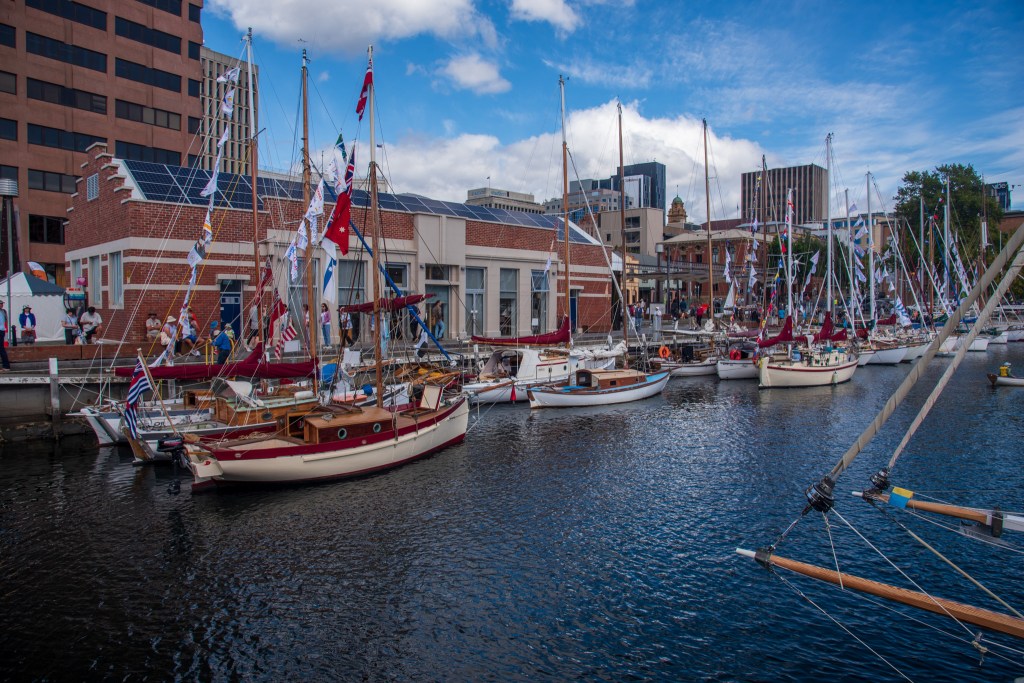
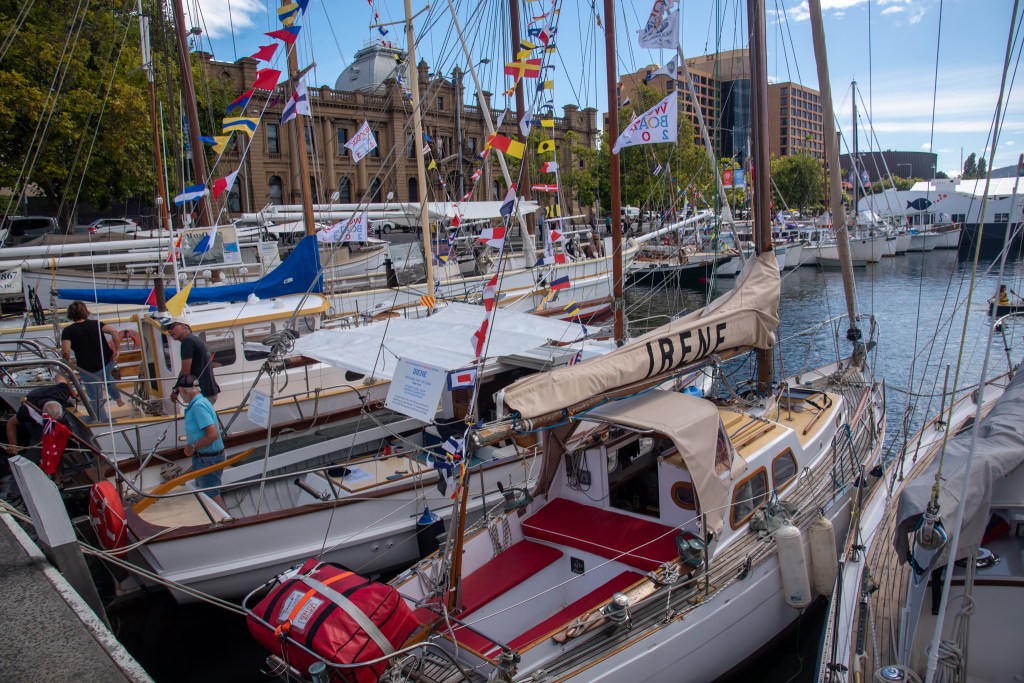
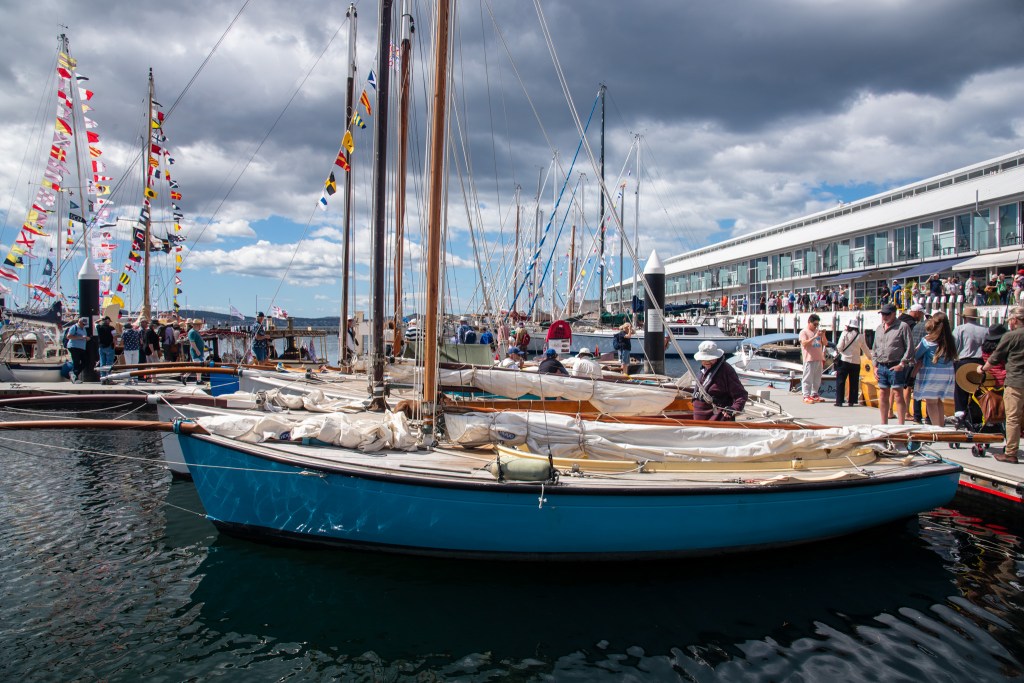
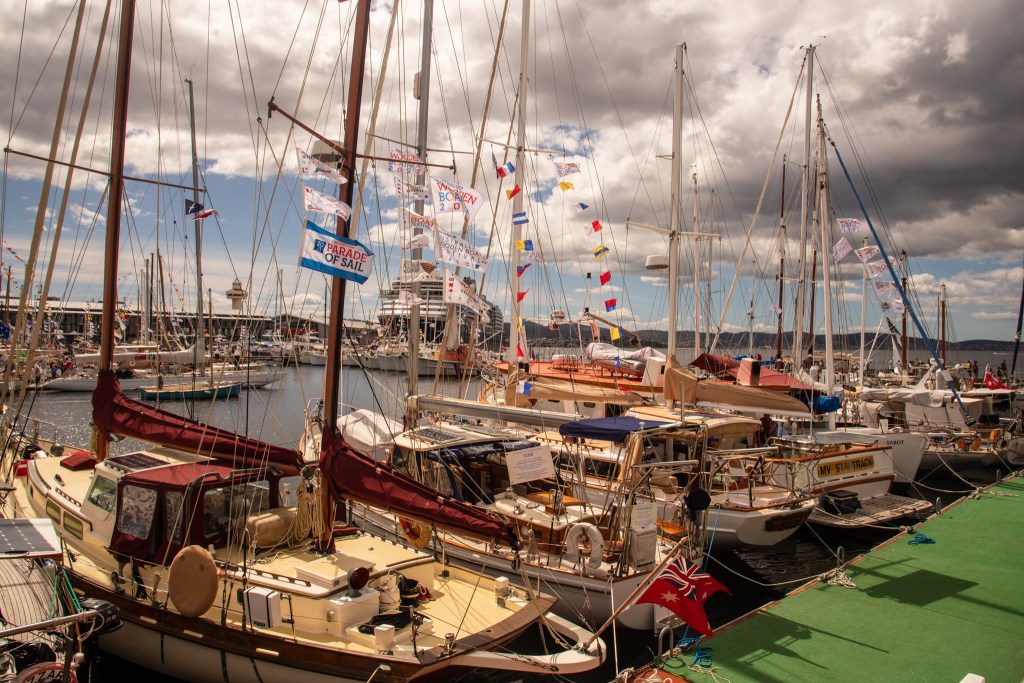
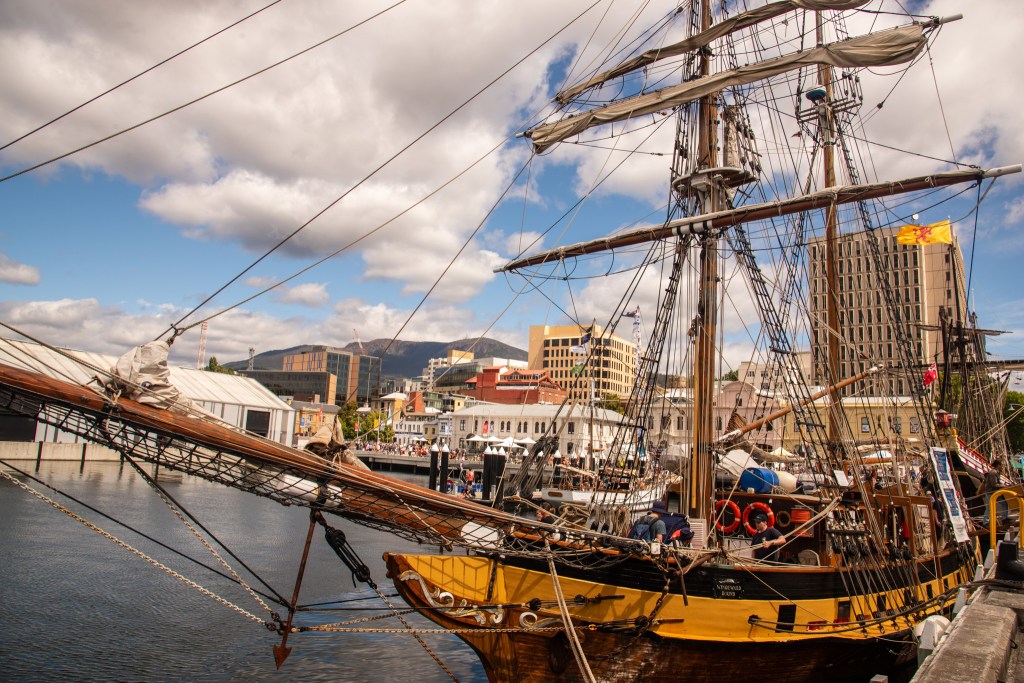
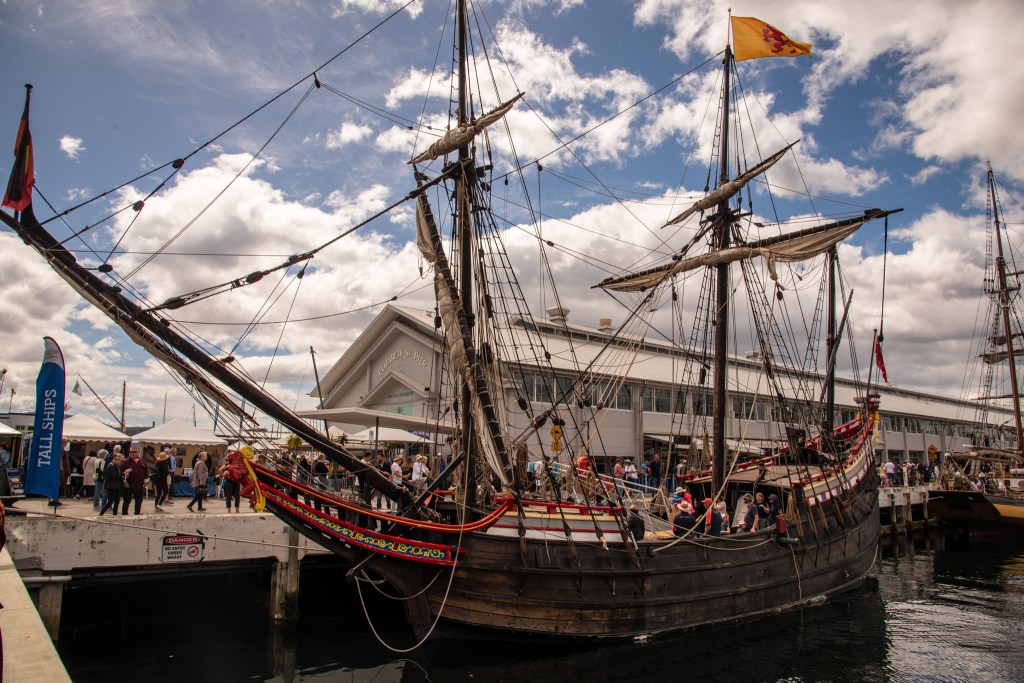
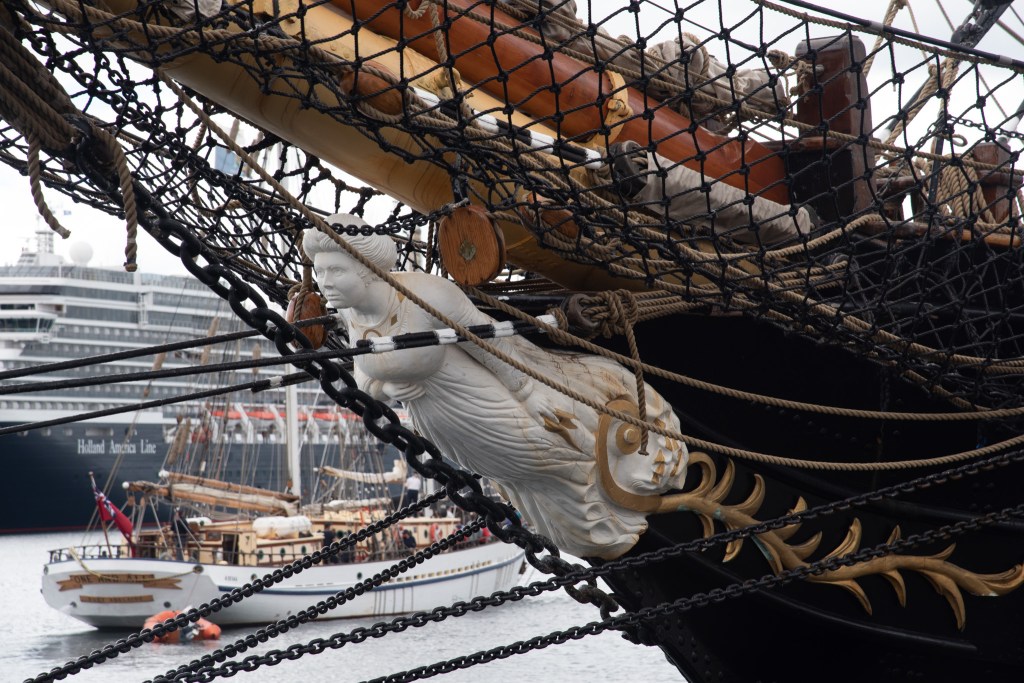
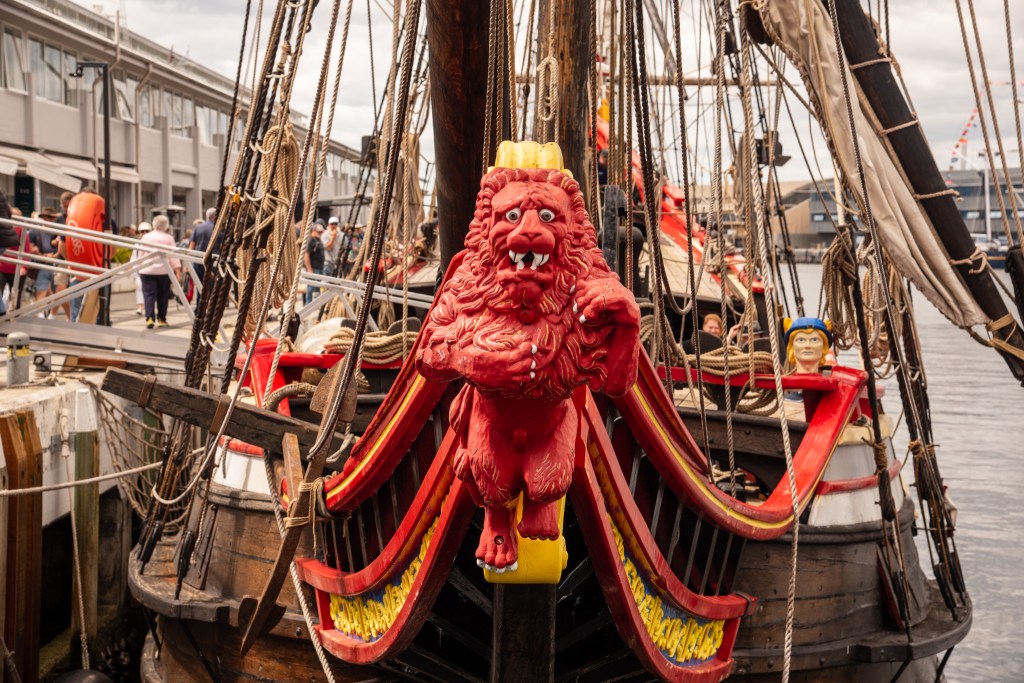
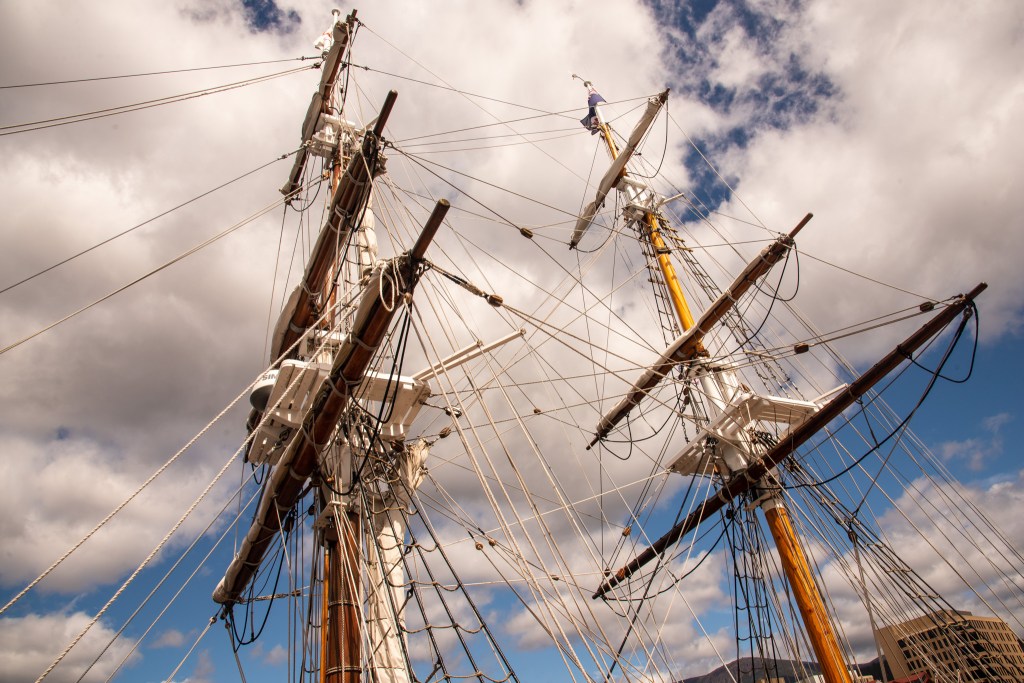
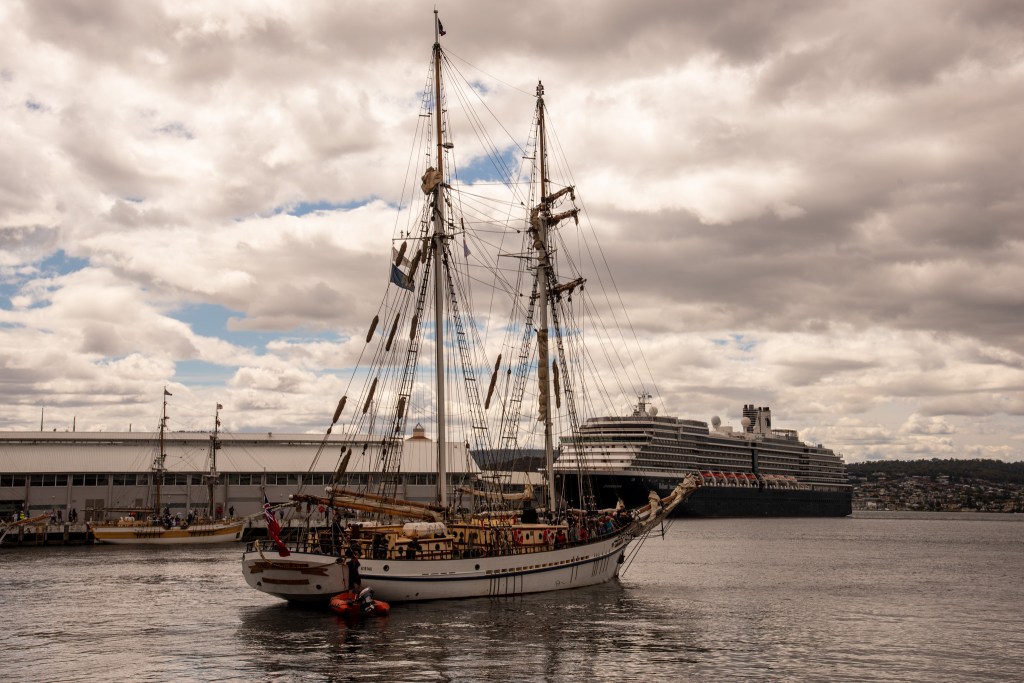
That afternoon we watched a procession of Tall Ships make their way out of Hobart and up the Derwent River. We were viewing them from a hill near Chris and Anne’s house and Matt took these photos with his long camera lens.
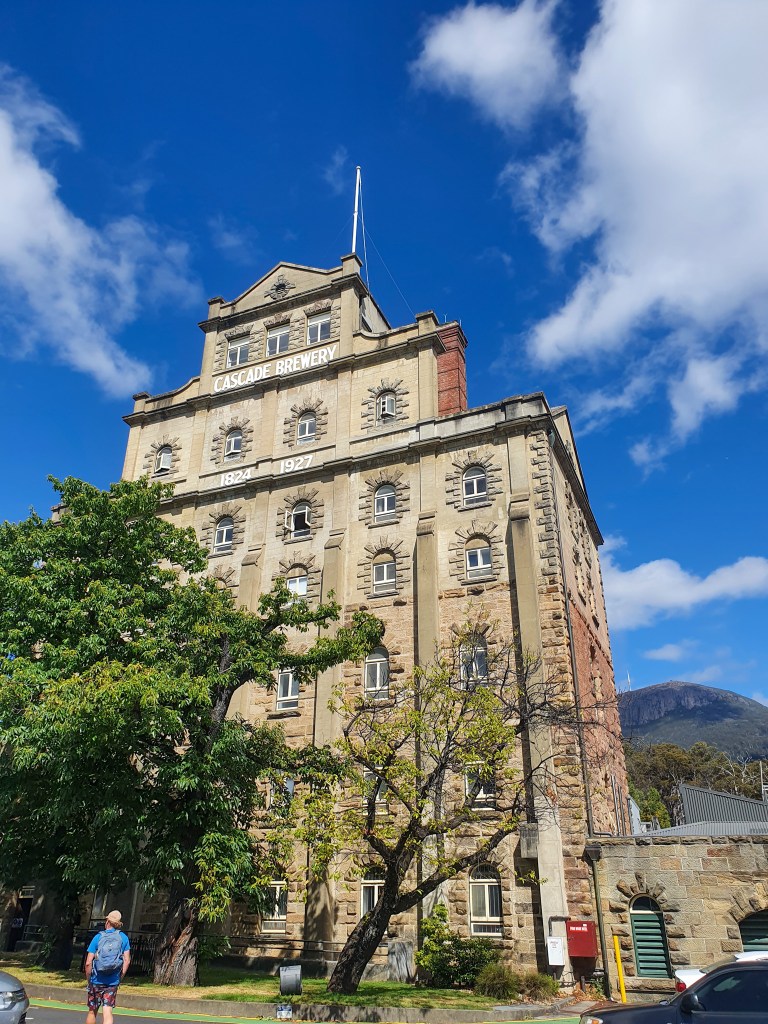
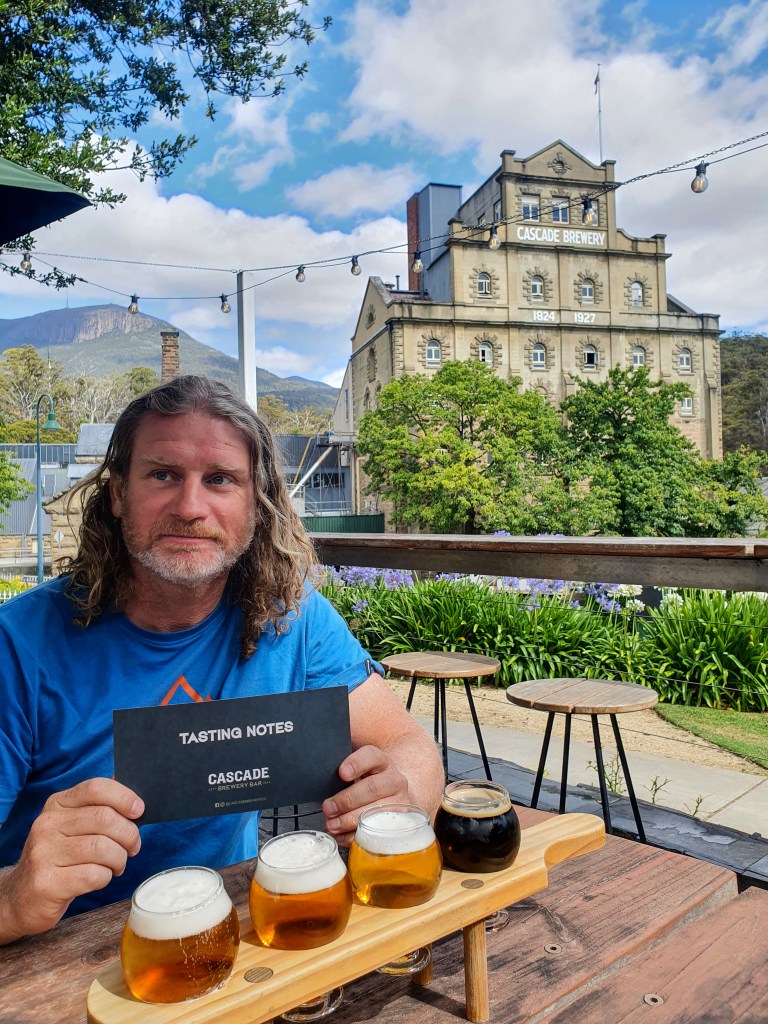
We spent a day being tourists in Hobart. Beginning with a tasting paddle for Matt at Cascade Brewery, we walked along the pretty Hobart Rivulet, toured the Female Factory, had lunch in an Irish Pub on Salamanca and wandered through town.
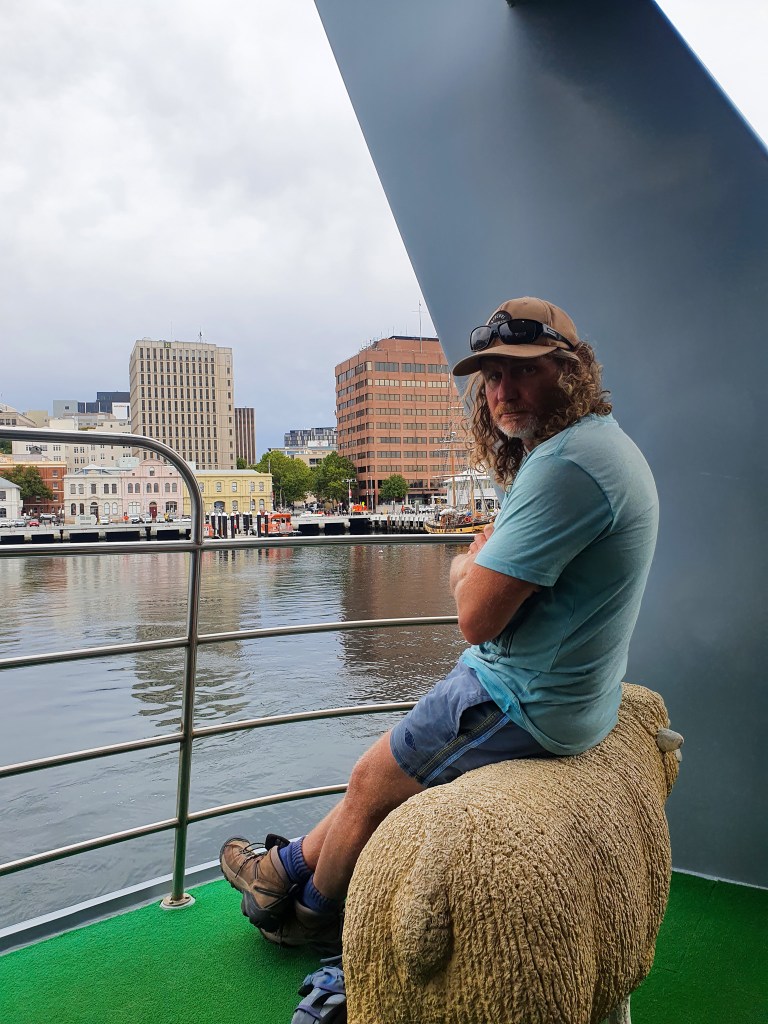
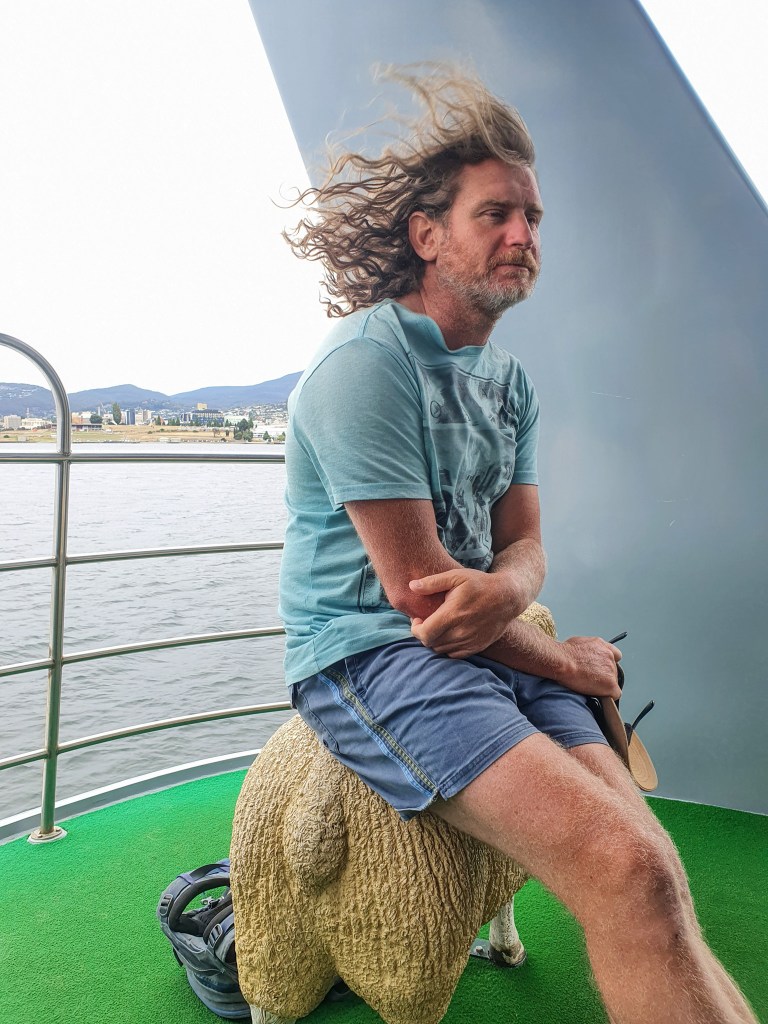
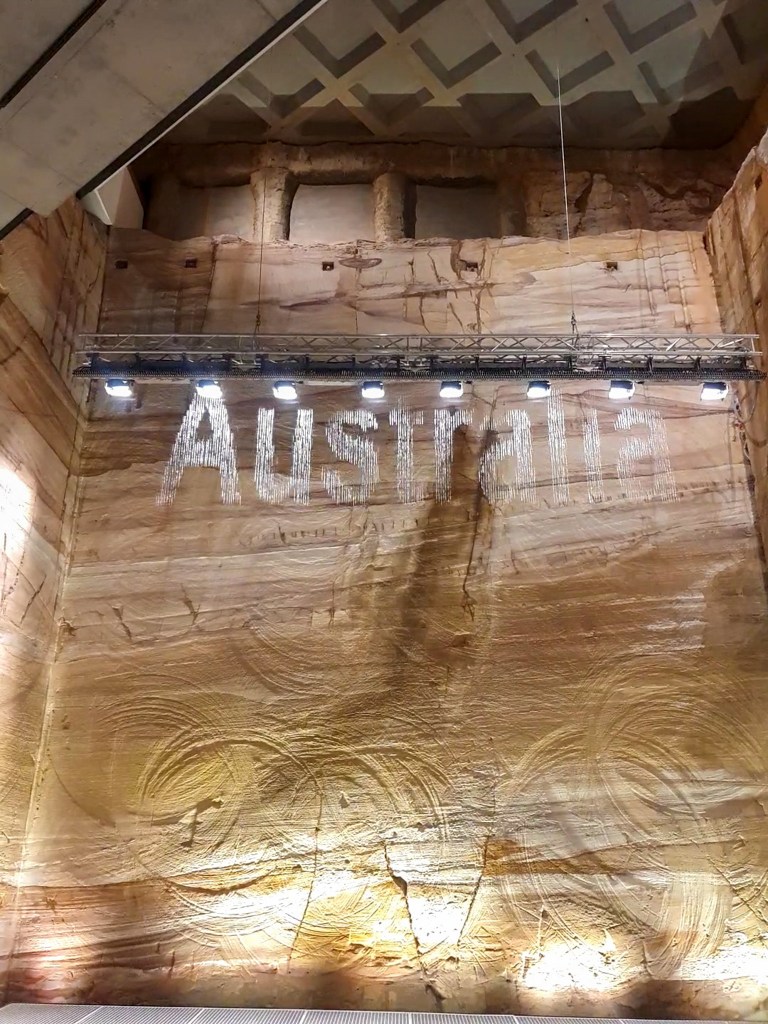
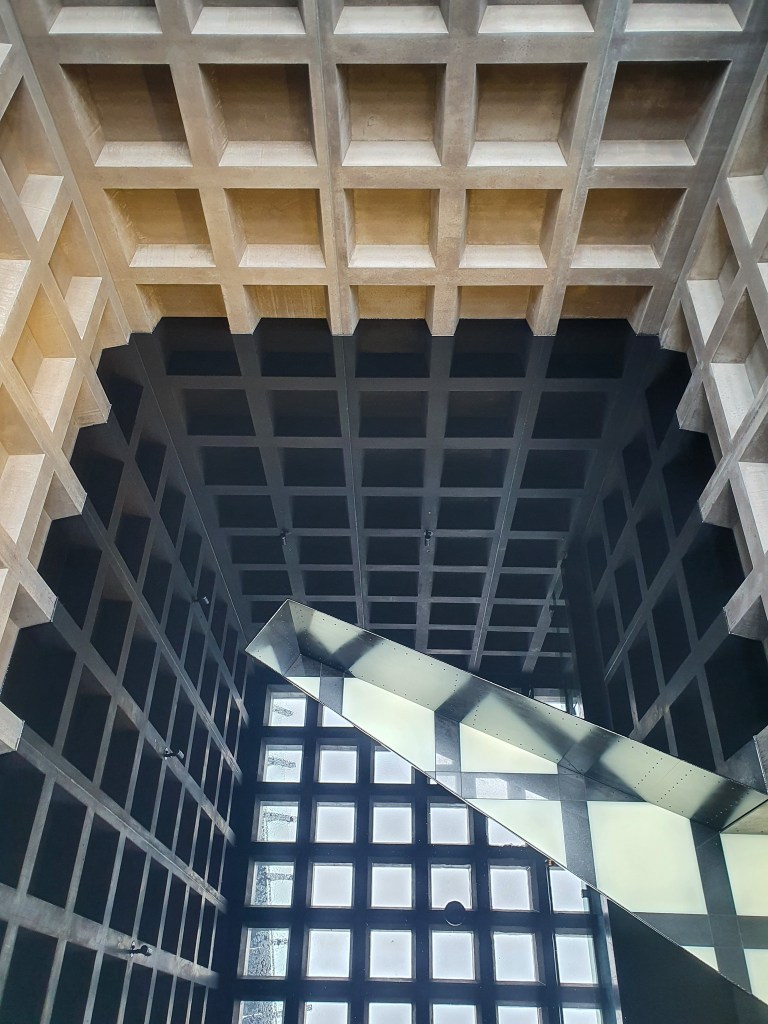
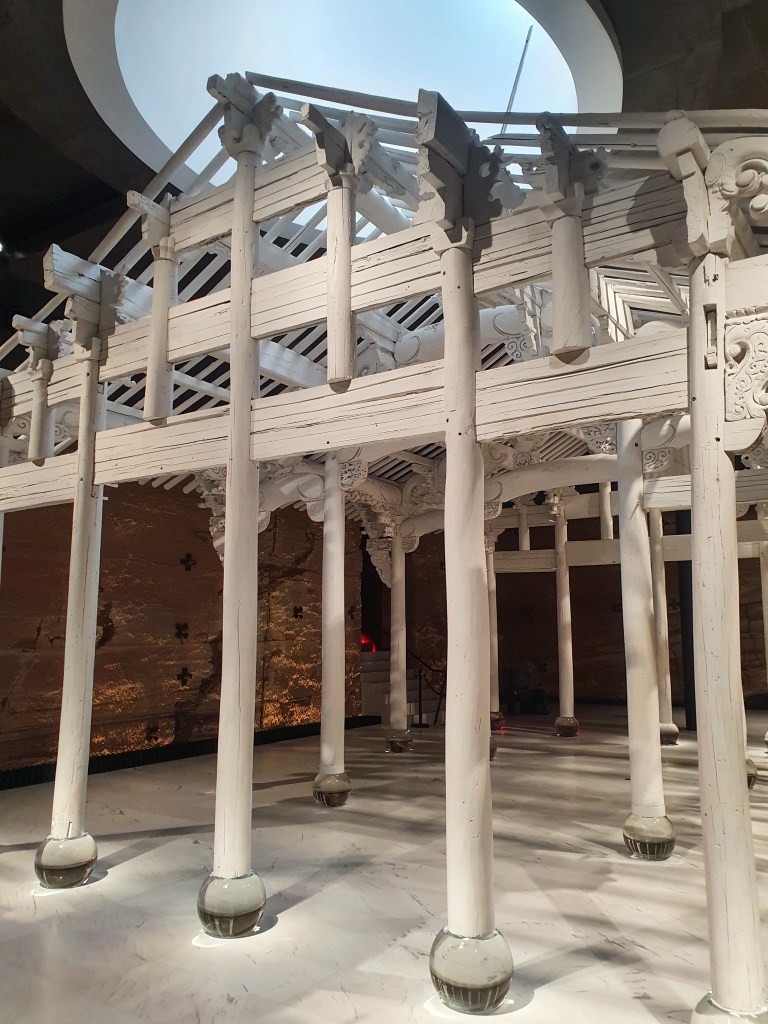
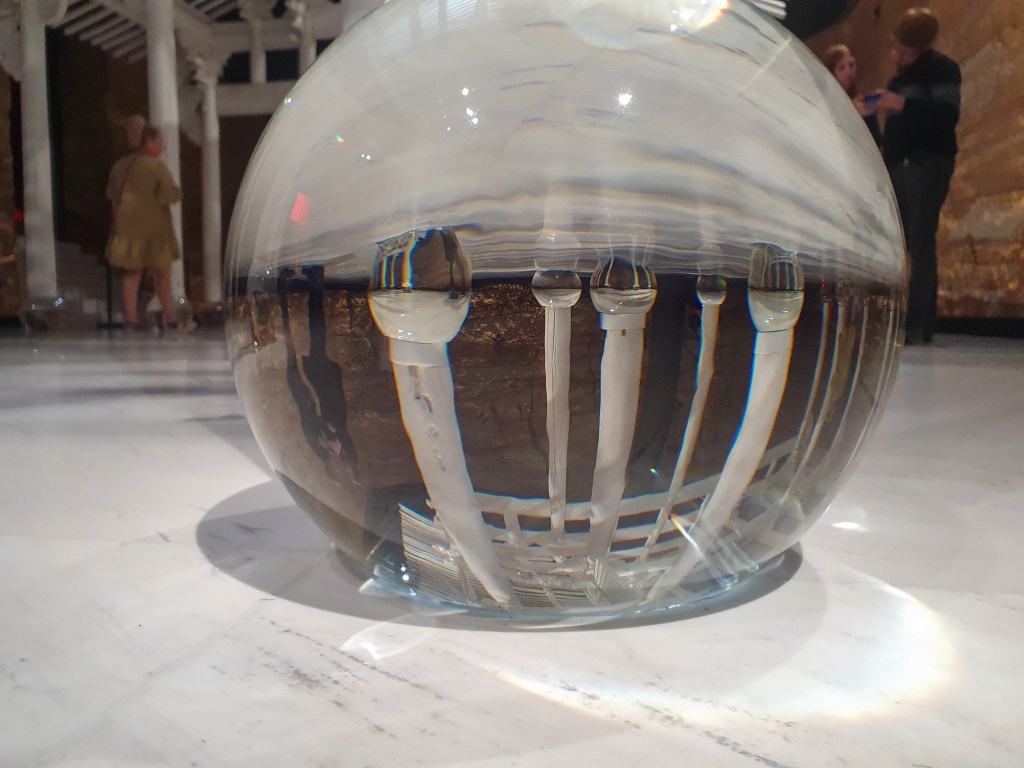
Although we’d been to MONA (Museum of Old and New Art) on a previous trip in 2015, we decided to visit again. Catching the quirky ferry over, (yes, that’s Matt sitting on a sheep), we spent a couple of hours wandering the controversial museum. While the building itself is pretty cool, having been carved into the sandstone cliffs and lying twelve metres underground, we were both less than impressed with most of the exhibits. A mixture of modern art and antiquities, some were interesting, some unusual and some plain abhorrent.
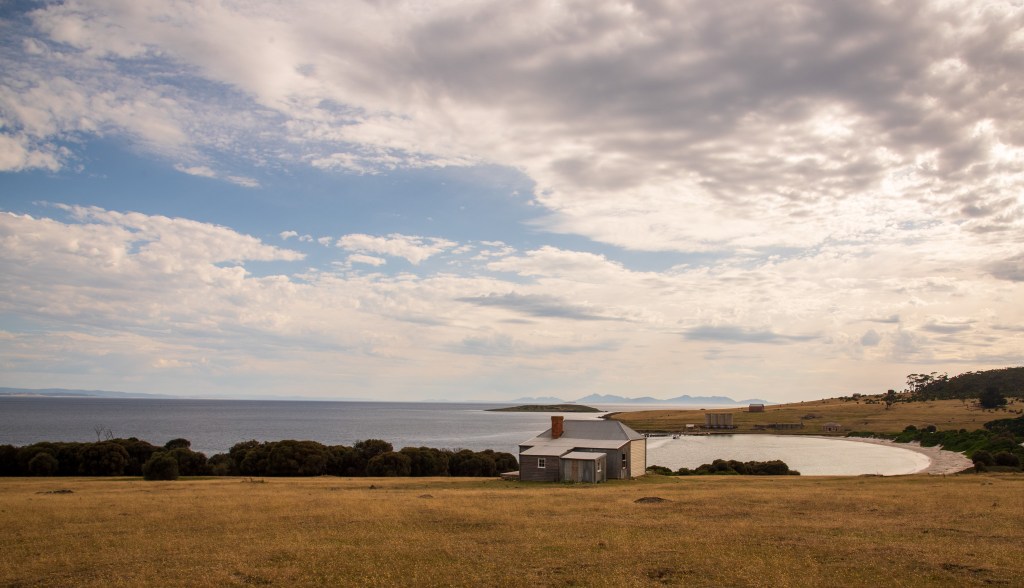
Another day, we headed back up the east coast for a day trip to Maria Island. Combining beautiful scenery, a wide array of native wildlife and a rich and varied history, Maria Island is a tourist destination with something for everyone. We hadn’t had the right conditions to anchor in the main harbour and explore the island, so we decided to do a day trip from Hobart. Taking a bus for the seventy minute drive to Triabunna, we then jumped on the ferry to cross over to the island.
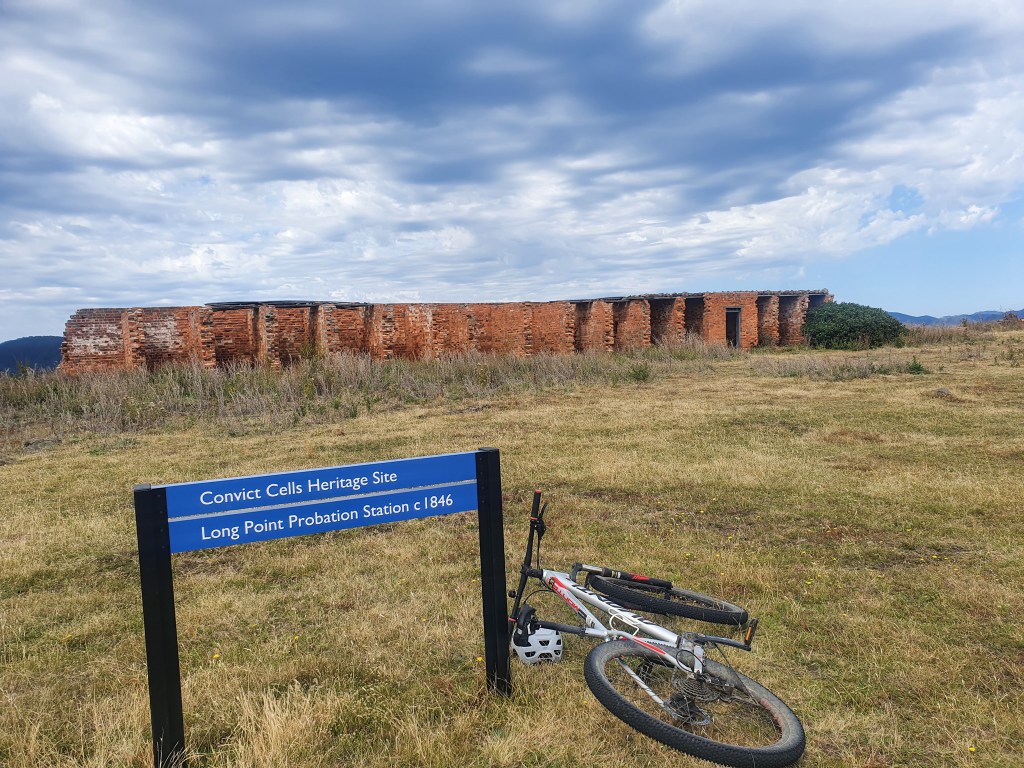
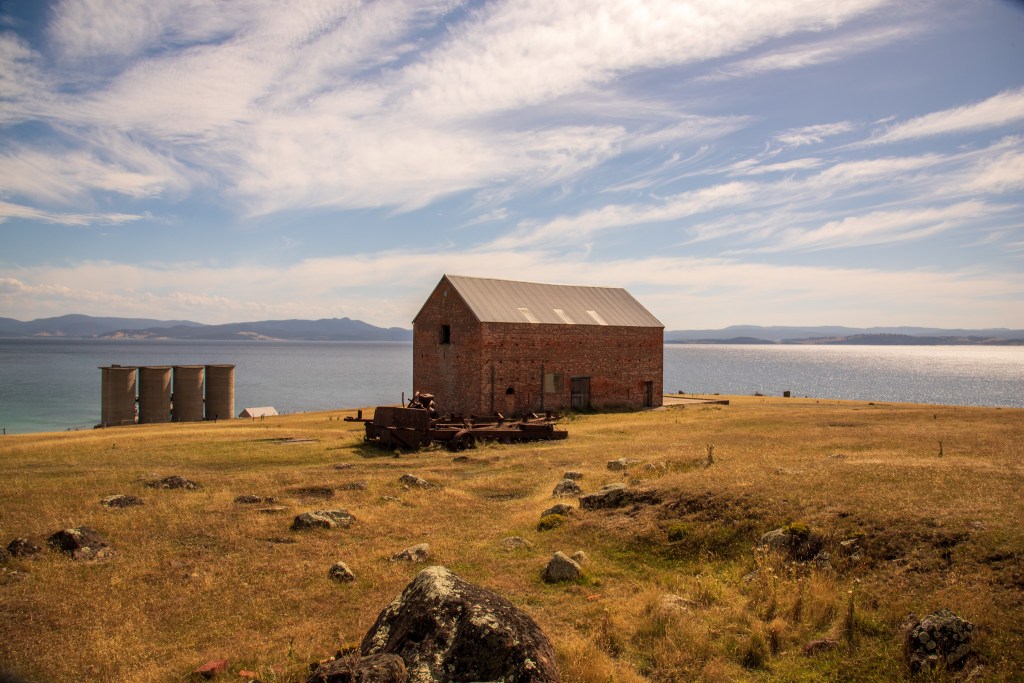
Maria Island is most well known for its convict history. By 1825, the island had become a penal settlement to cope with overcrowding in Hobart Town. But with a significant number of prisoners escaping, often in bark canoes or on rafts, it was abandoned in favour of the Port Arthur penal settlement and closed in 1832. In 1842, Maria Island’s second convict era started, this time as a convict probation station. The Darlington Probation Station was opened that year and three years later another was opened at Point Lesueur. Both these stations operated until 1850 with the inmates mostly doing farming work. The island was then used for activities such as sheep grazing while sealing and whaling also continued. Several whaling stations operated on the island, including one at Darlington. A boom time arrived in 1884, when Diego Bernacchi, a colourful Italian entrepreneur, started silk-farming and wine-growing enterprises on the island, as well as a cement works to utilise the island’s limestone deposits. A school, post office, shops and other businesses followed and the island was flourishing. By 1930, however, all of those ventures had failed for a number of reasons. Farming continued until the late 1960s, and in 1972, the Maria Island National Park was proclaimed.
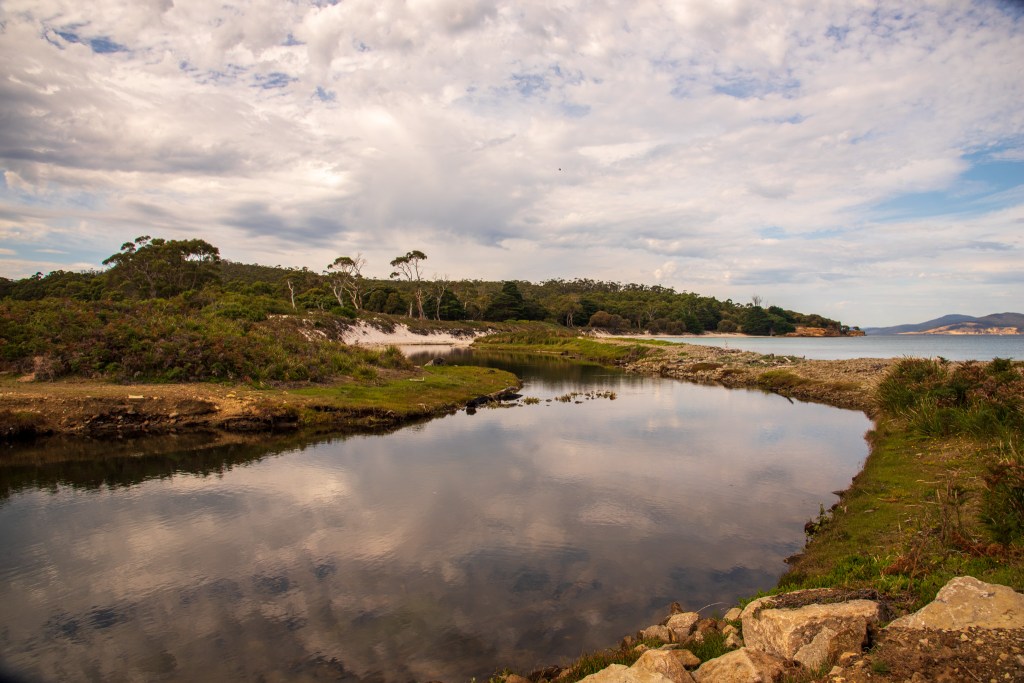
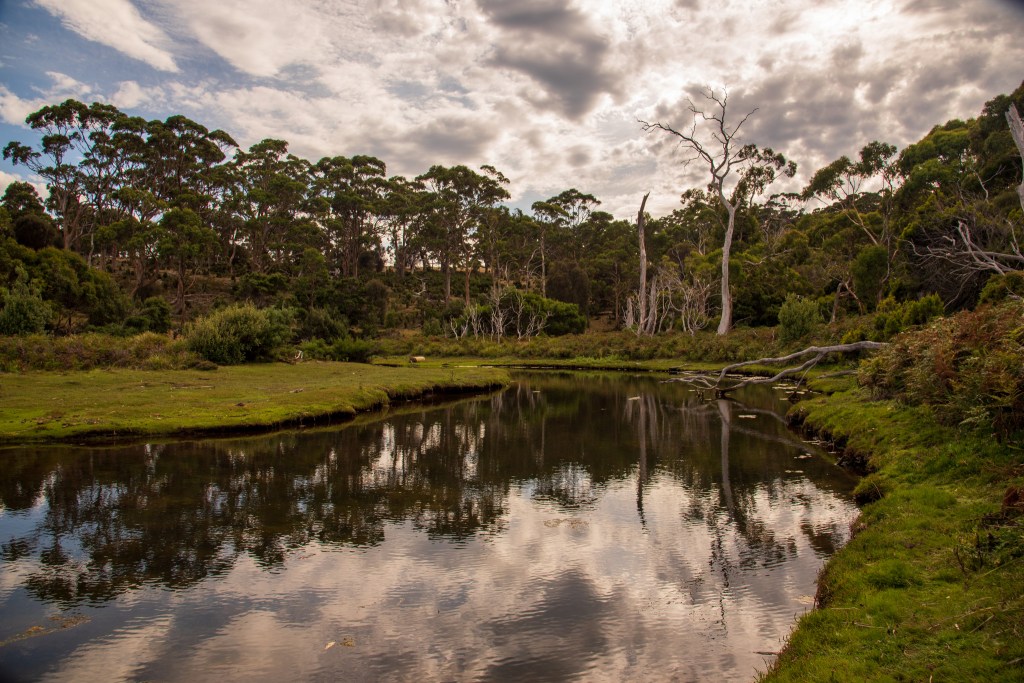
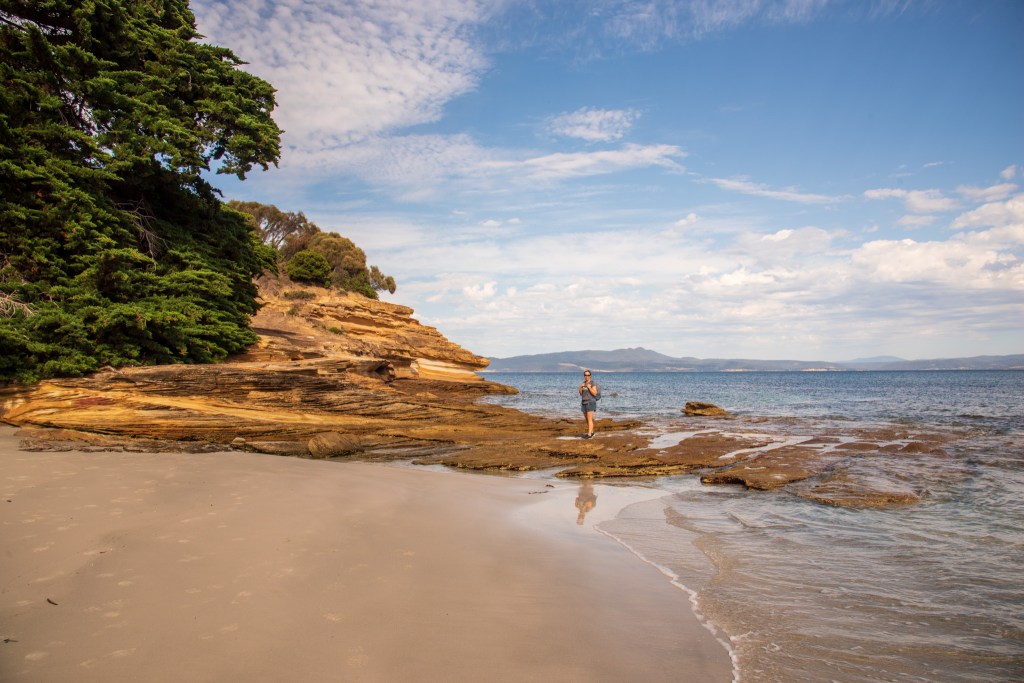
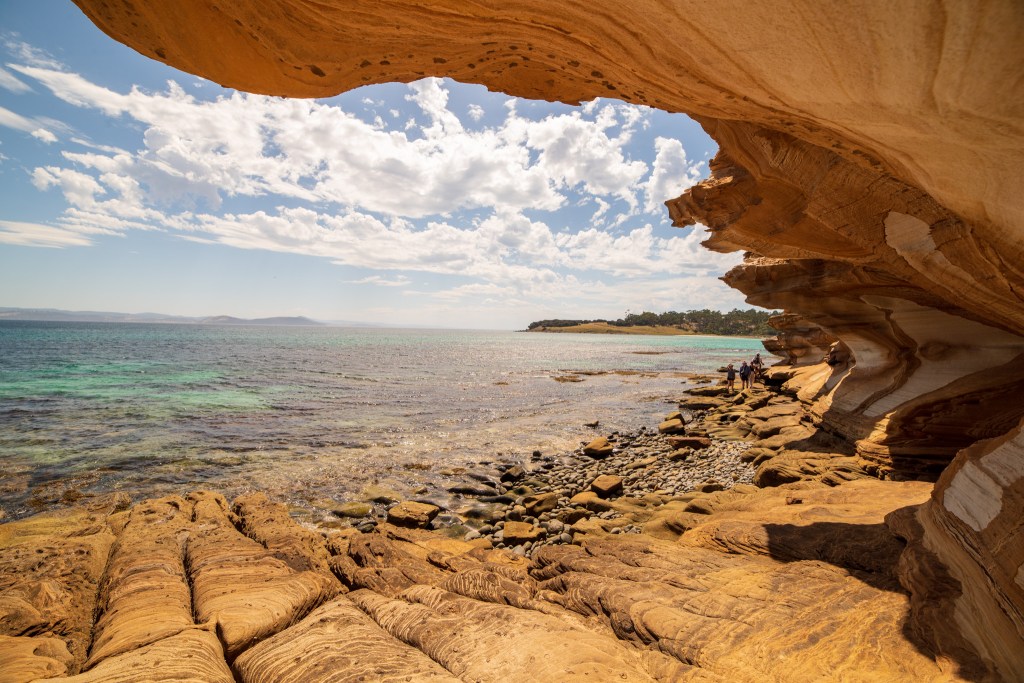
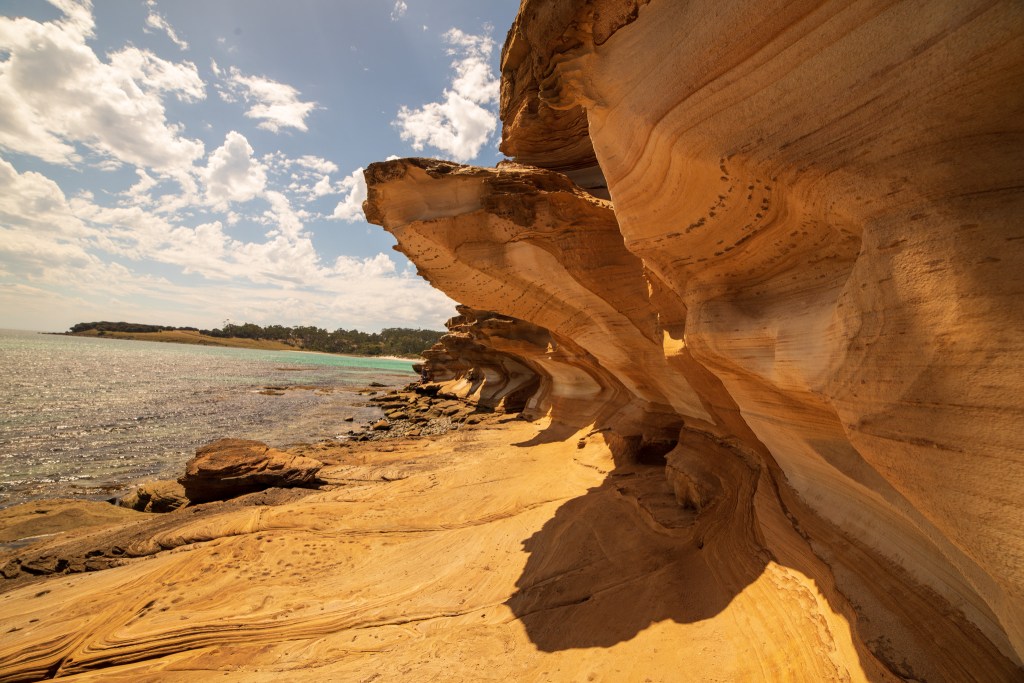
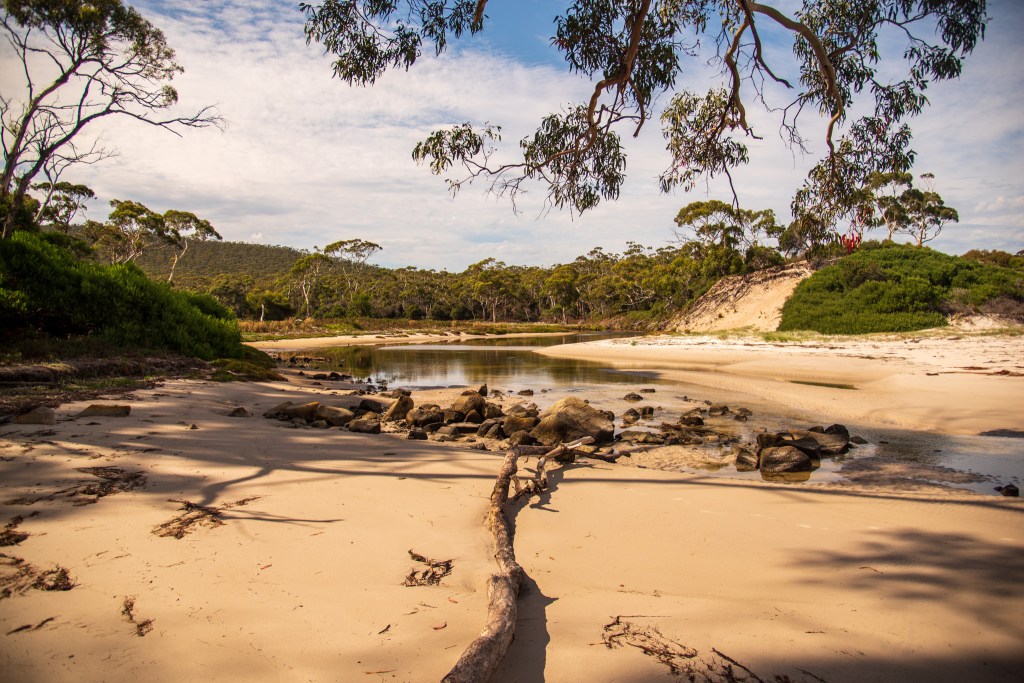
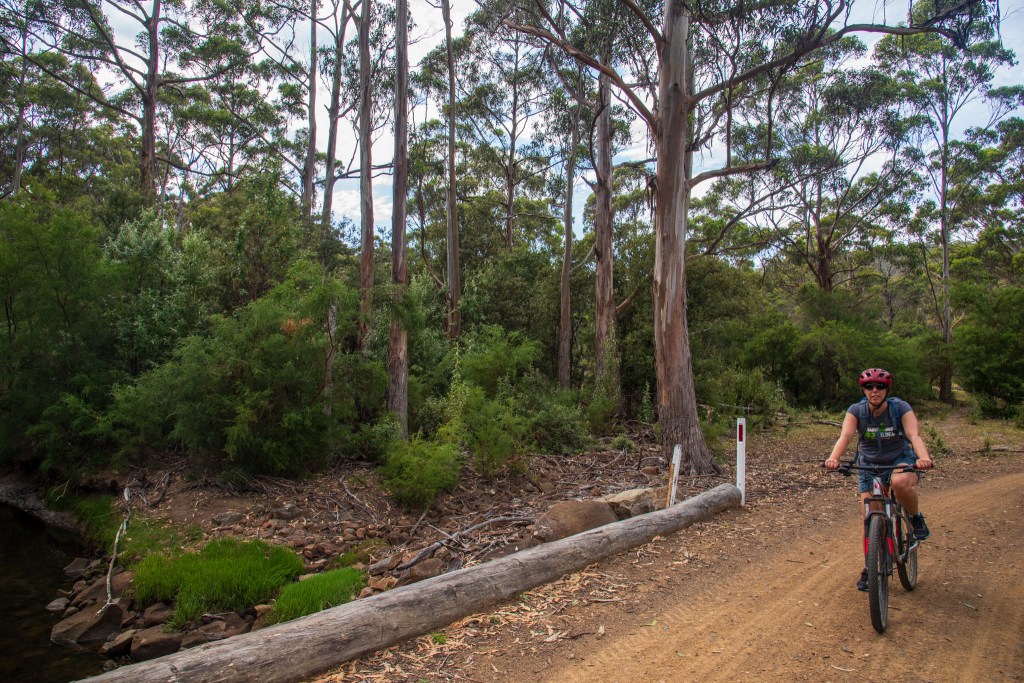
Today there are no permanent residents on the island, apart from the furry and feathered kind. We’d been told that cycling was the best way to get around, so we jumped on our hire bikes and off we went. It was a beautiful day, sunny and warm and we cycled all over the north part of the island, stopping at cliffs and creeks and beaches. It was very, very pretty. We cycled south from Darlington, past the Painted Cliffs to Shoal Bay, out to Point Lesueur, over to Encampment Cove and French’s Farm and back via the Painted Cliffs again.
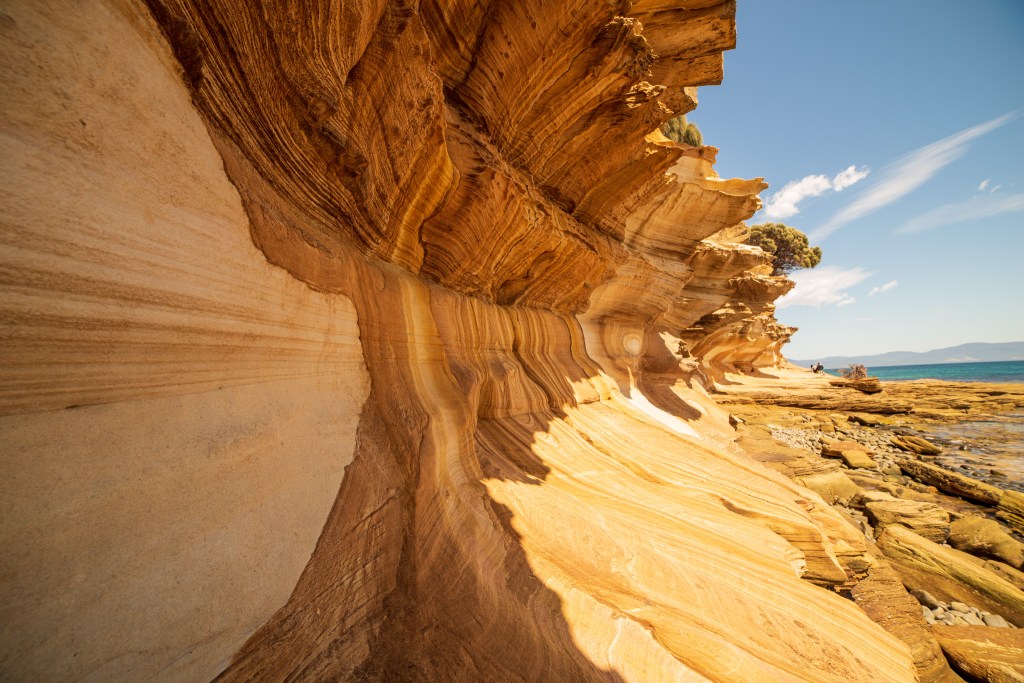
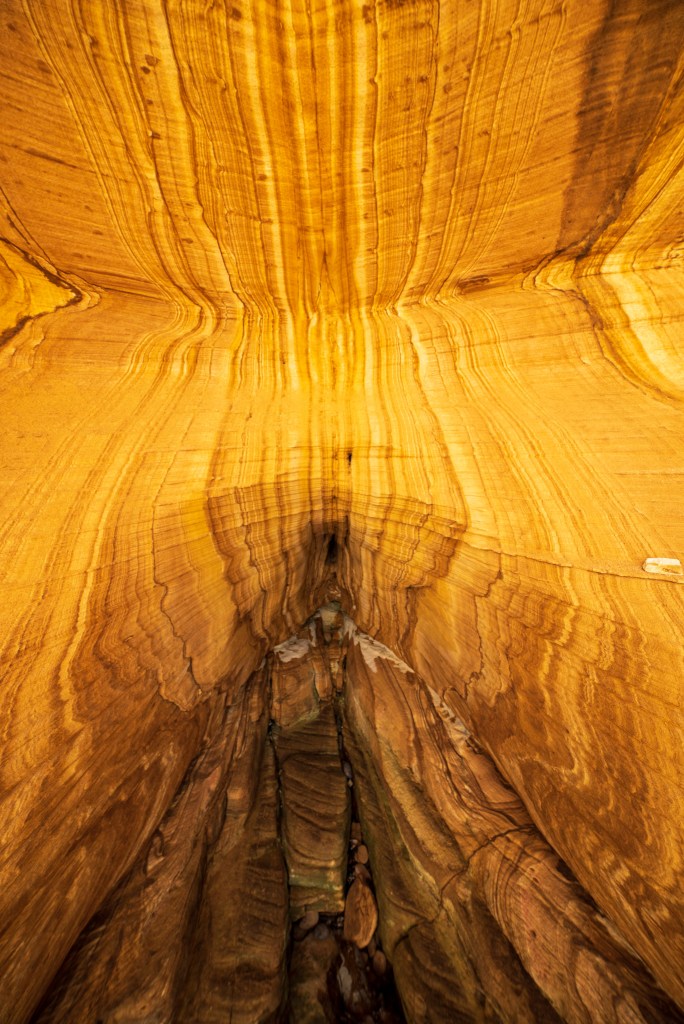
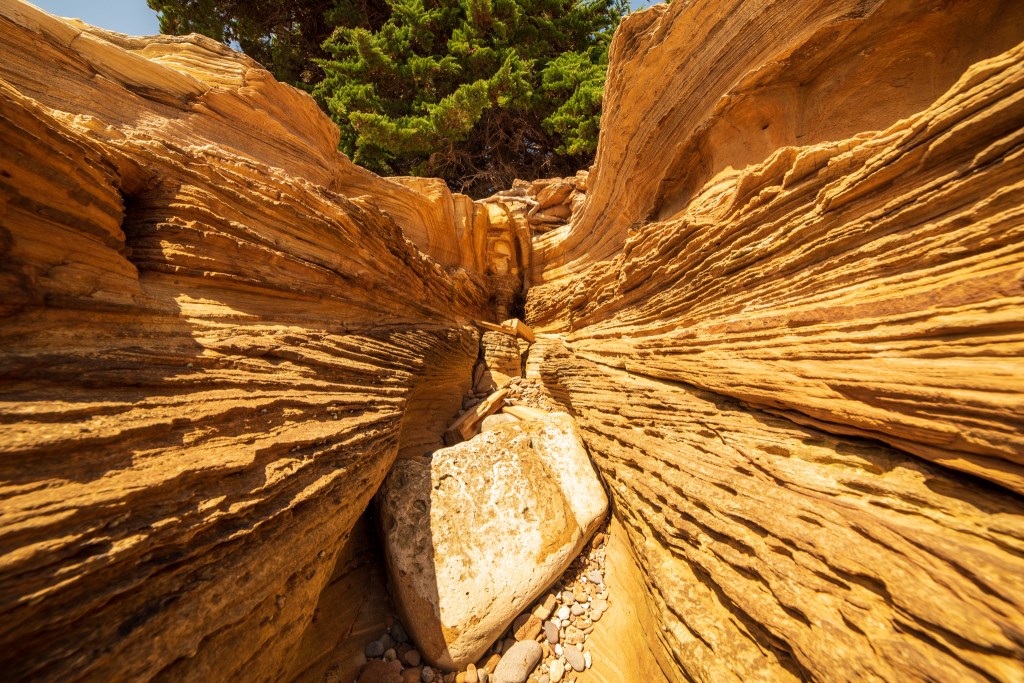
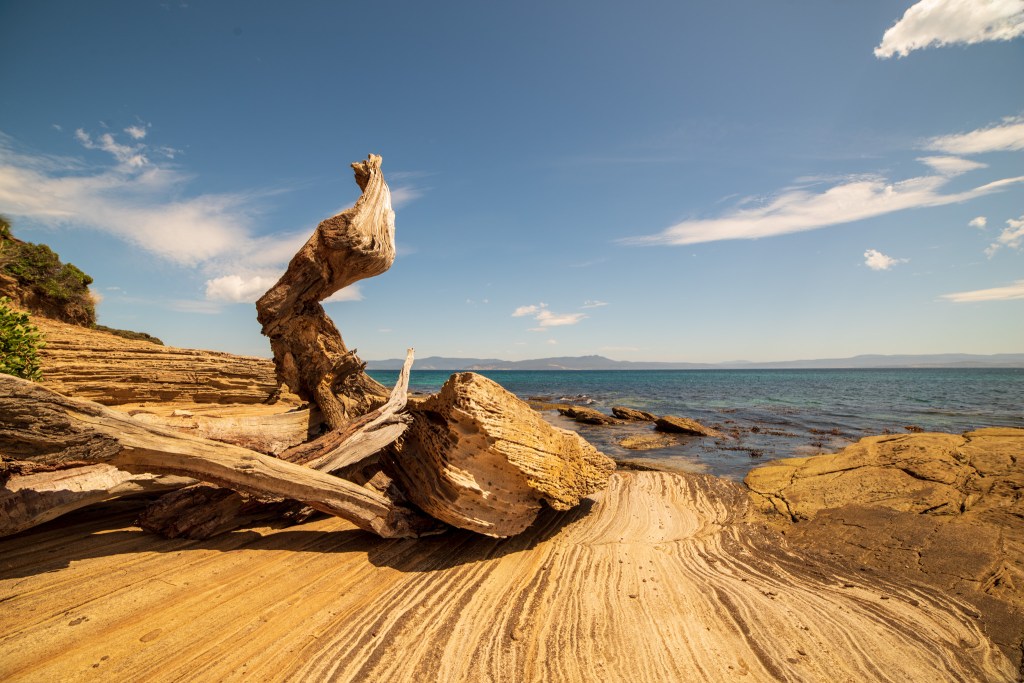
The second time we passed the cliffs was low tide, which meant we were able to access the cliffs themselves and admire the amazing colours and swirling patterns of the rock for which they are famous for. The patterns are caused by ground water percolating through the sandstone and leaving traces of iron oxides, which have stained the rock those distinctive red, orange and yellow colours.
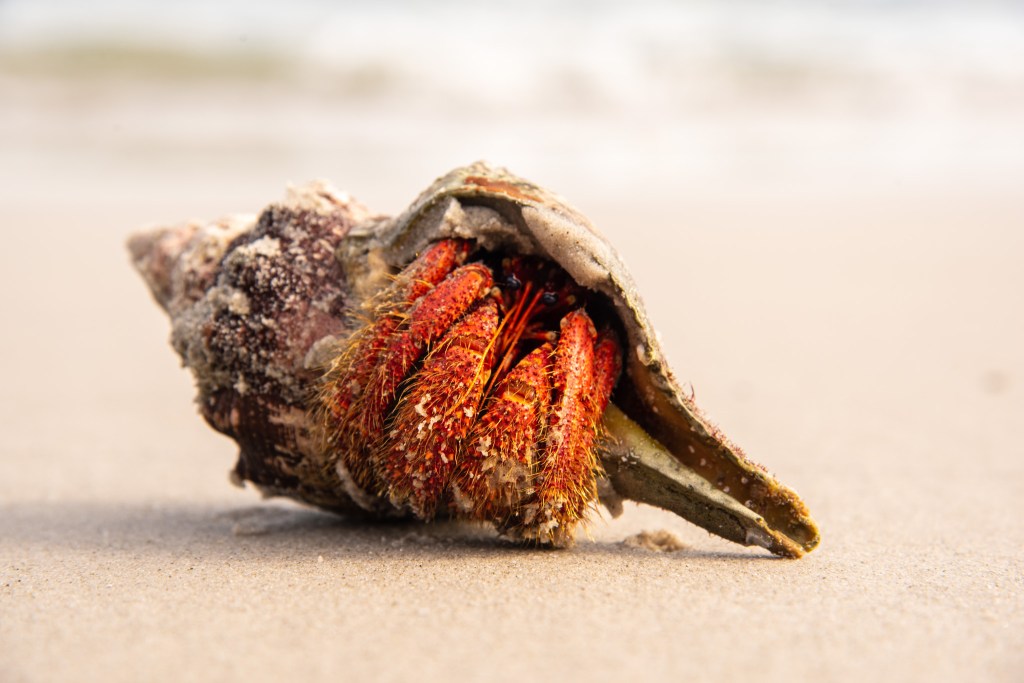
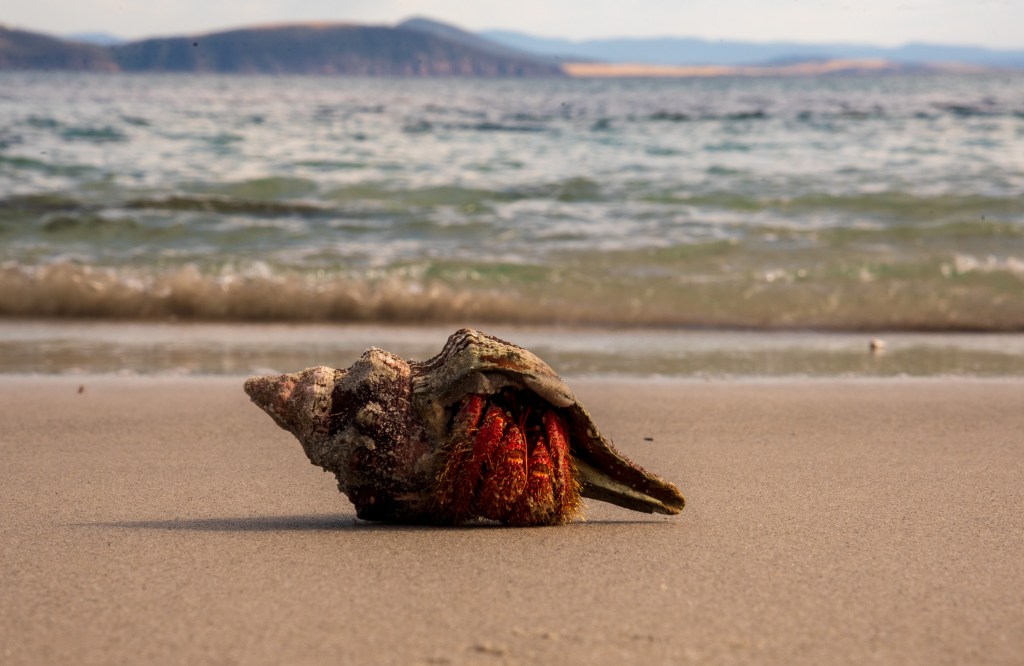
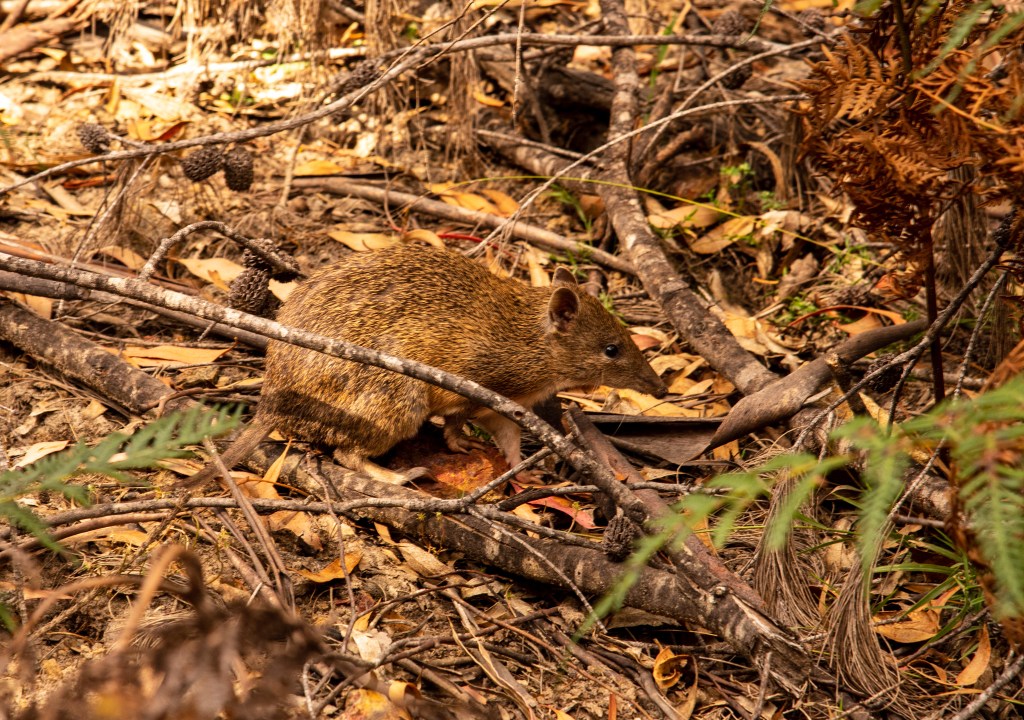
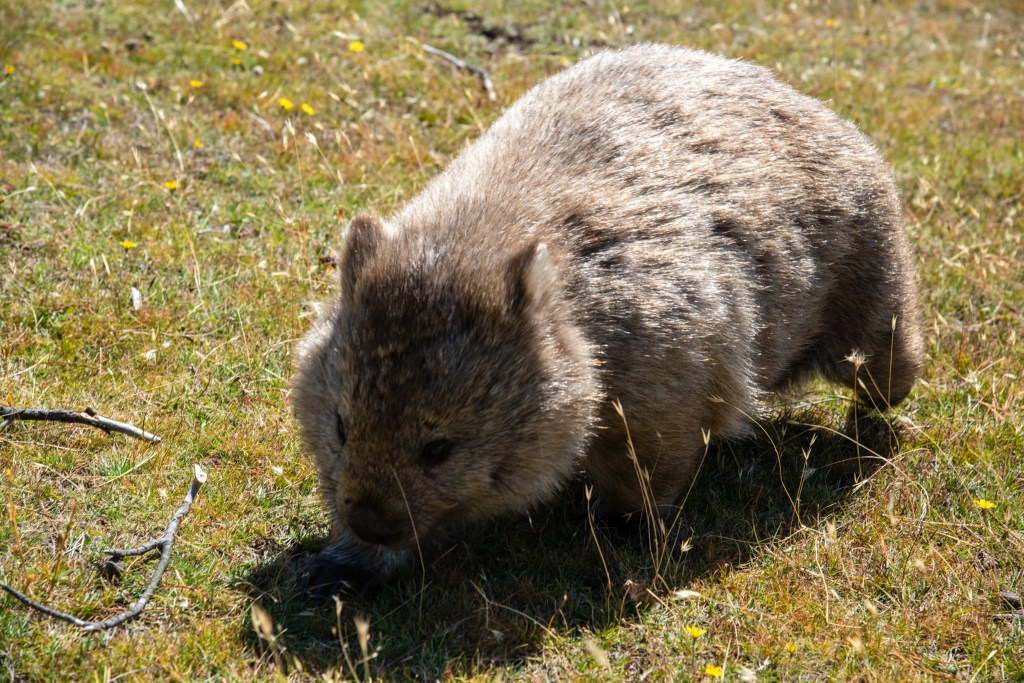
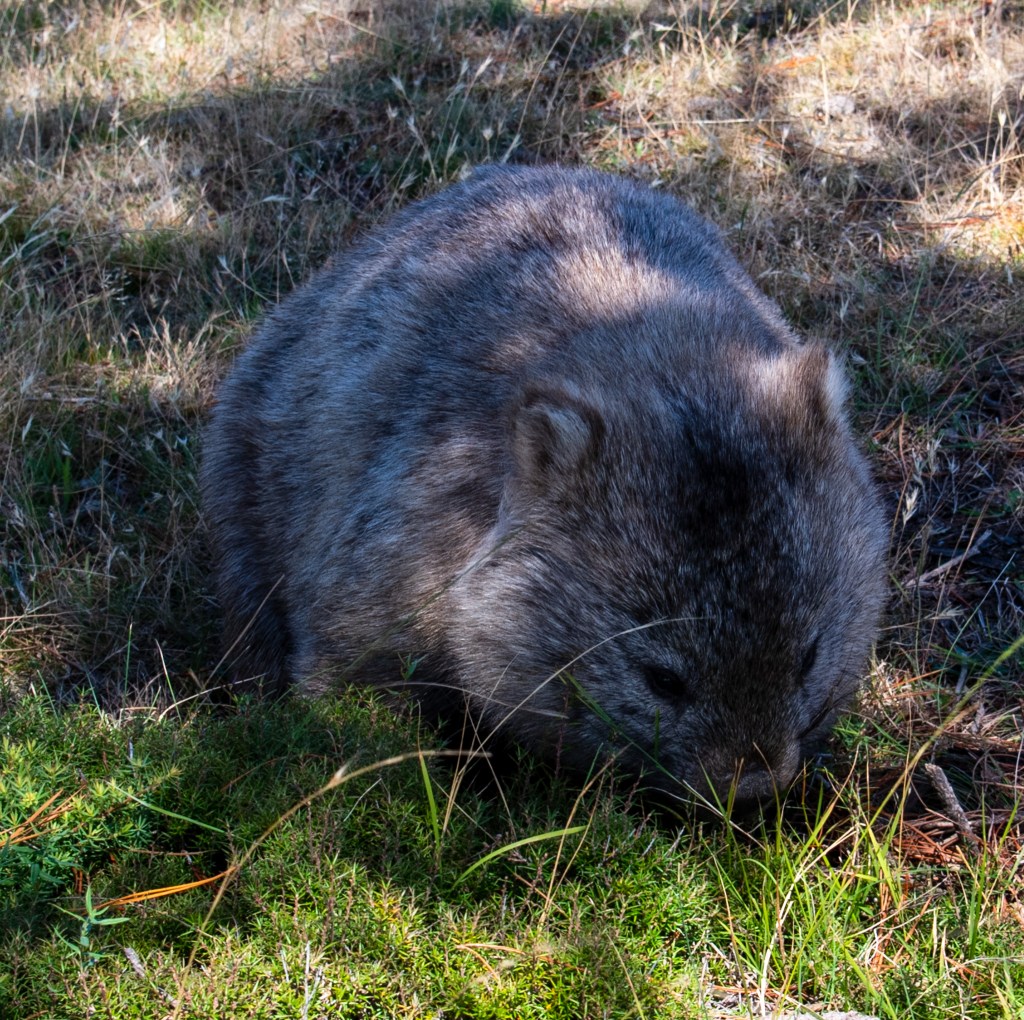
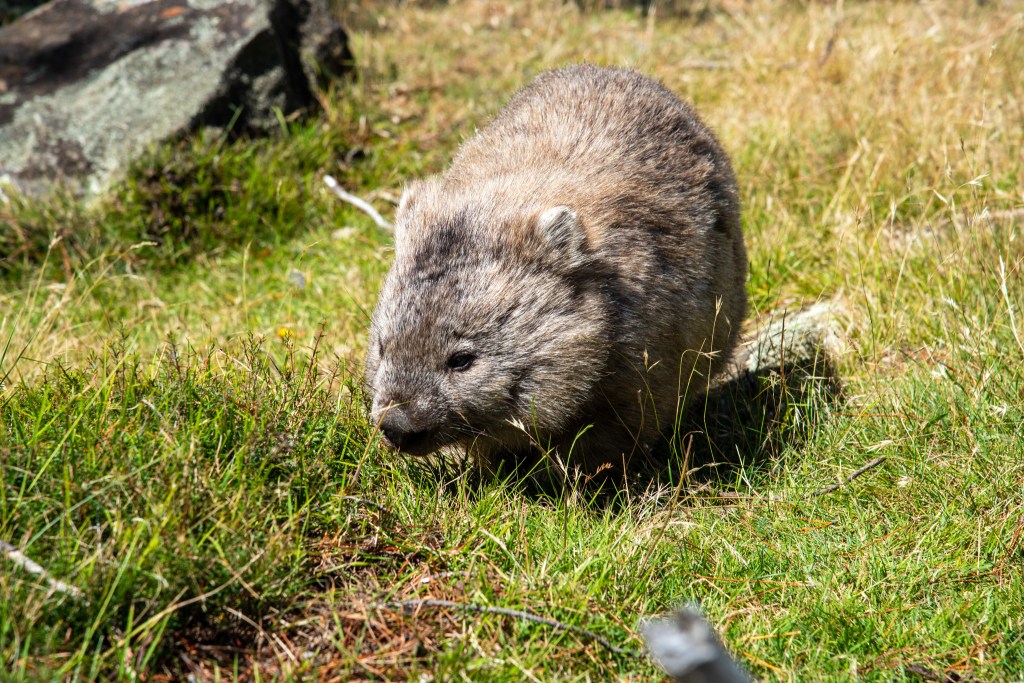
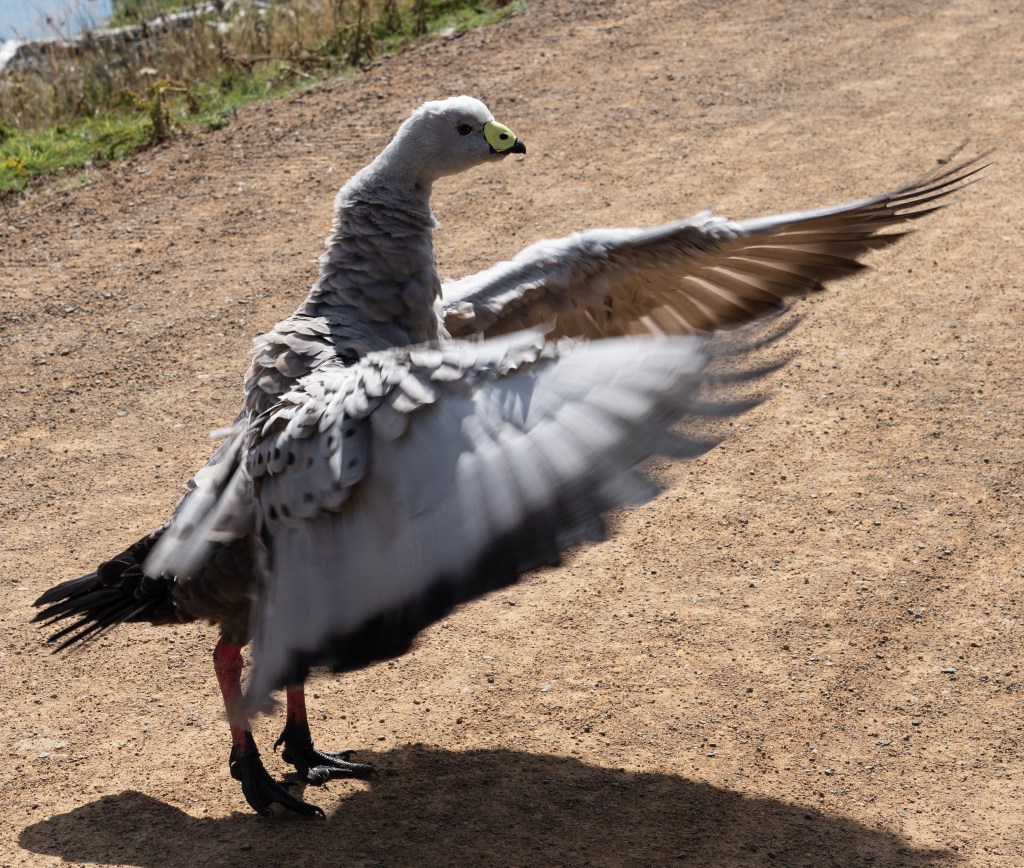
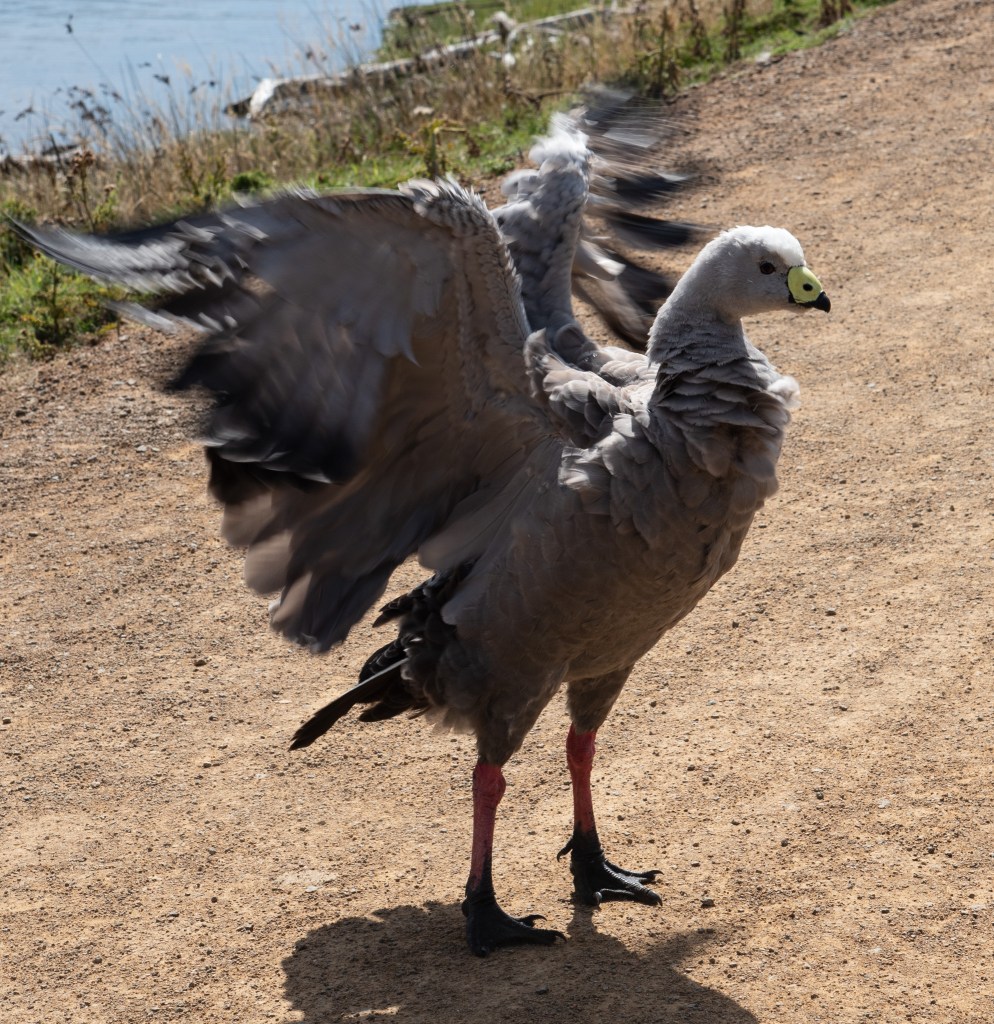
As well as incredible scenery, Maria Island is also famous for the wide variety of native animals living on its shores. We saw kangaroos, wallabies, pademelons, a potaroo, wombats and Cape Barren geese. I was most excited about seeing the wombats as we hadn’t seen any in the wild on this trip yet. Although technically wild animals, the two wombats we spotted weren’t the least perturbed by us and our cameras.
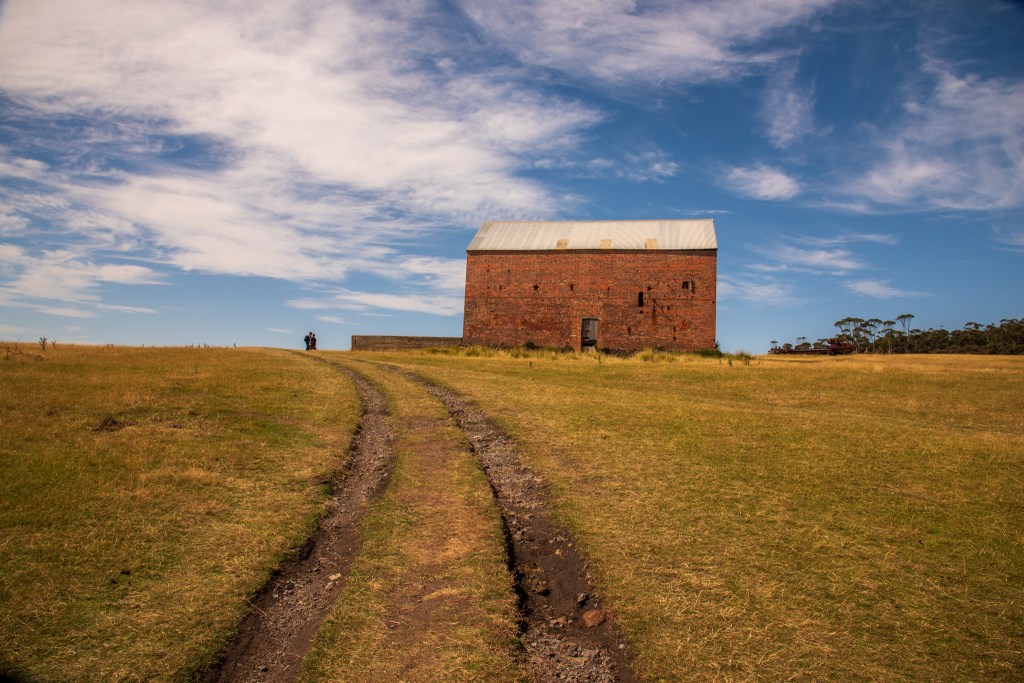
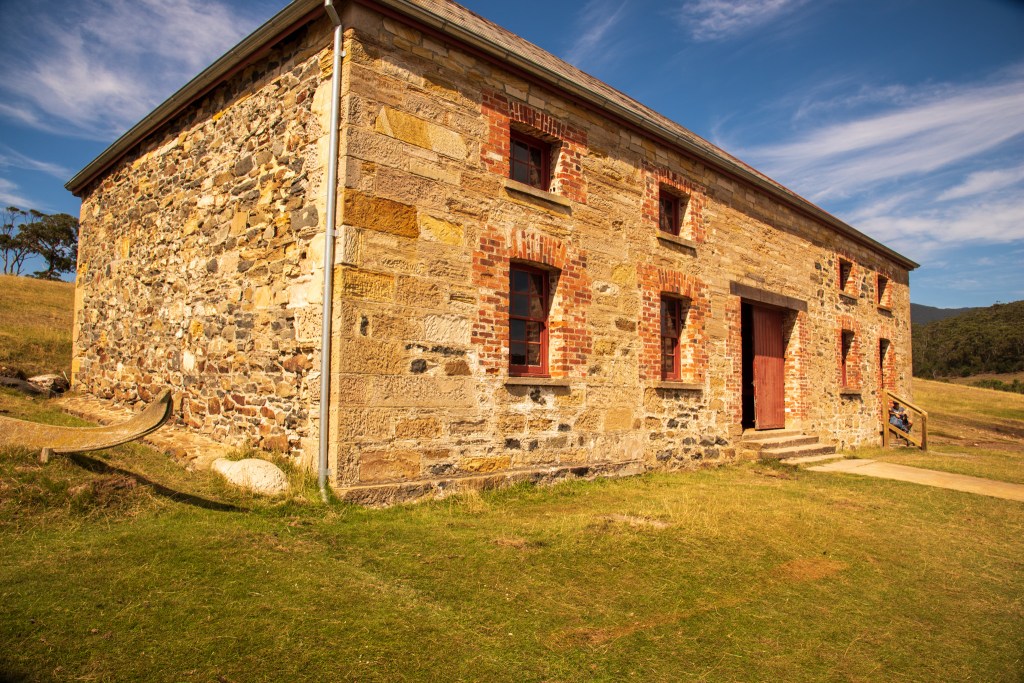
Arriving back in Darlington I was absolutely exhausted. We’d cycled about 35 kilometres and were both hot and sweaty. We relaxed in the shade of a verandah before strolling around some of the old buildings for the last hour or so. It had been a great day, well worth the effort and I felt happily tired.
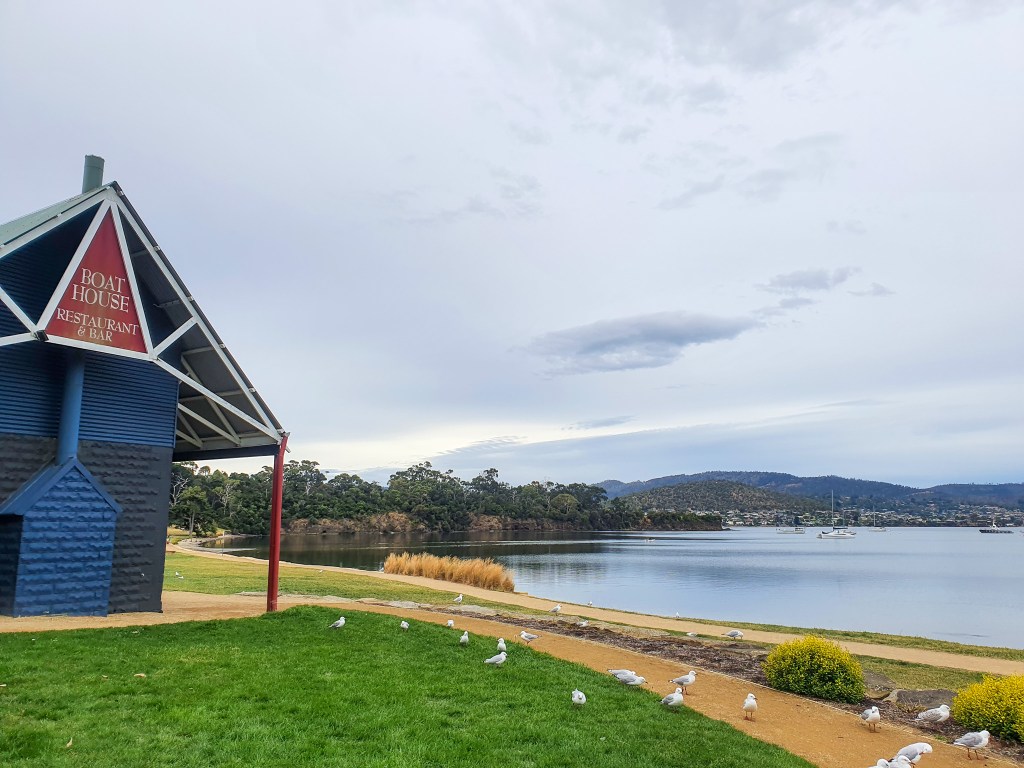
We took Chris and Anne out for a thank you dinner. They’d been gracious hosts and we’d very much appreciated their hospitality. The Cornelian Bay Boathouse was a lovely little restaurant on the banks of the Derwent, just across the river from Geilston Bay. We had an absolutely delicious dinner and several bottles of a yummy local wine. If you’re ever in Hobart, do yourself a favour and check out this little gem.
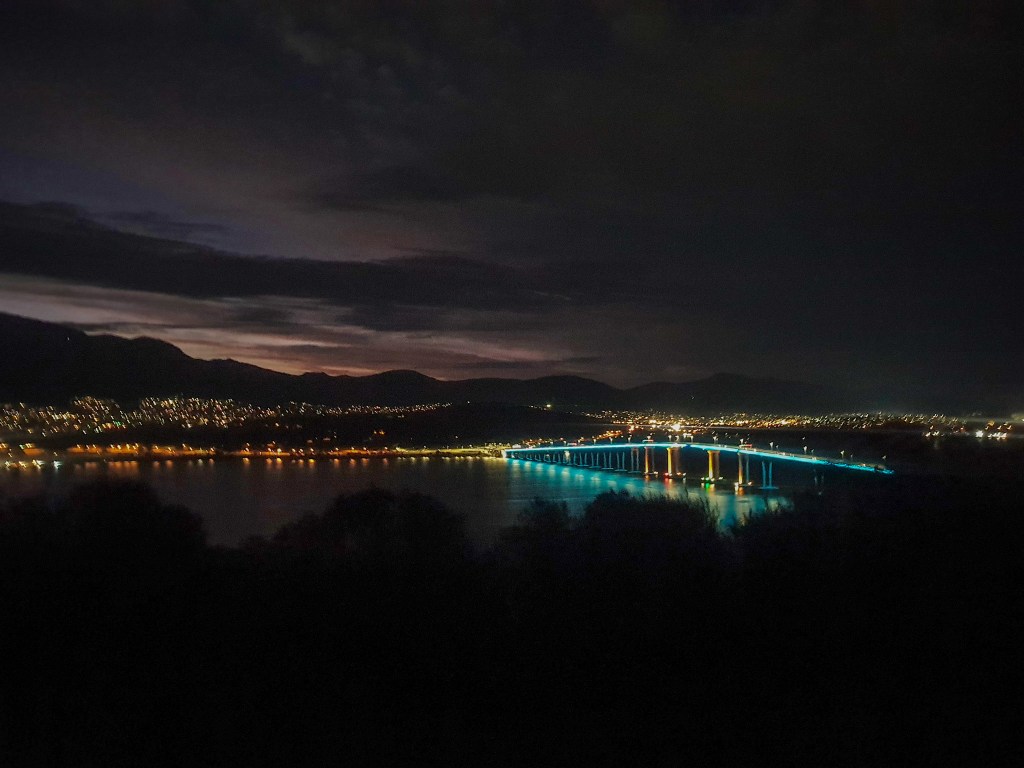
A detour on the way home up the Rosny Hill Lookout afforded a spectacular view of the Tasman Bridge glowing electric blue, with the lights of Hobart twinkling in the background.
We spent a full week in Hobart; a nice mix of catching up with friends, relaxing, doing odd jobs and a bit of sight seeing. As well as spending time with Chris and Anne, and meeting some of their friends and family, Matt also spent an afternoon having beers with his mate Brian from our marina in Hastings. We also caught up with Chris, our delivery skipper.
Chris had helped us bring Cool Change down to Hastings from Pittwater in 2019, when we first purchased her. At the time, we were very inexperienced and out of our depth, and Chris had taught us so much, not just about sailing but about our own boat. Matt had kept in occasional contact with Chris via email over the years, and had been hoping to meet up with him. We were keen to have the chance to thank him again and tell him just how big an impact he’d had.
Chris and his lovely wife, Peta, invited us over for dinner and we had a great night. Matt and Chris swapped stories (mostly true) and compared notes. Throughout our trip we have been the recipients of a lot of great advice and assistance, but Chris had been there at the very start and had played an instrumental role in our journey. To now be able to talk to him as somewhat of an equal was a great thrill for Matt, and was a testament to Chris’s patience as a skipper as well as to our subsequent efforts. It was pretty late when we reluctantly bade farewell and jumped into a taxi.
I had made full use of Anne’s washing machine, and she’d taken me to the supermarket and to exchange a gas bottle, so once Matt had installed the new piece of glass for our oven that Chris had kindly organised, we were all set to go. We filled up with diesel and water at the Motor Yacht Club of Tasmania, waved goodbye to Chris and Anne and set off to explore the cruising grounds around Hobart.
If God had meant for us to have fibreglass boats, he would have planted fibreglass trees.
L. Francis Herreshoff
 Cool Change
Looks like a great place! Lovely captures!
LikeLiked by 1 person
Thanks Lisa, another very informative blog. The photos were excellent, your adventures are never ending. Keep safe guys.
LikeLike