A rough and lumpy sea greeted us as we untied from our mooring and began our passage south from Broome. The big waves had us putting our life jackets on and I was feeling pretty crappy, tired and emotional. We sailed well, if uncomfortably, in the 20 to 25 knots winds, and as the day wore on the sea state improved while the winds dropped off so much that we turned the motor on. By the afternoon, it was quite fine and I was feeling a lot better.
Anchoring in the calm of Lagrange Bay, I cooked, cleaned and prepared for our upcoming overnight passage. Our time in Broome had been so fraught with difficulties that a lot of this had fallen to the wayside. I even had a much needed shower. Unfortunately the swell rolled in overnight, so after another fairly sleepless night we were up and sailing south by 7am.
Dampier was a full two days and two nights sail to the south. We were prepared to do overnight passages, yet we had also marked out a few anchorages that we could stop at if needed. Of consideration was the very busy shipping channel filled with humongous ships that we would have to cross over as we passed Port Hedland. It would definitely be preferable to do this in daylight hours.
After sailing for the first five hours, we then motor sailed for the rest of the day in the inconsistent winds. Thankfully the lumpy seas had turned following, and in the late afternoon we decided to continue on through the night rather than detour in to an anchorage in the choppy seas. It was cold and rough during our overnight watches, and while it wasn’t overly fun, I felt ok.
We slept throughout the following day alternating with each other in one to two hour shifts, as the seas calmed and we sailed along nicely. Deciding to keep on for Dampier we reverted back to our four hour overnight watches. The second night was a lot more pleasant and at 2.15 am I put the sails back out and turned the motor off. It is definitely a much nicer experience without the constant hum of the engine, and it also makes it a lot easier for the other person to sleep properly.
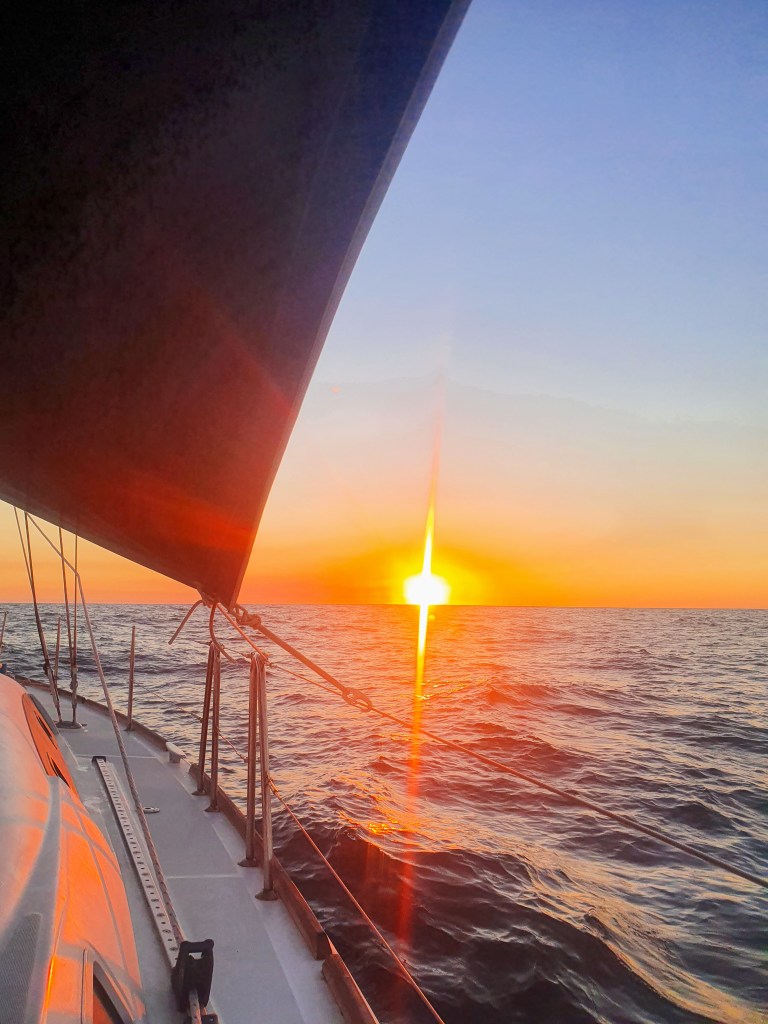
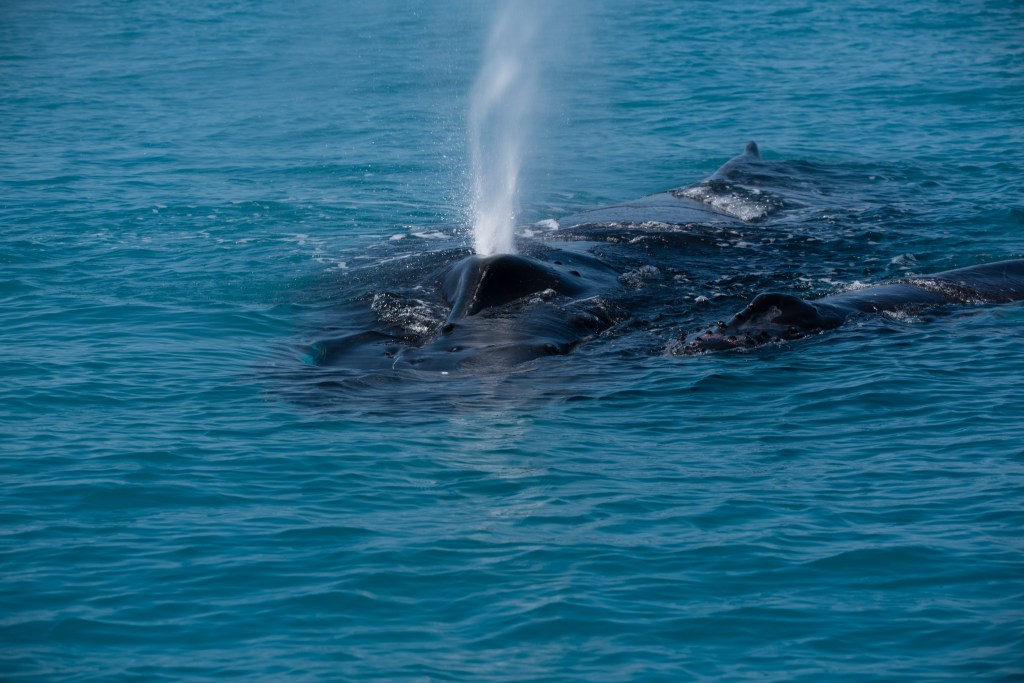
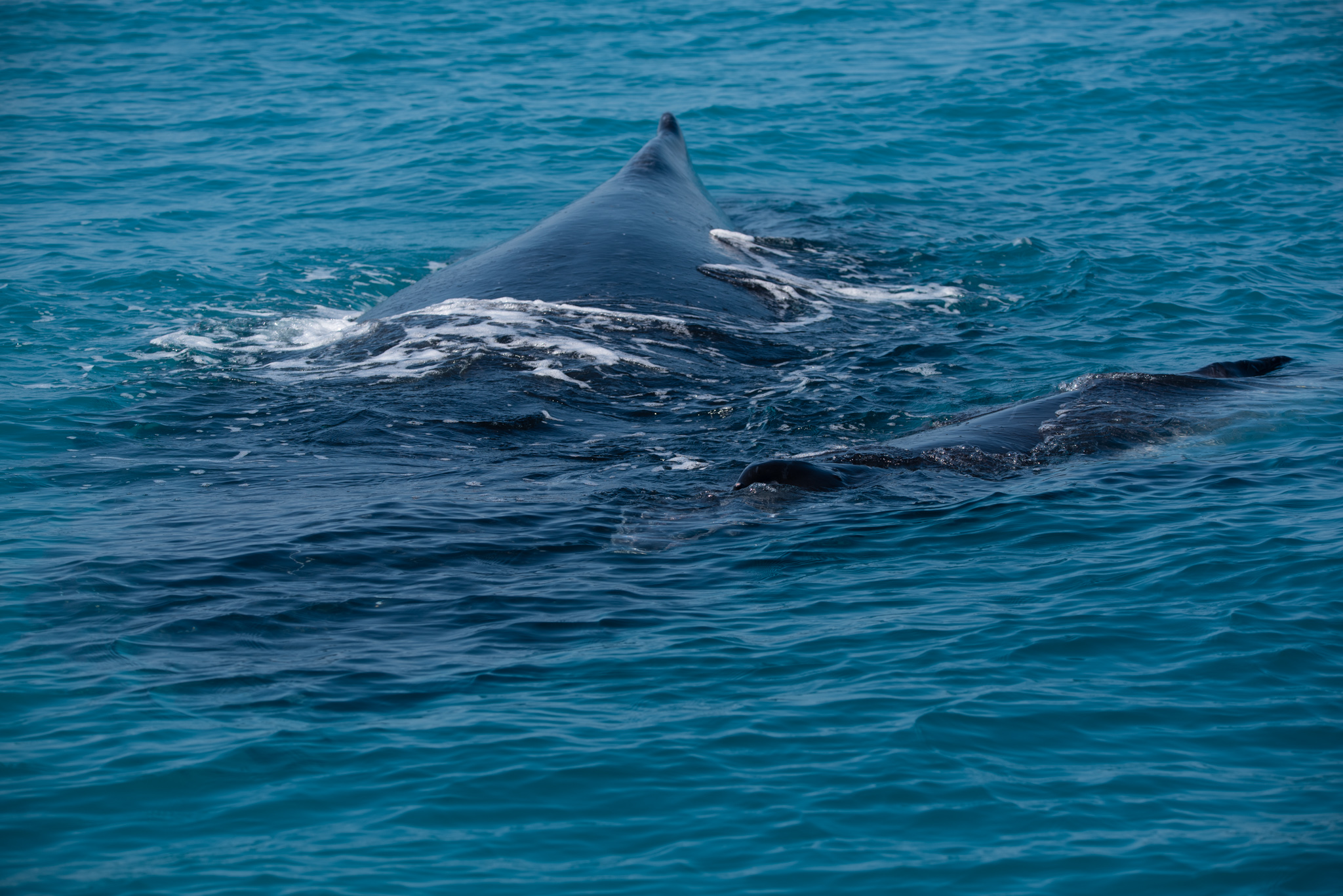
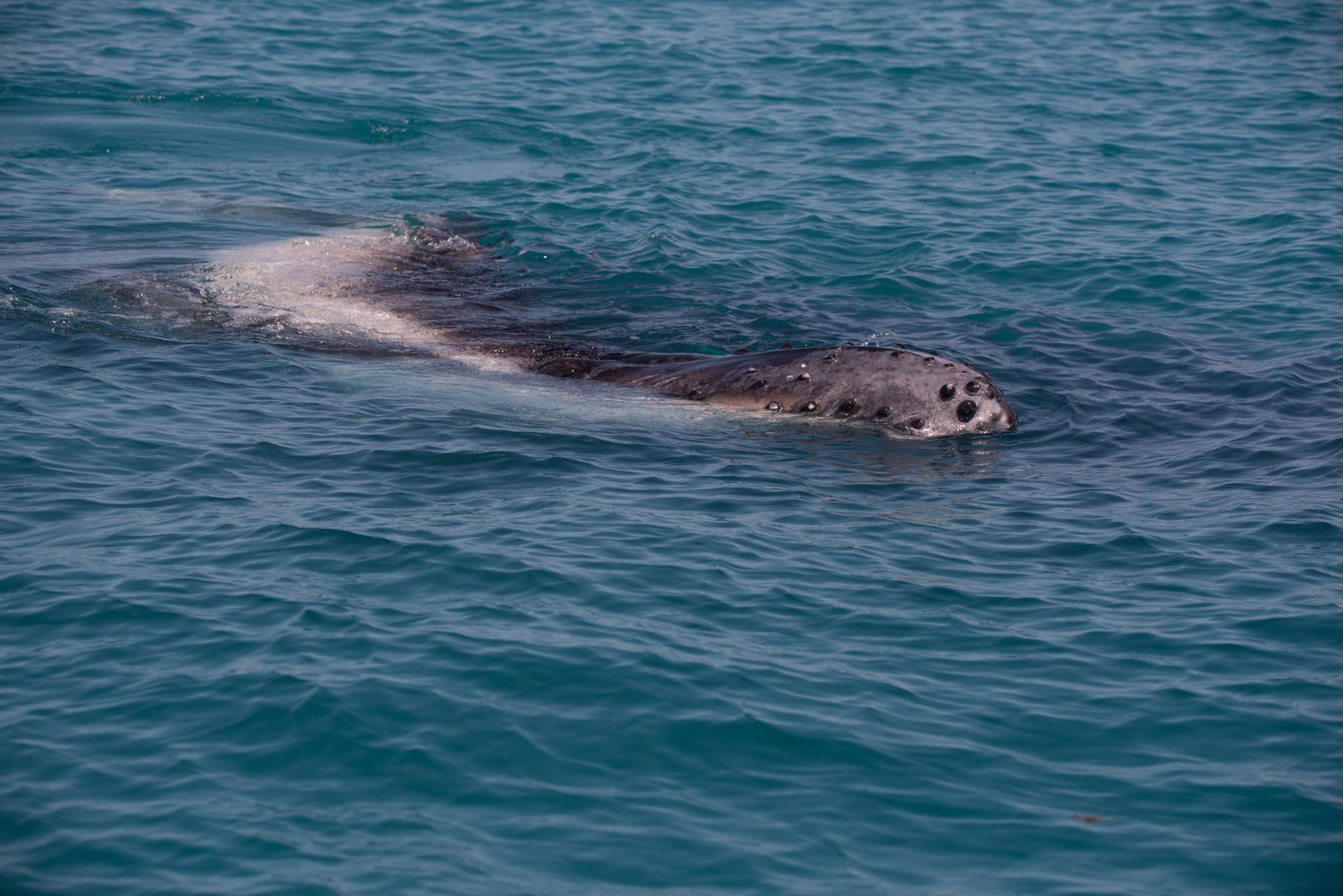
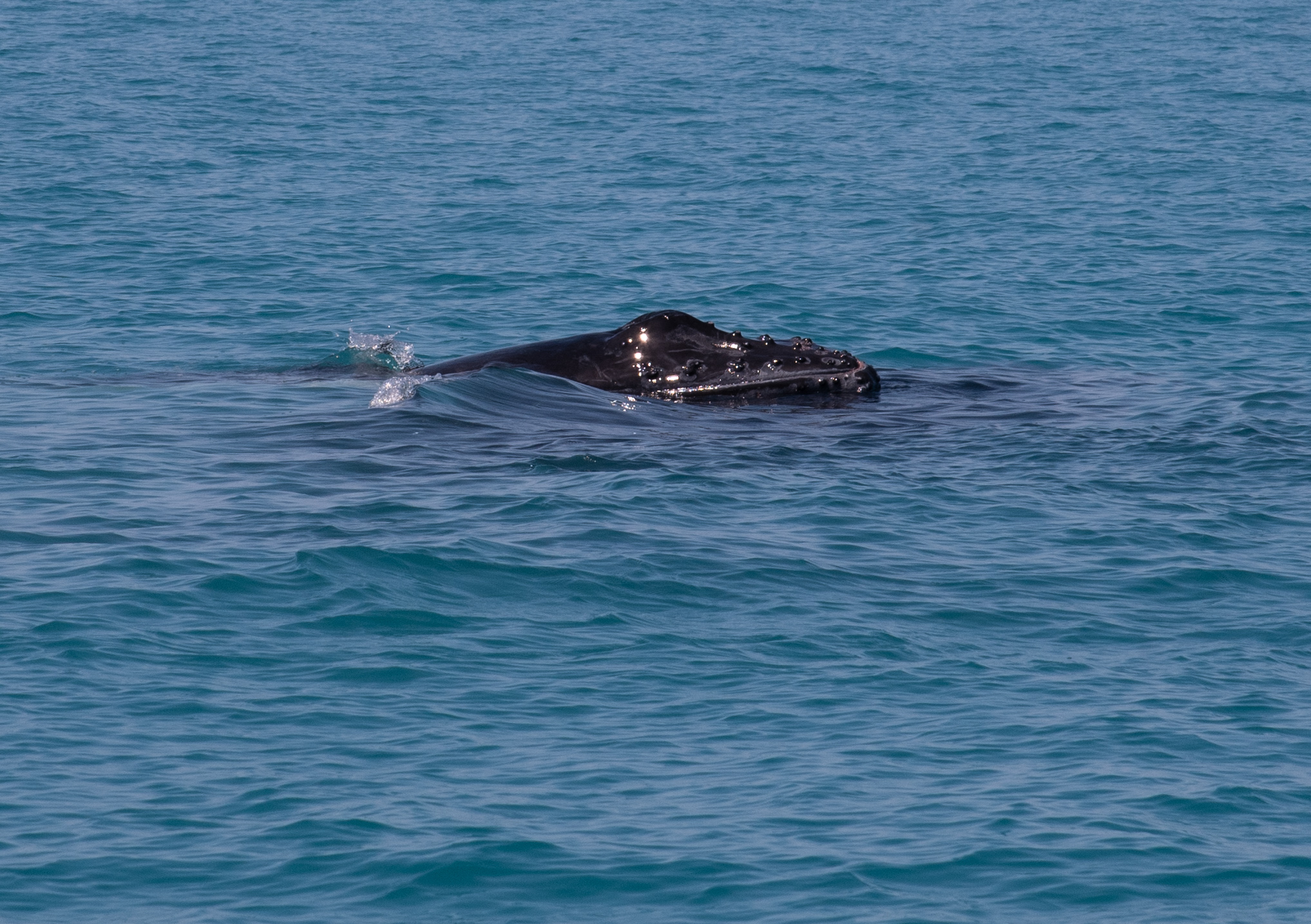
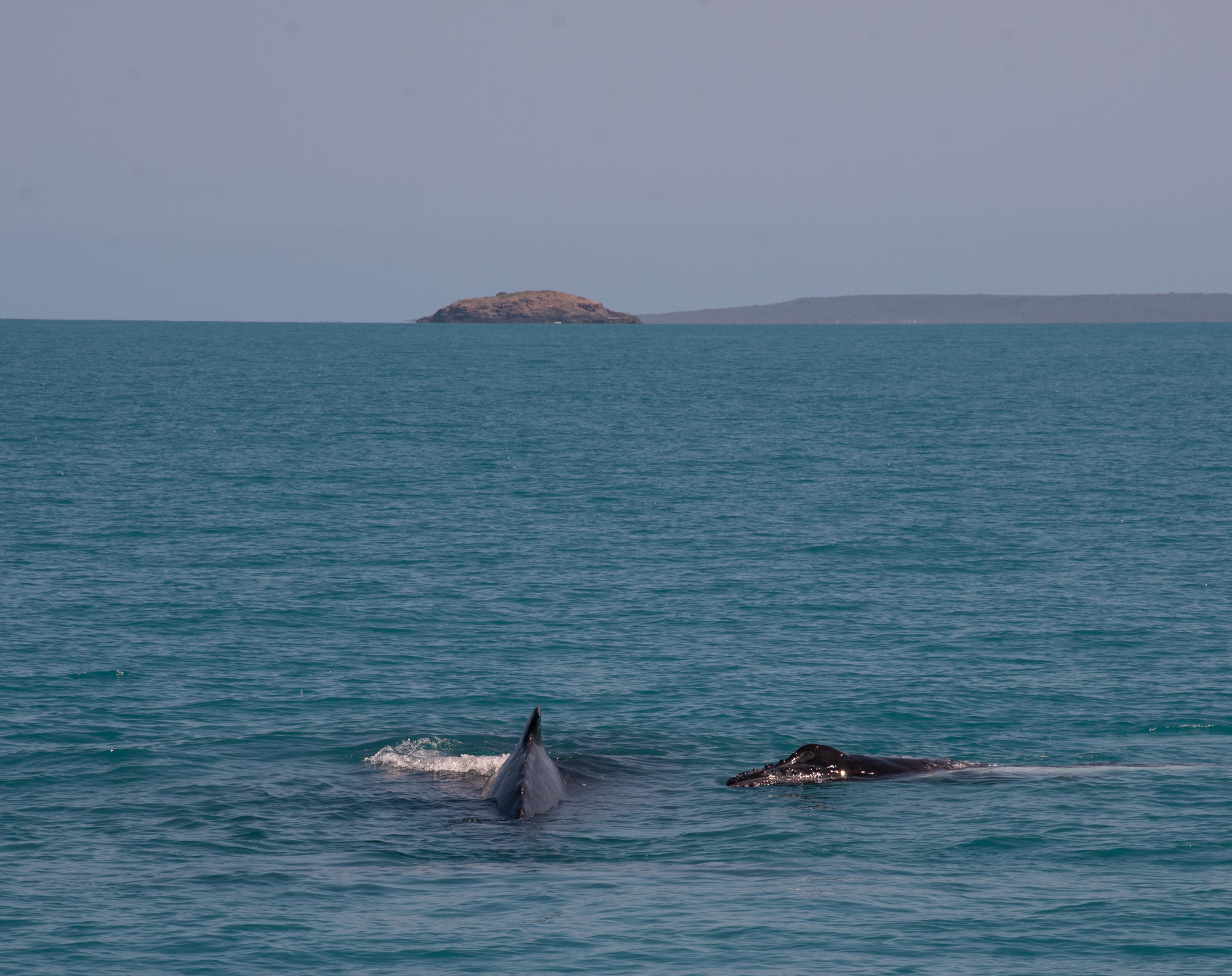
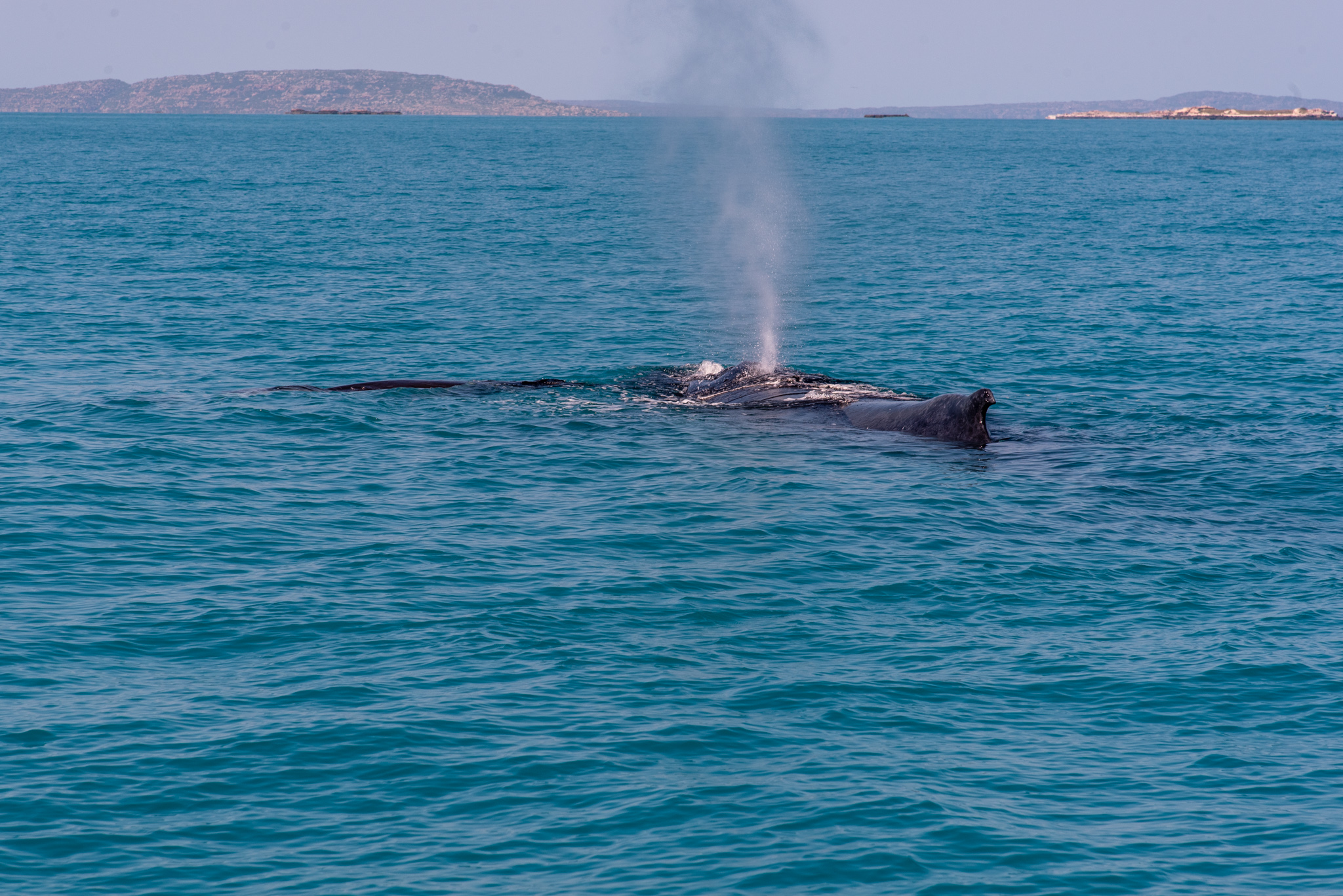
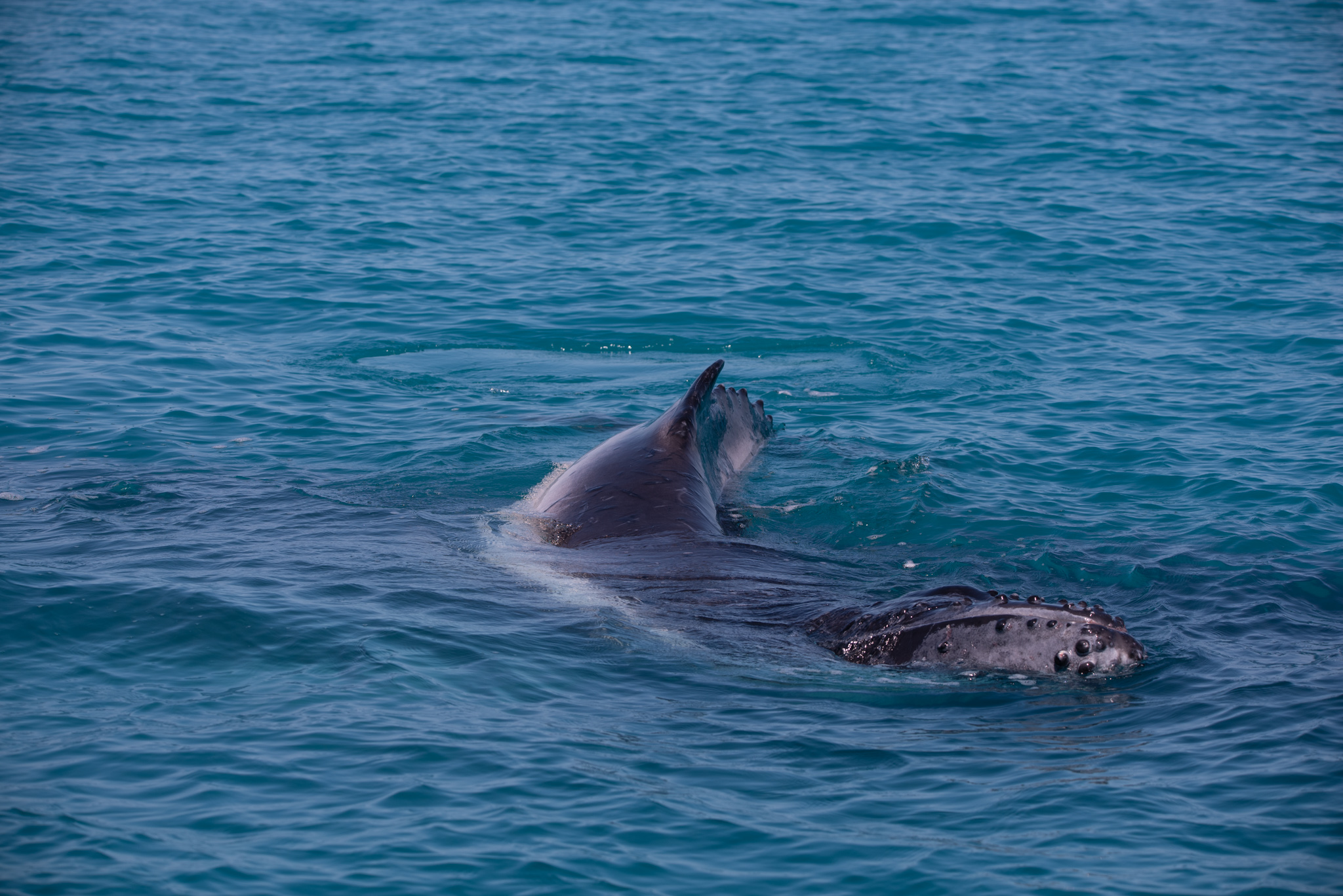
When I woke up at 6 am, we were approaching Dampier and the myriad of channels through Mermaid Sound that leads into the anchorage at Hampton Harbour. The wind had picked up strongly, and we dropped the sail before Matt headed back to bed and I motored us through the maze of channels. I couldn’t believe my eyes when I saw a humpback whale swimming right past some of the channel markers in the busy harbour.
Matt was back at the helm to drive us into the very, very crowded Hampton Harbour. Carefully weaving his way through a multitude of boats on moorings and at anchor, we finally found a safe space and dropped our own pick. Finally, we could take a breath. We had been on the go for 50 hours since leaving Lagrange Bay. It was time for a rest.
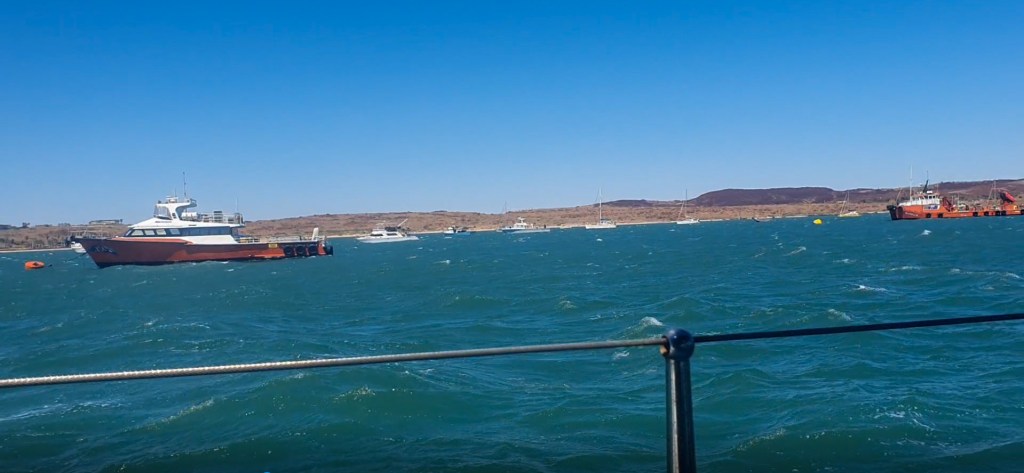
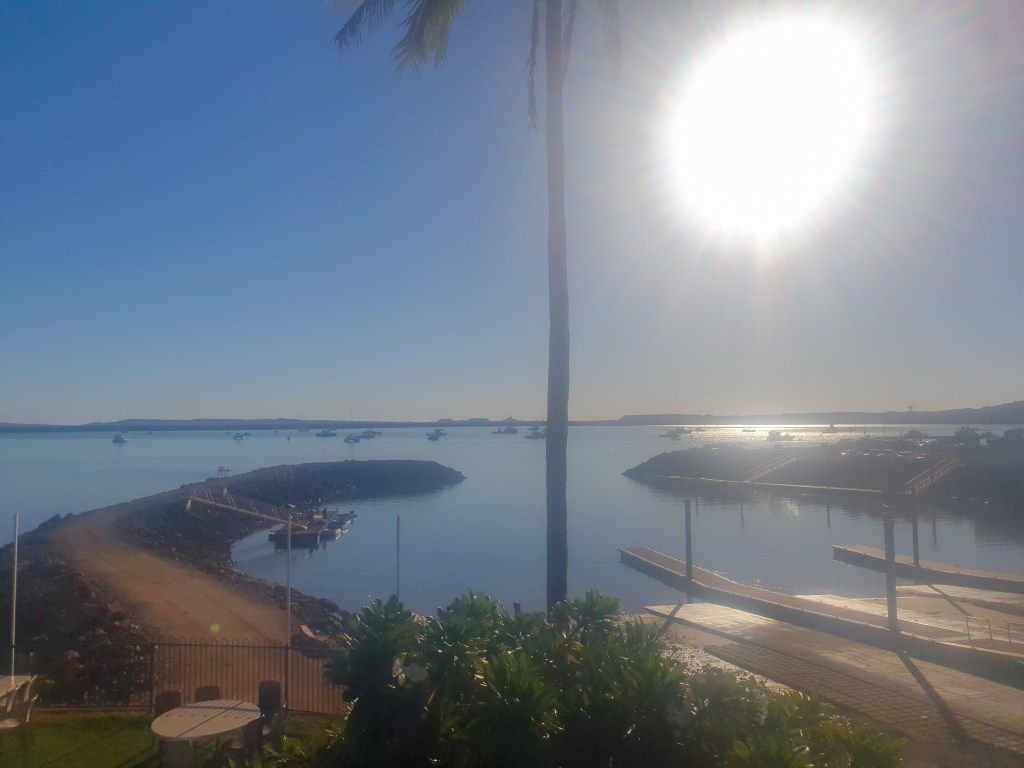
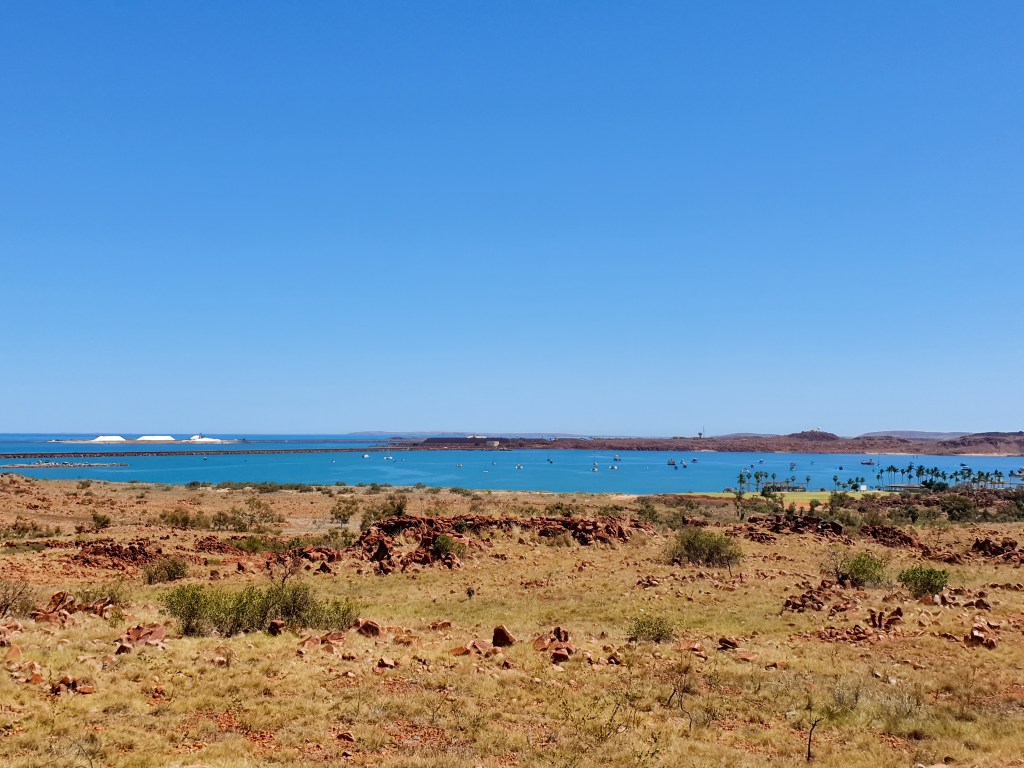
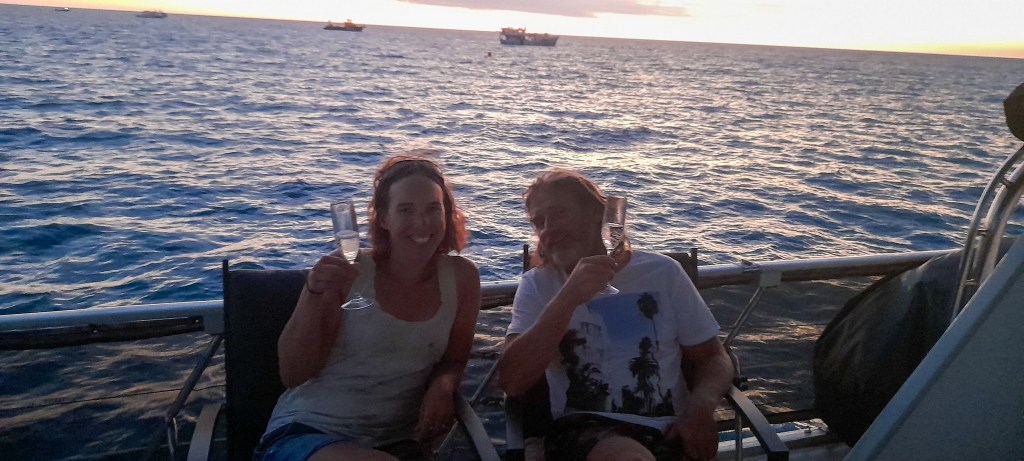
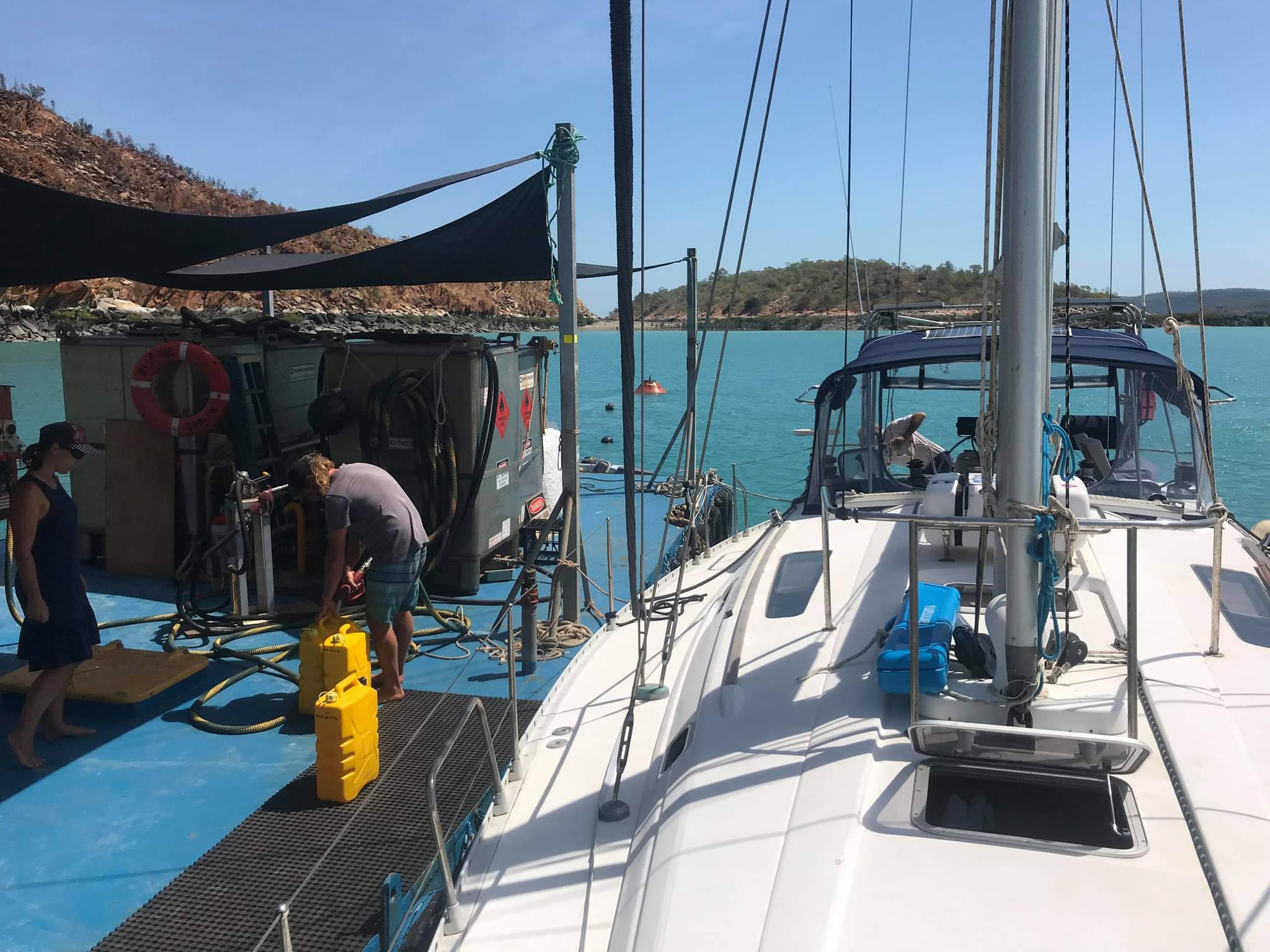
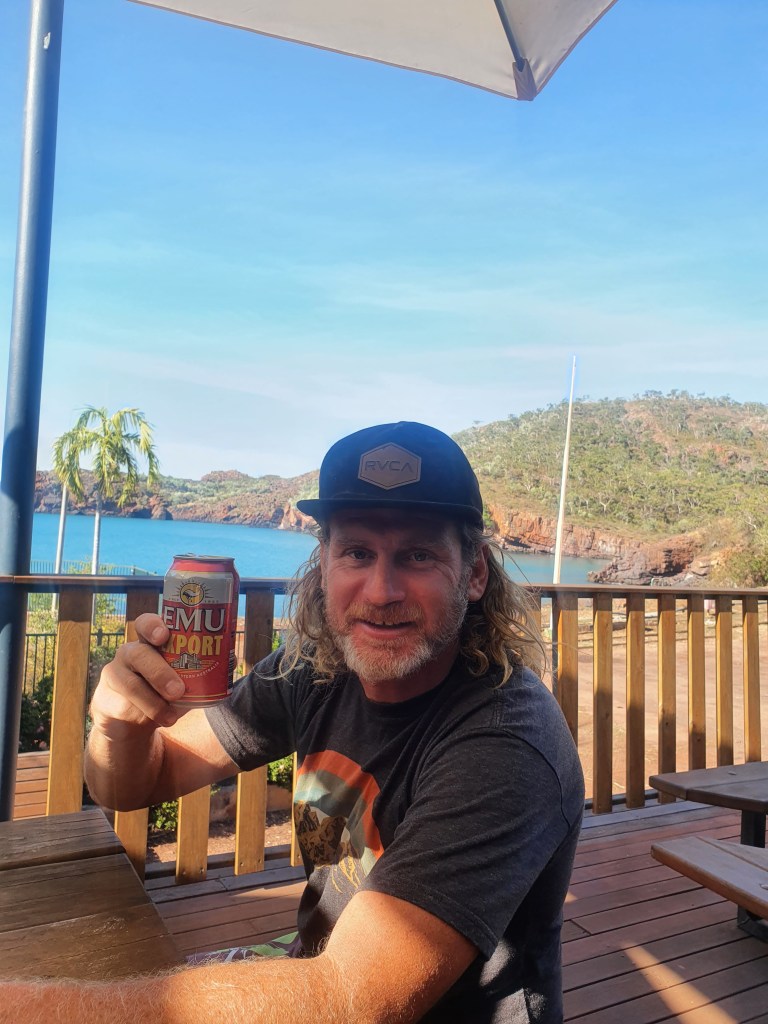
We spent four nights anchored in Hampton Harbour at the little mining town of Dampier. Over the next few days we rested, caught up on sleep and stretched our legs, walking all over the tiny town. We made use of the Sailing Club facilities; luxuriating in a proper shower and topping up our water tank with jerries. We treated ourselves to dinner out at the Mermaid Hotel, had a breakfast at SOAK café and when Brian and Sandra arrived, we celebrated their anniversary with them at the lovely Hampton Harbour Boat and Sailing Club overlooking the bay.
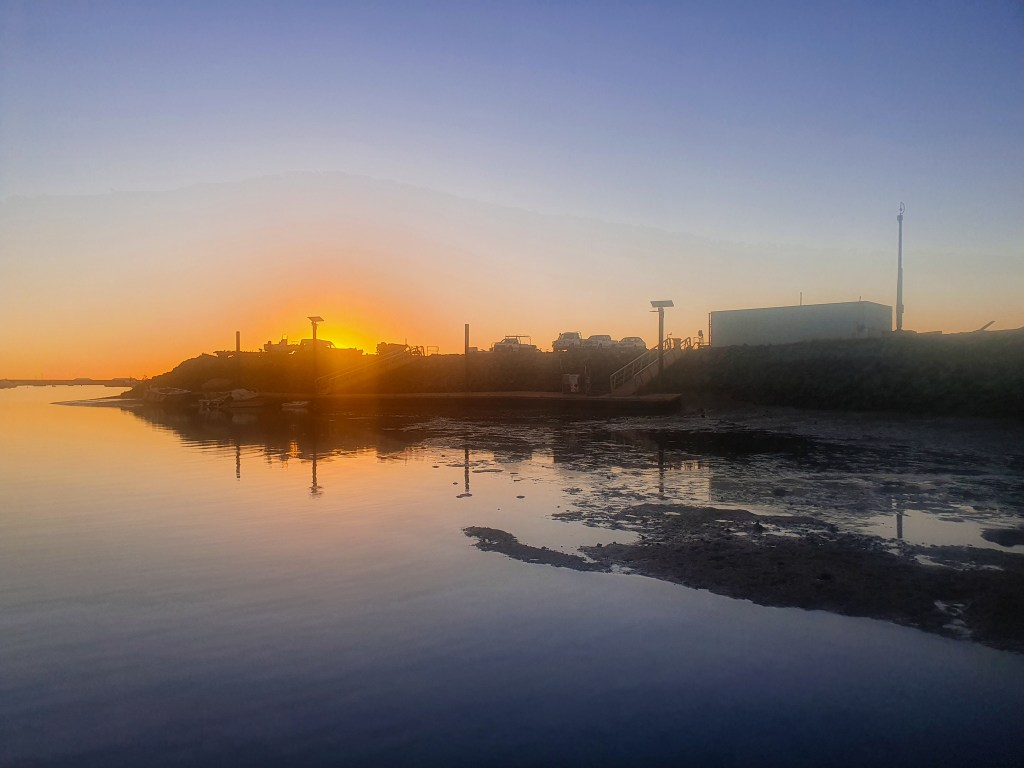
Dampier’s main claim to fame is as the home of ‘Red Dog,’ the kelpie who travelled all over Western Australia’s vast Pilbara region, becoming a mascot for the community and inspiring the movie by the same name. Of course we wandered out to his statue for a photo.
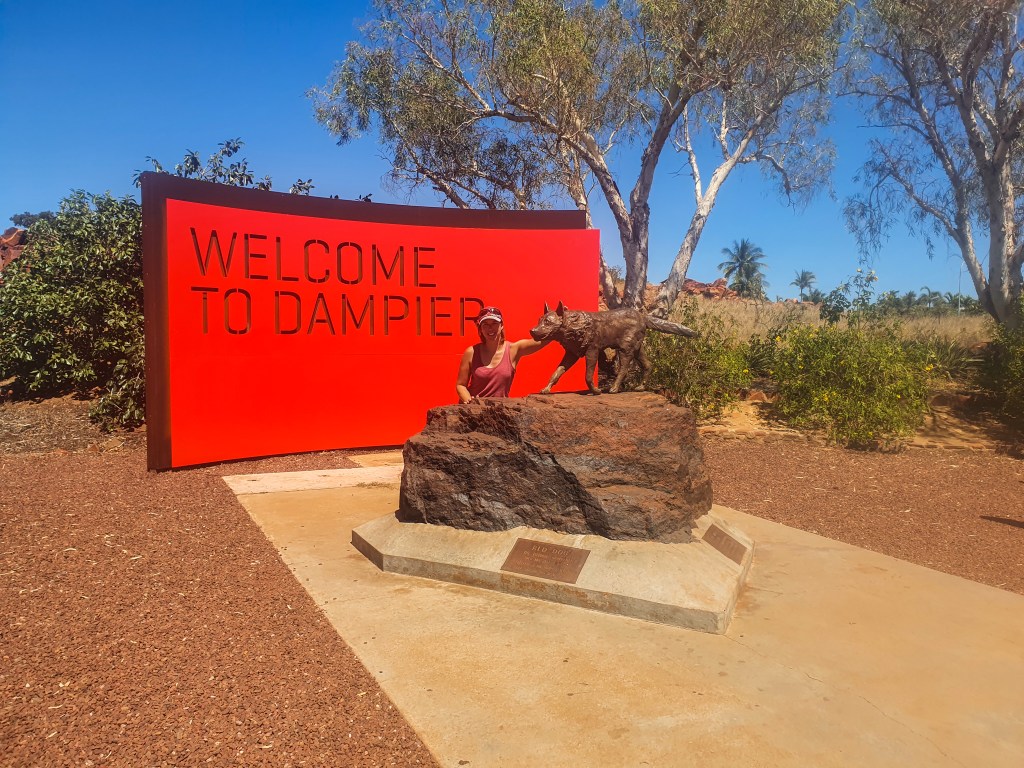
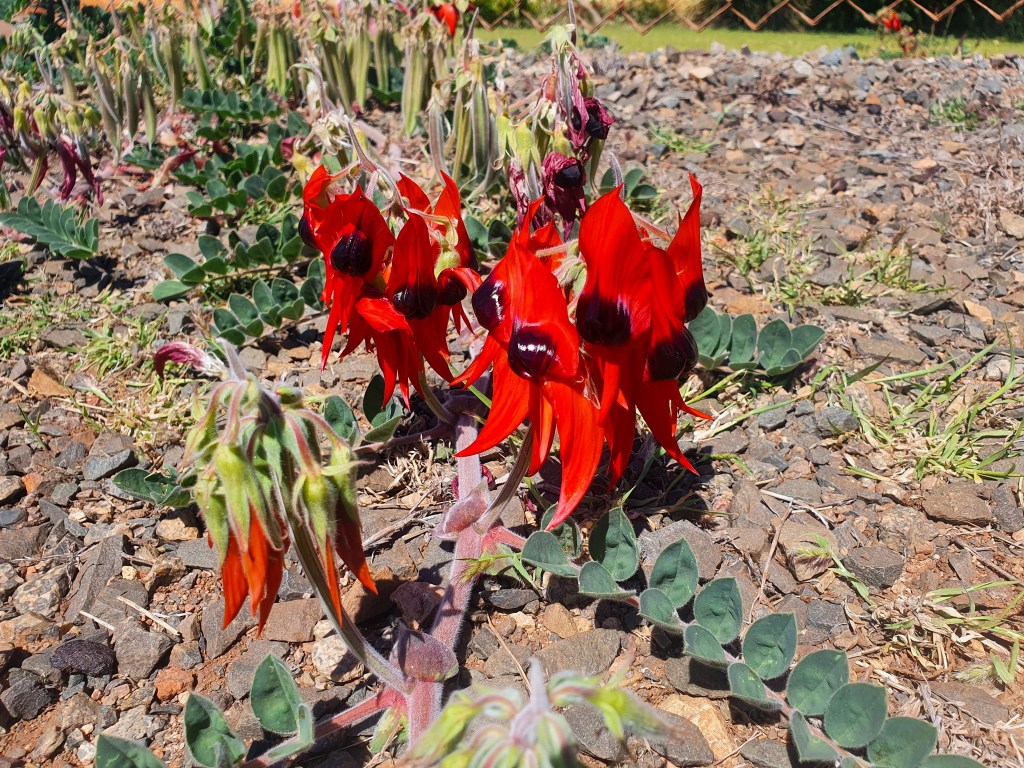
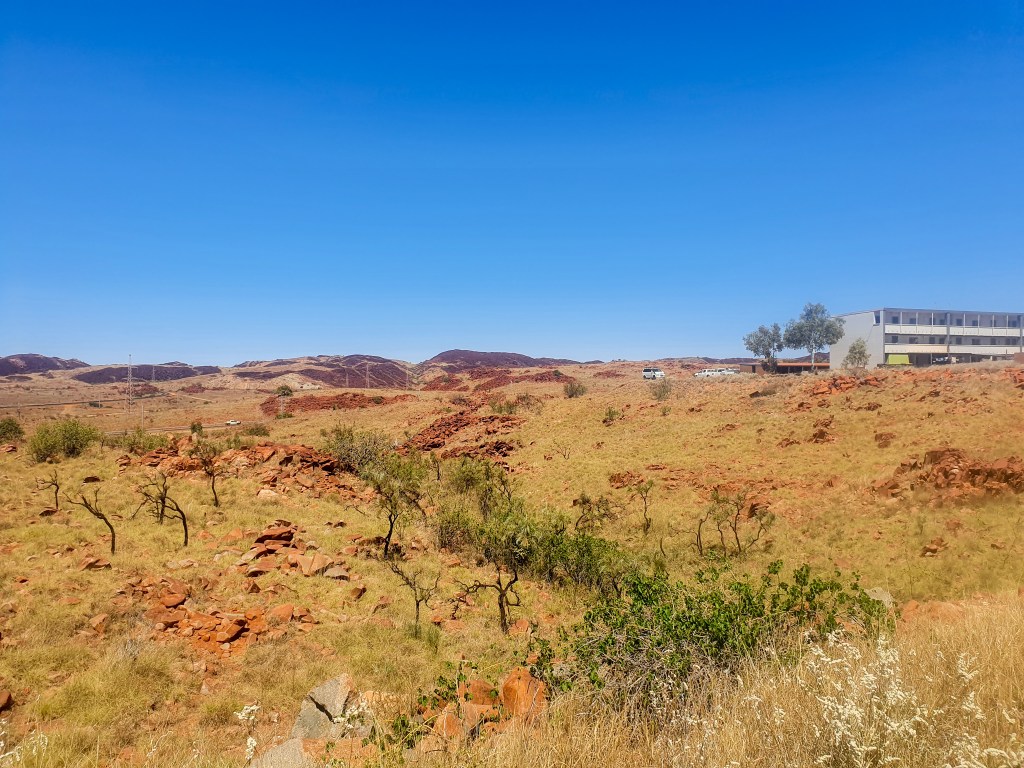
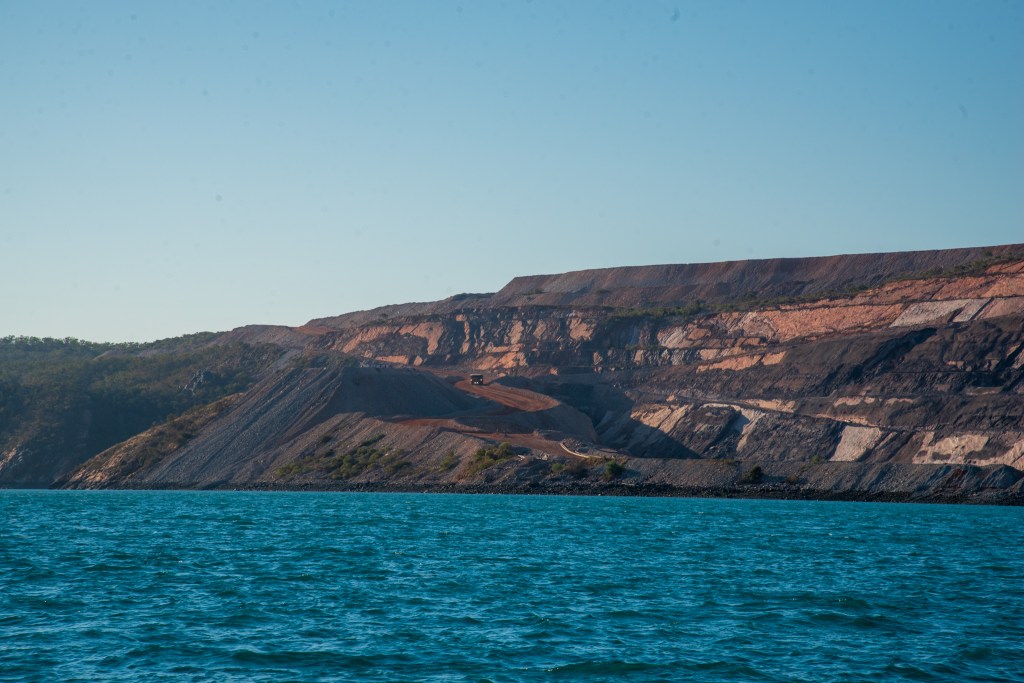
The town itself is tiny and it didn’t take us long to walk pretty much the length and breadth. The landscape is sparse and barren with huge lumpy piles of rocks everywhere, yet the gardens are lush and well maintained. Quite a juxtaposition. We found the streets clean, the public gardens neat and well tended, and there seemed to be a huge number of children’s playgrounds for such a small town. The beautiful wildflower Sturt’s Desert Pea was growing freely along the side of the roads. Fun fact: it is actually the floral emblem for South Australia and was first collected by William Dampier in 1699 on the nearby Rosemary Island.
We joined Brian and Sandra for an excursion into the neighbouring inland town of Karratha via bus, enjoying the tour as it wound its way along the local bus route. In Karratha we wandered through the small shopping centre, feeling overwhelmed by the hustle and bustle of the crowds.
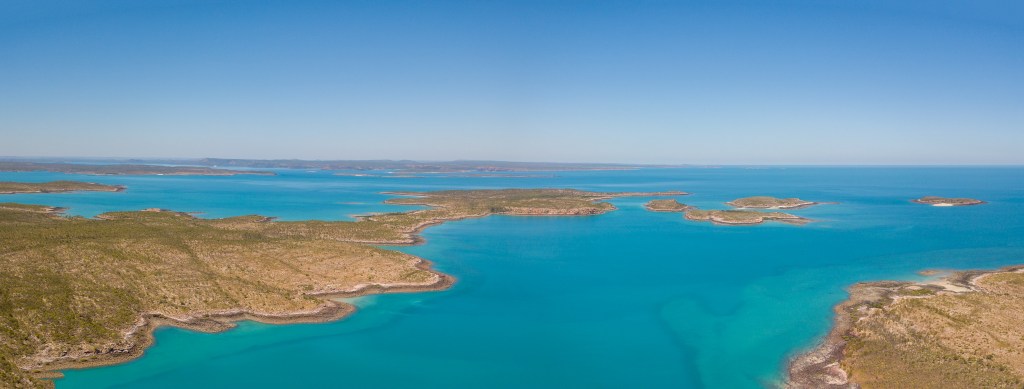
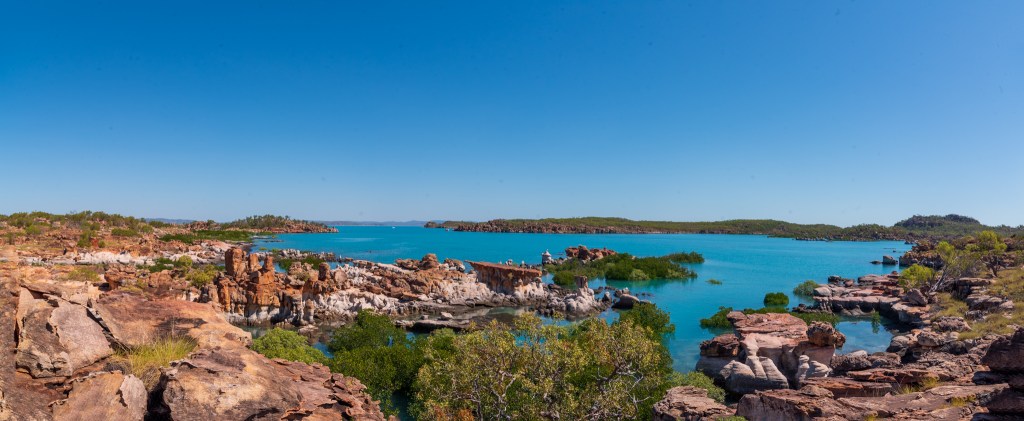
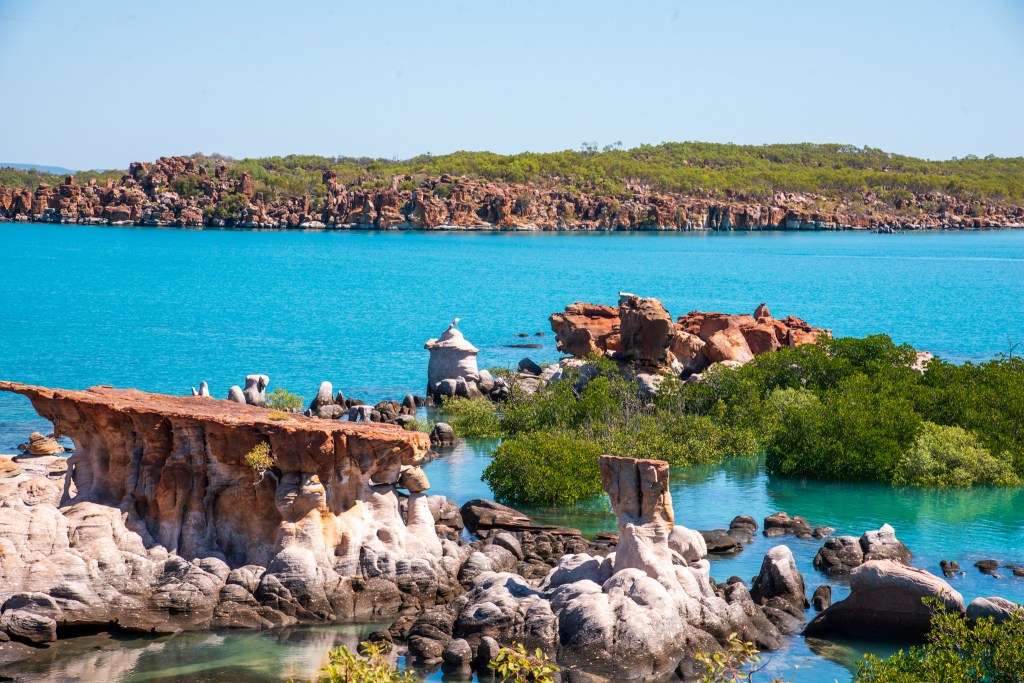
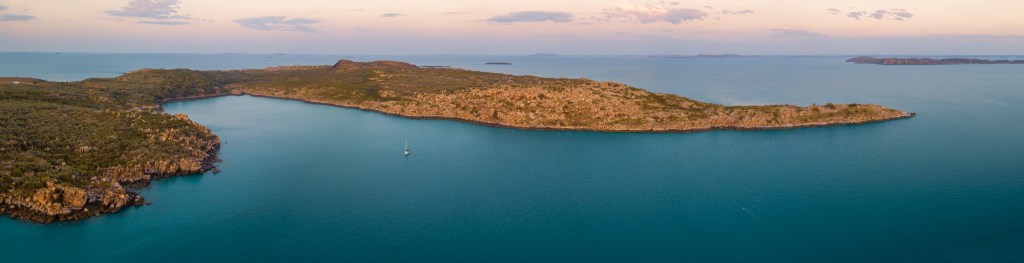
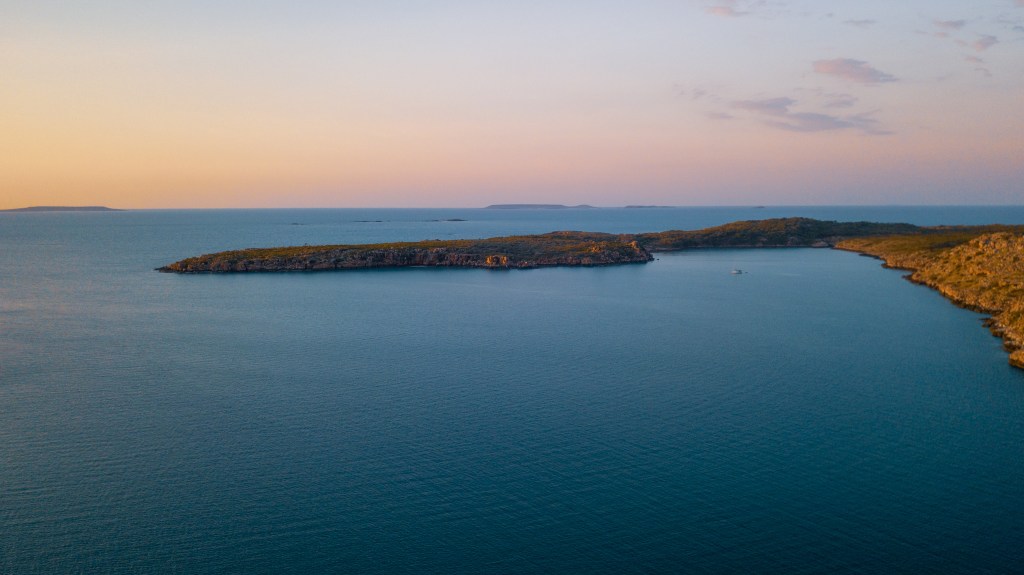
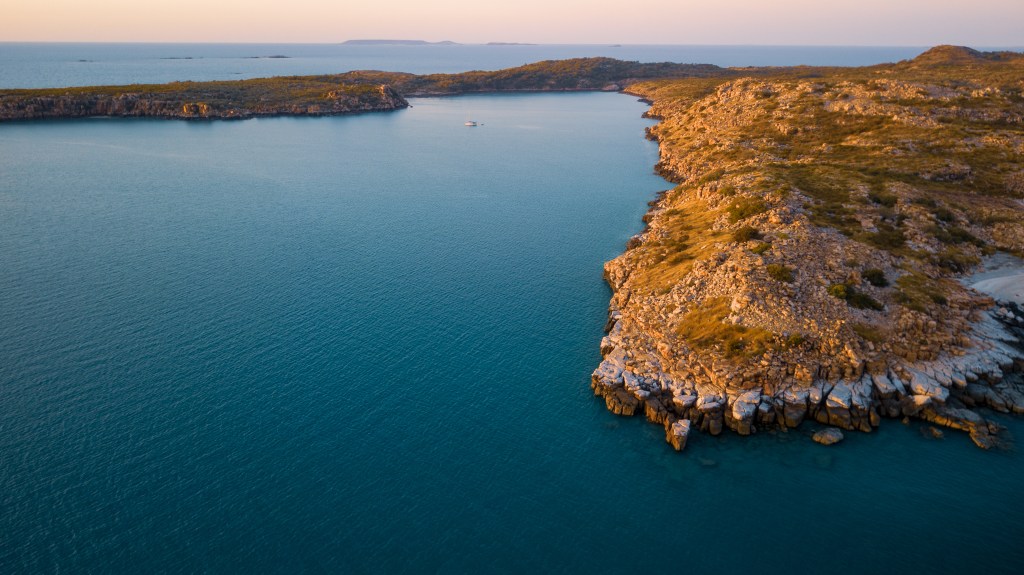
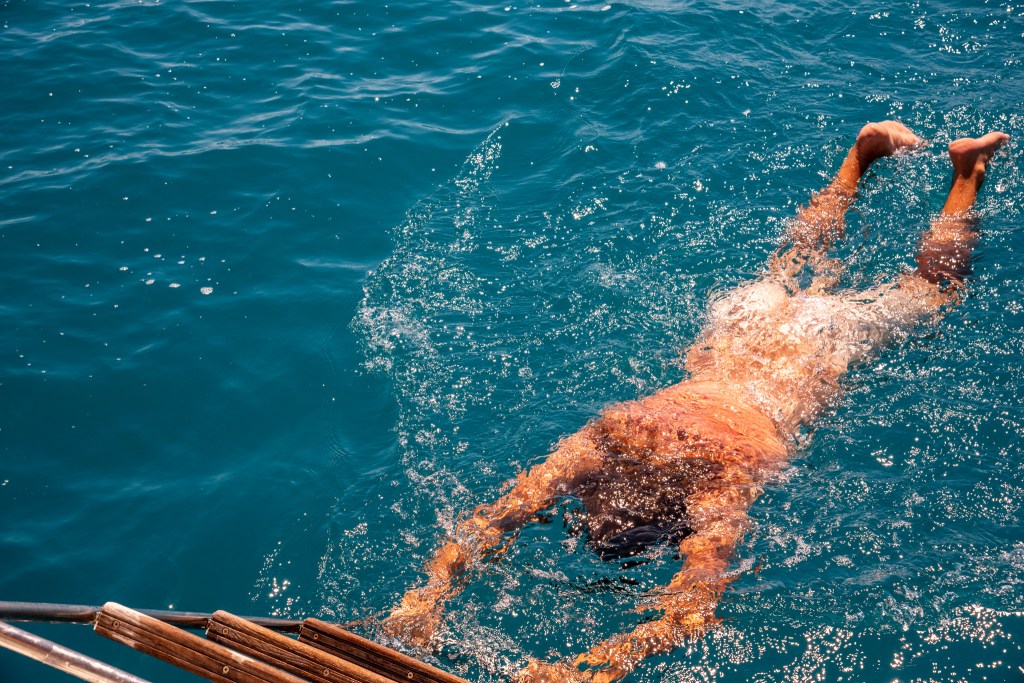
After several nights of some good sleep and three days on land, we were ready to head back out to sea and find out what the Dampier Archipelago was all about. Consisting of 42 islands, outcrops and islets, the archipelago is said to be the richest area of marine biodiversity known in Western Australia, with coral reefs, sponge gardens, seagrass and more than 650 fish species. Enticingly for us, the waters were also crocodile free so we would be able to properly swim and snorkel for the first time in five months.
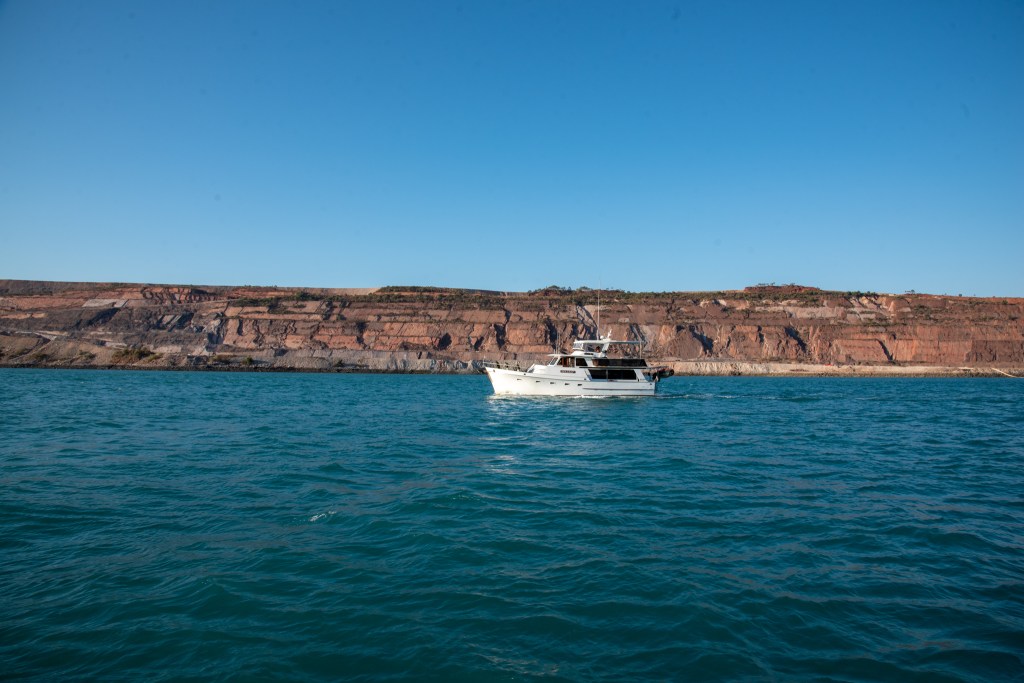
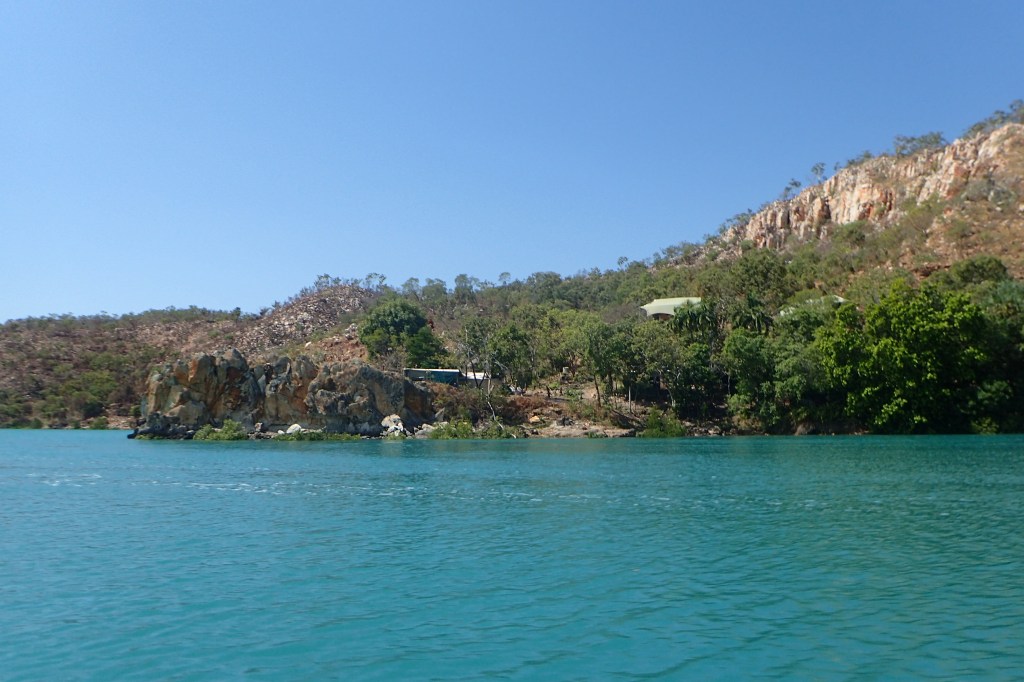
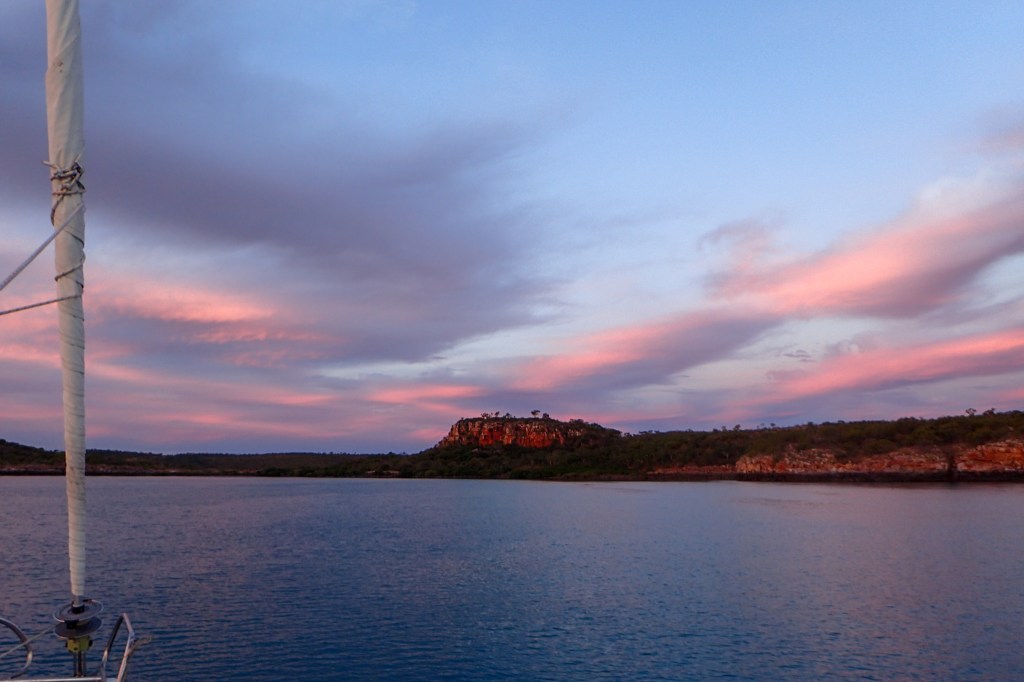
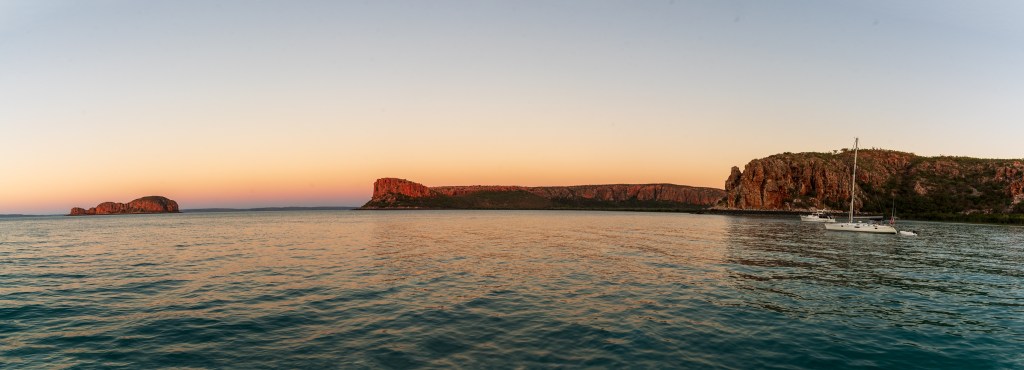
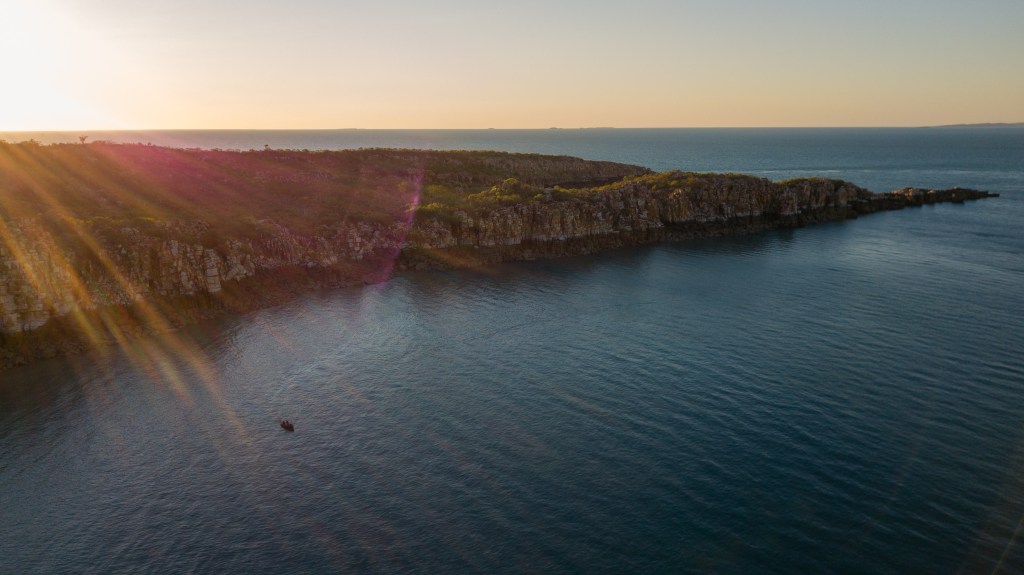
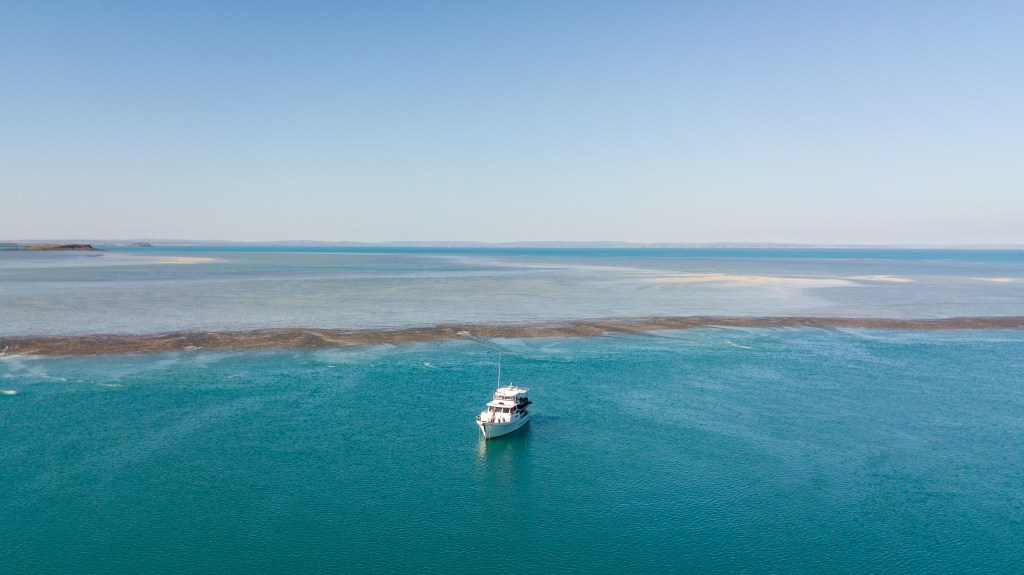
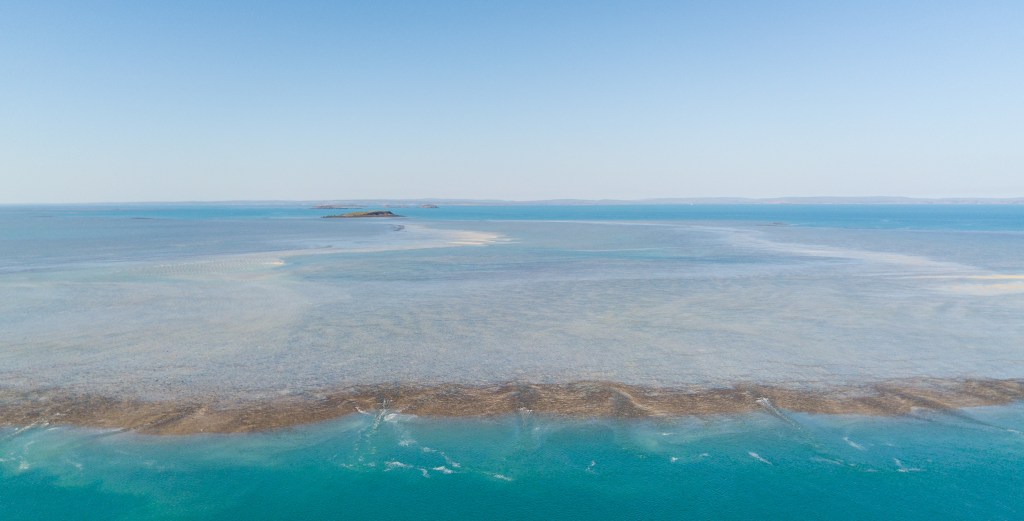
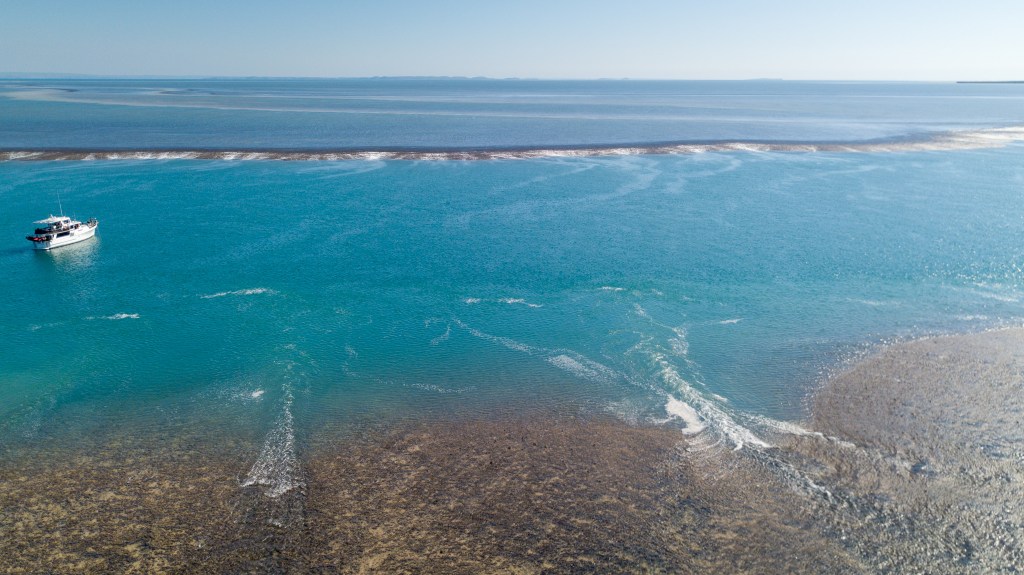
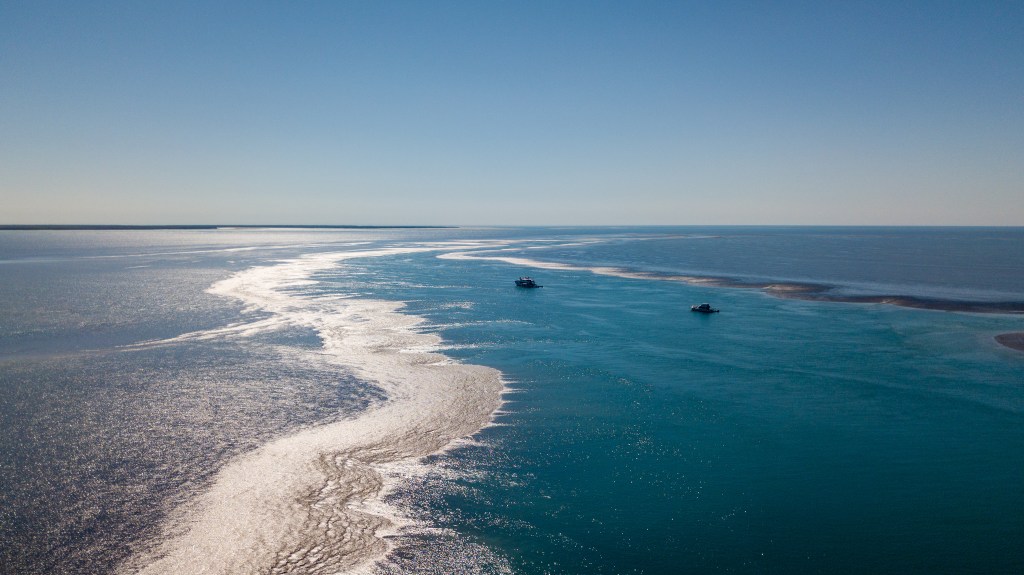
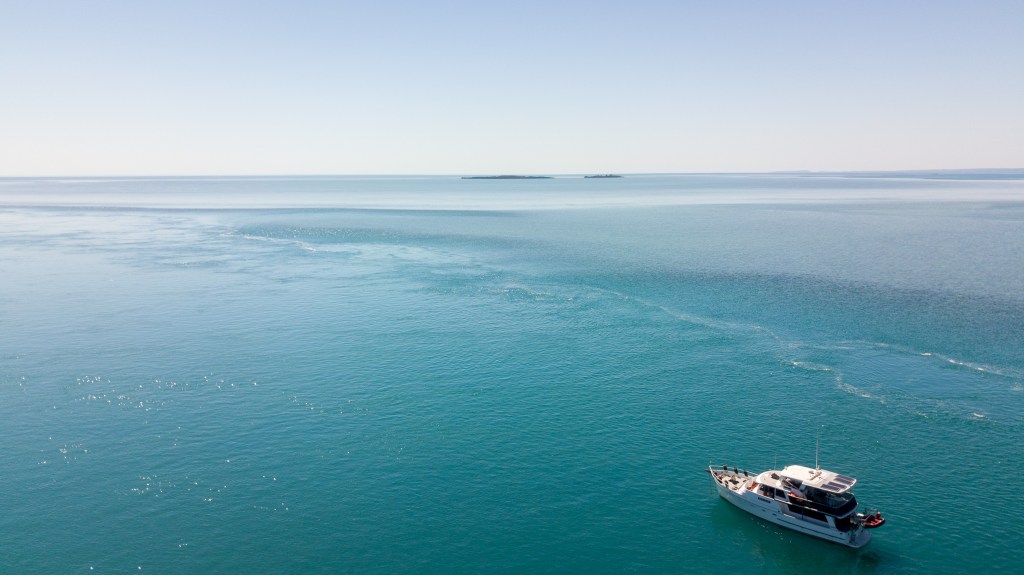
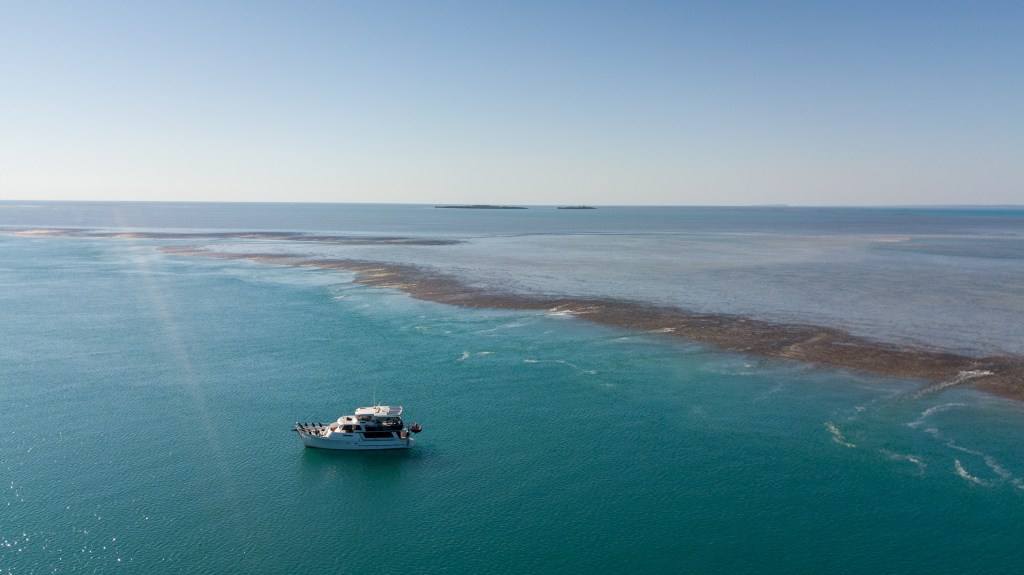
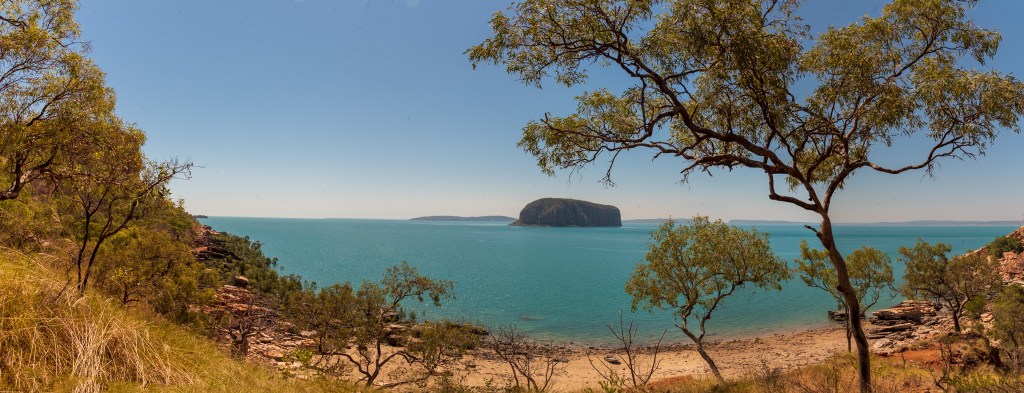
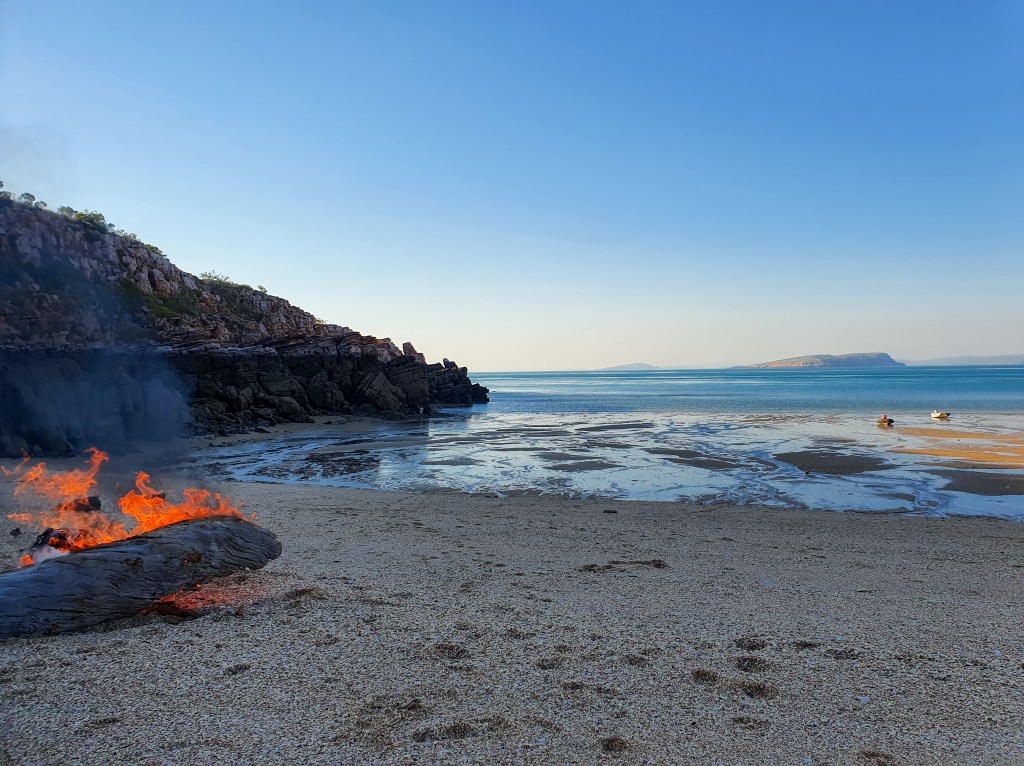
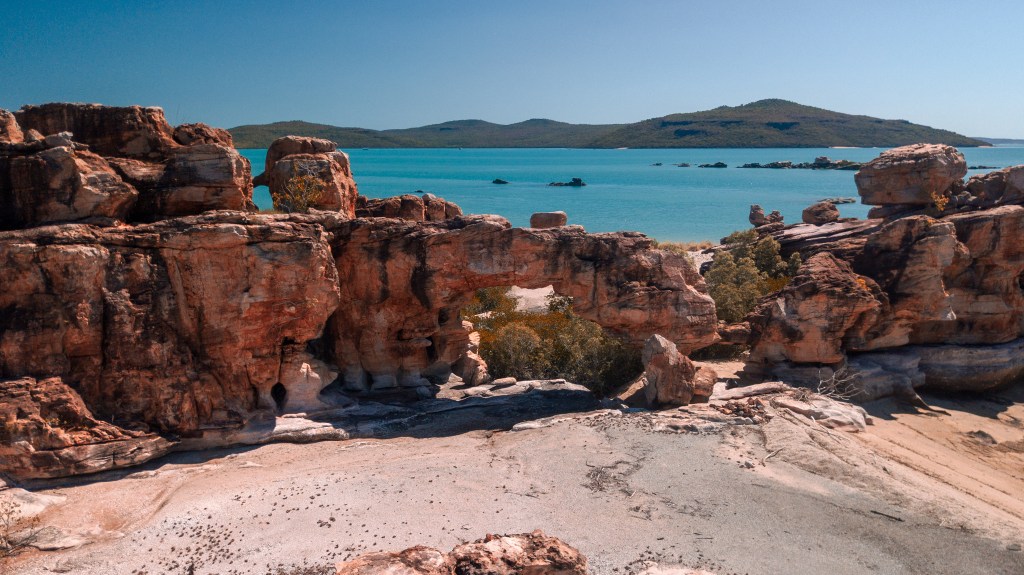
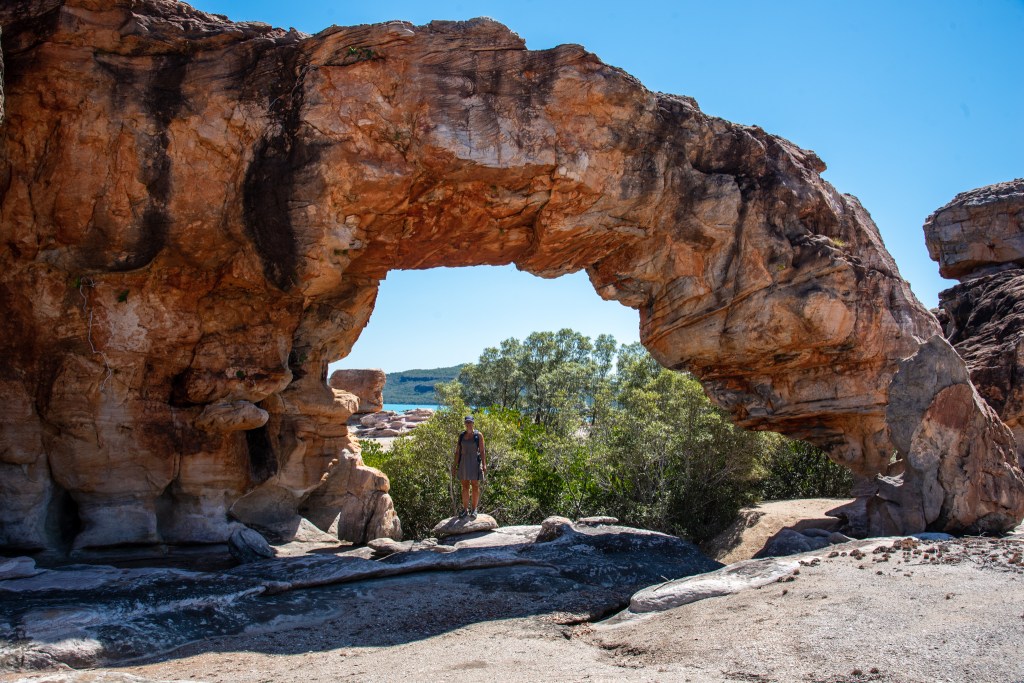
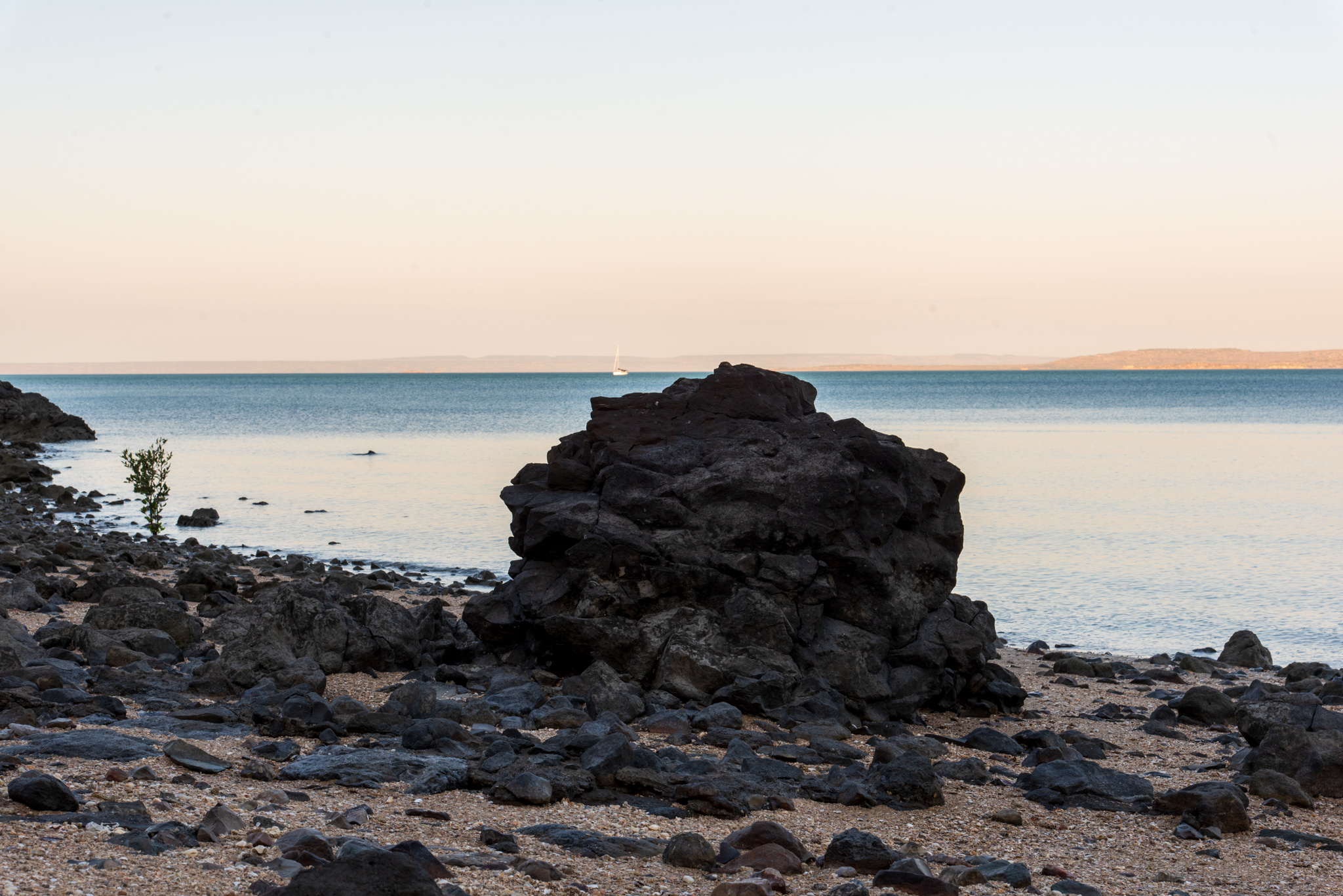
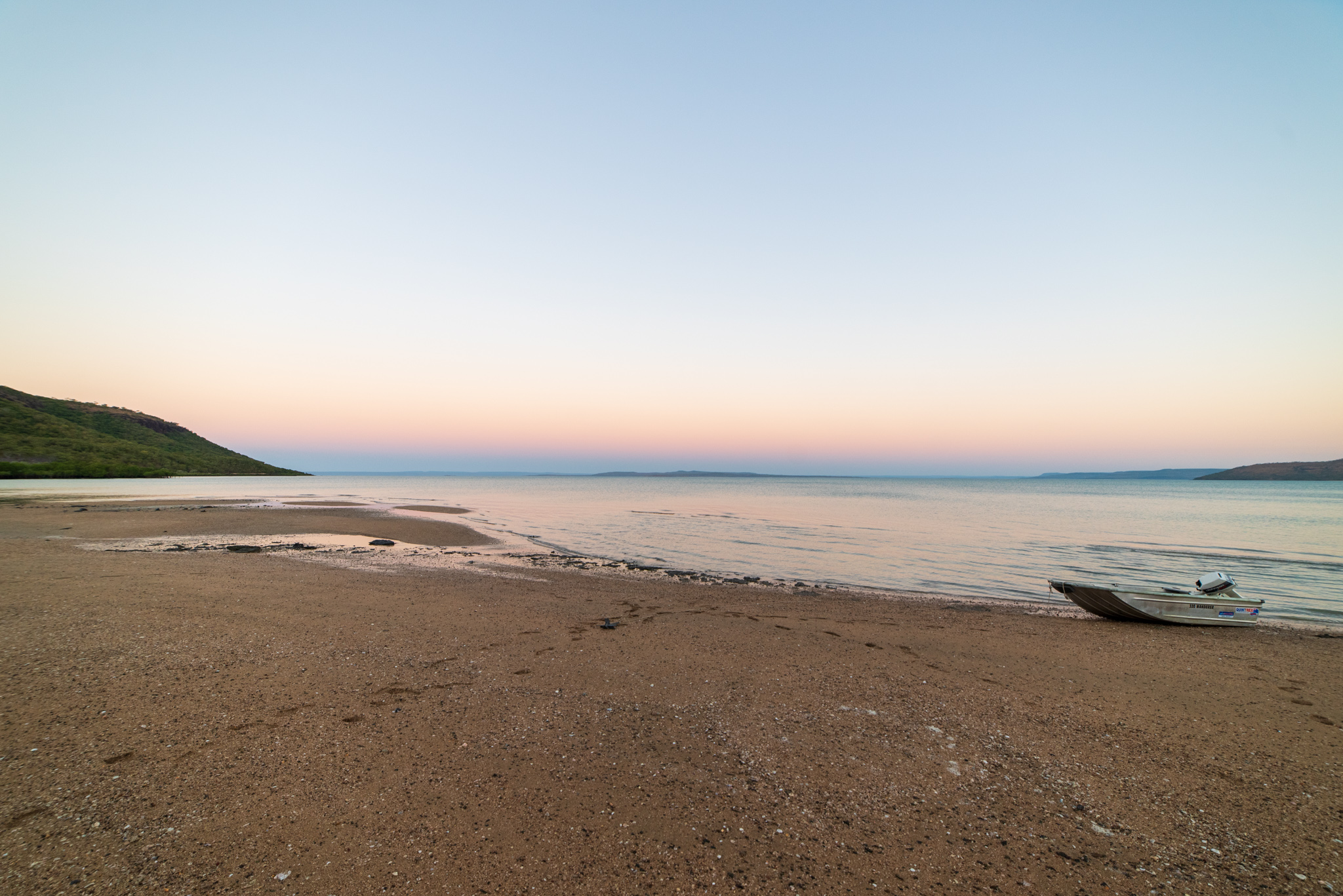
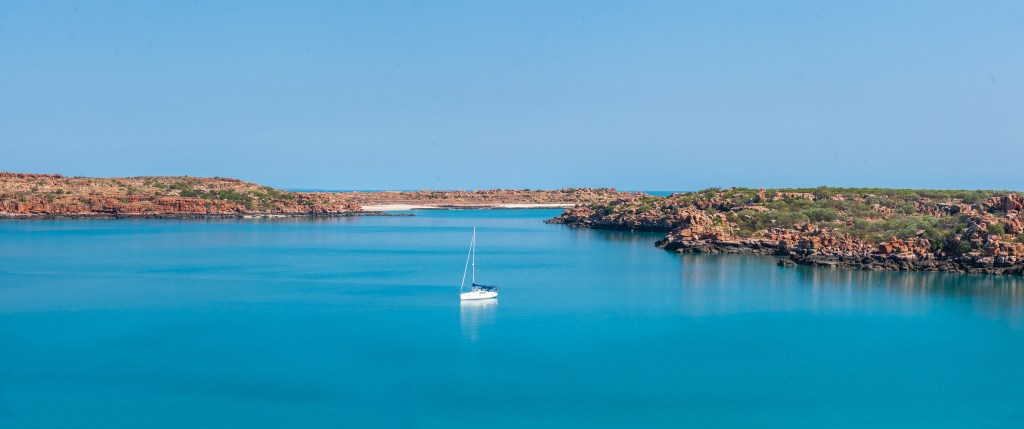
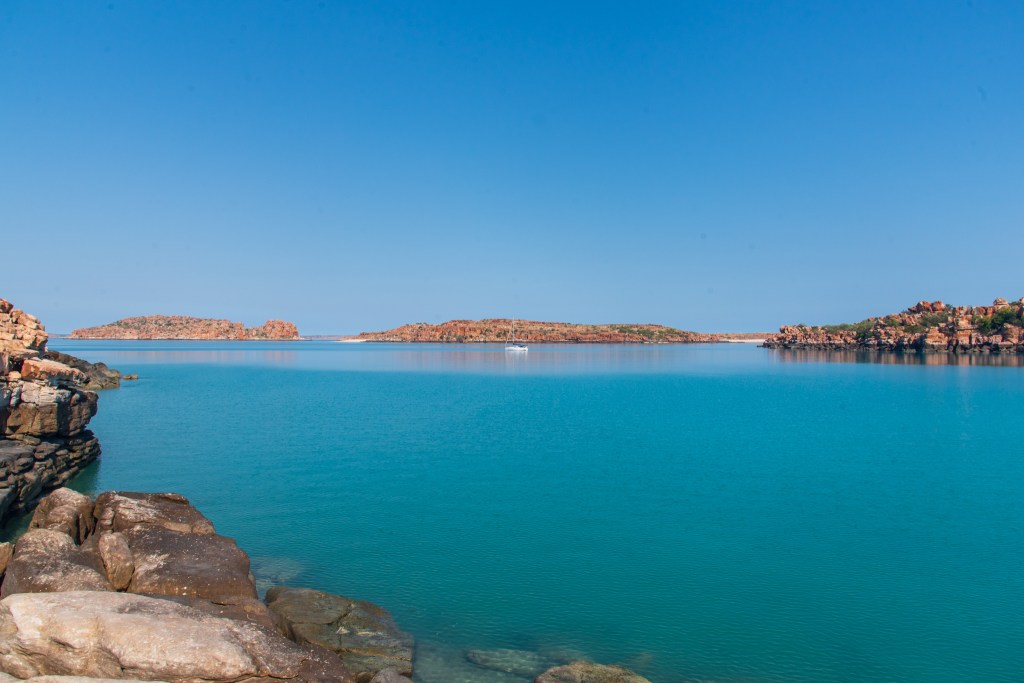
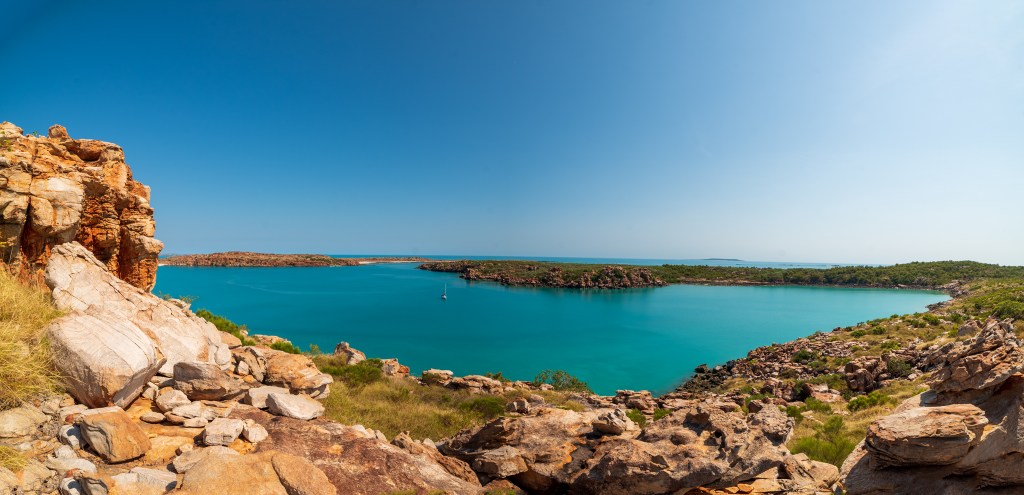
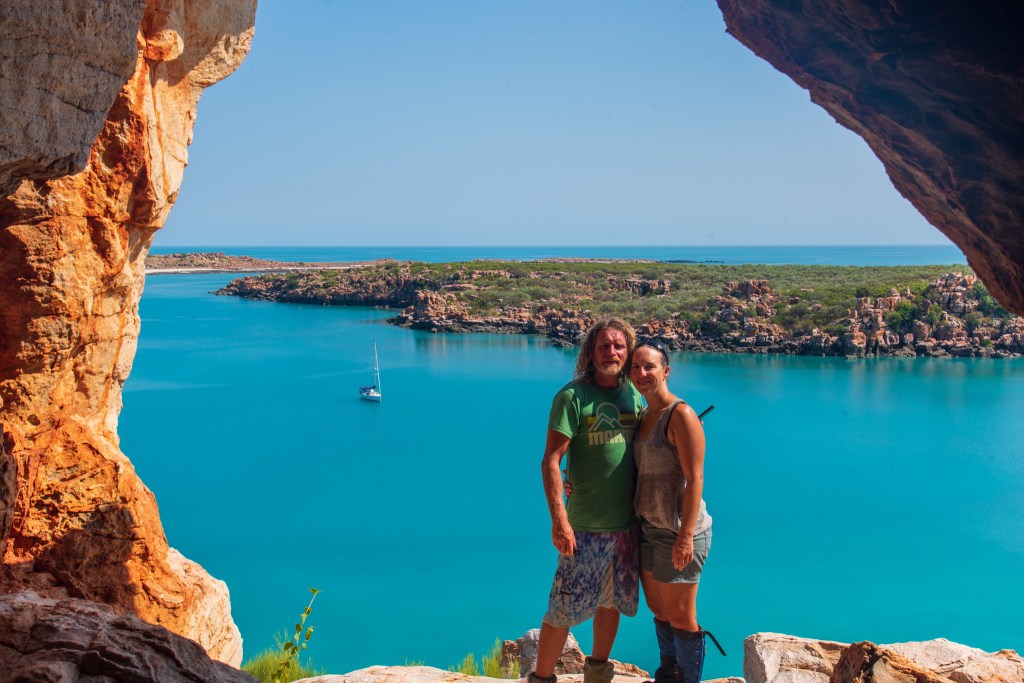
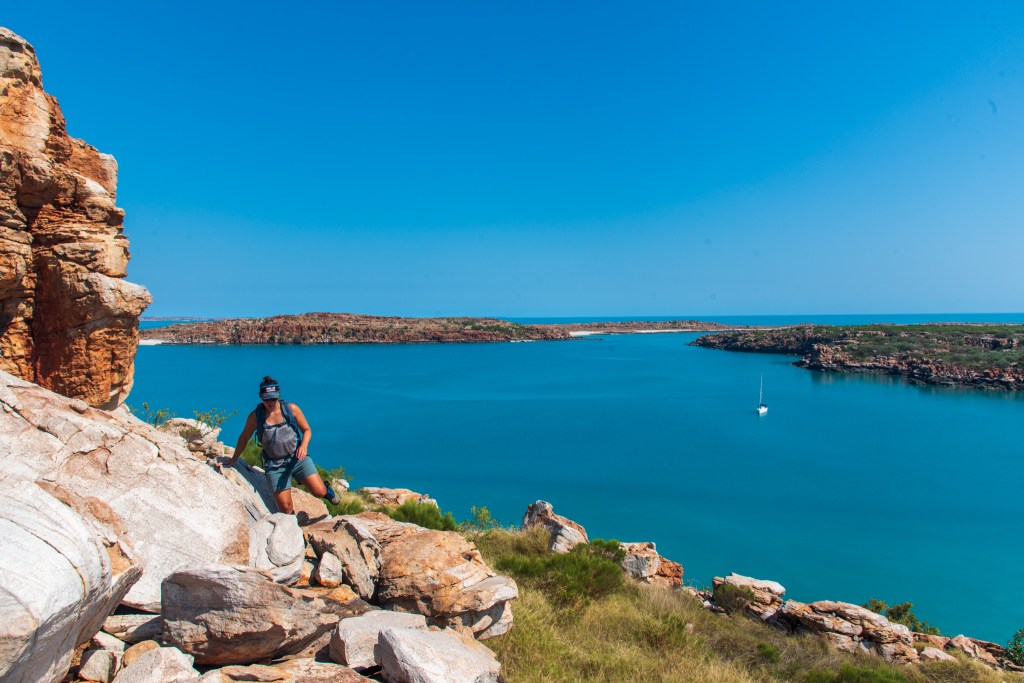
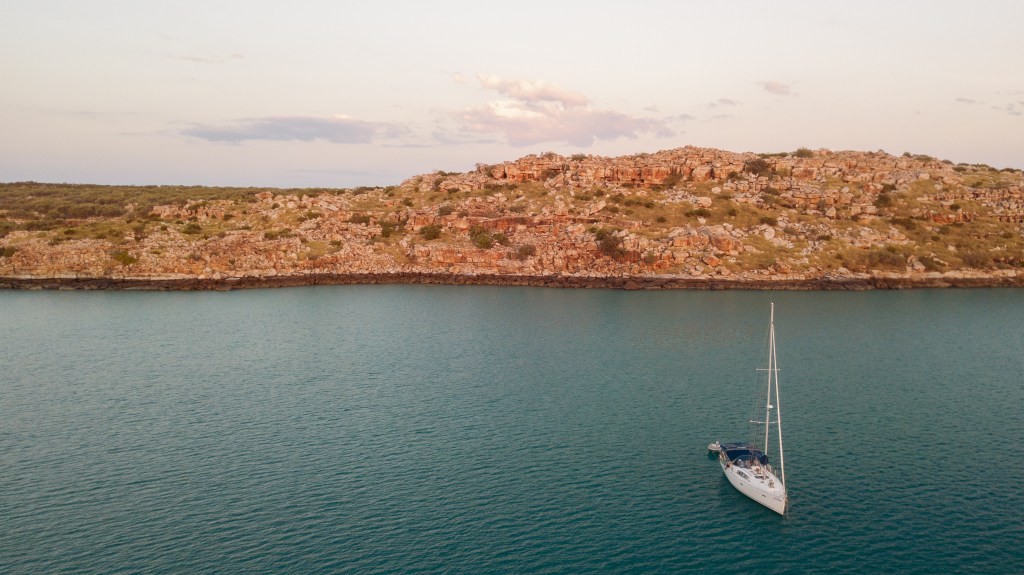
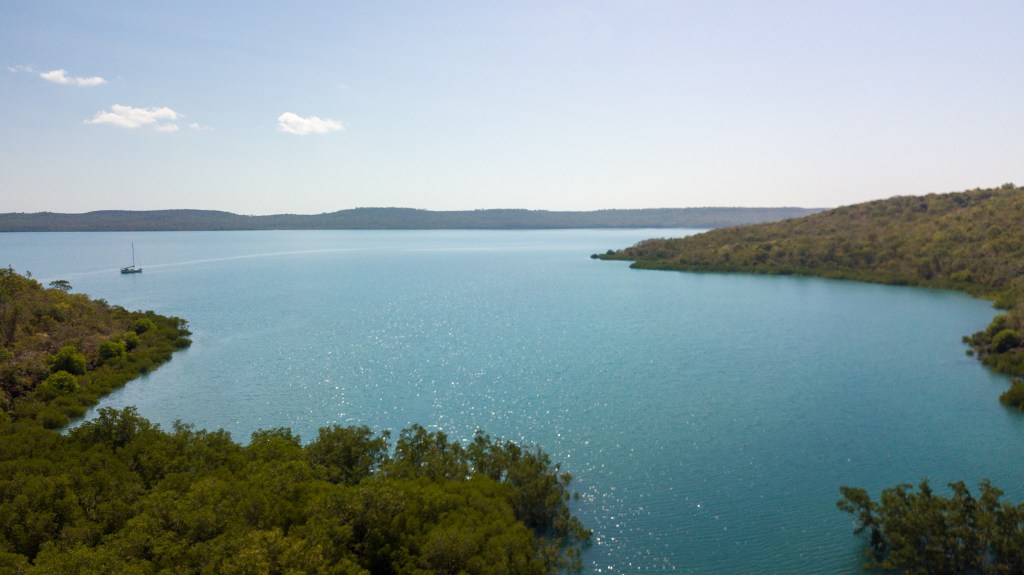
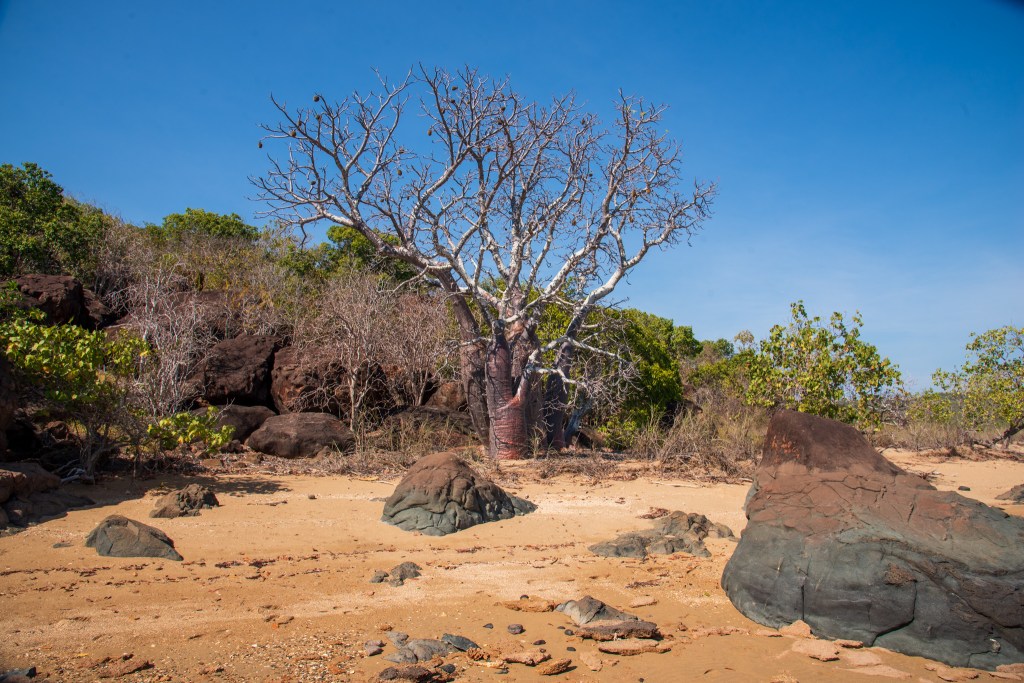
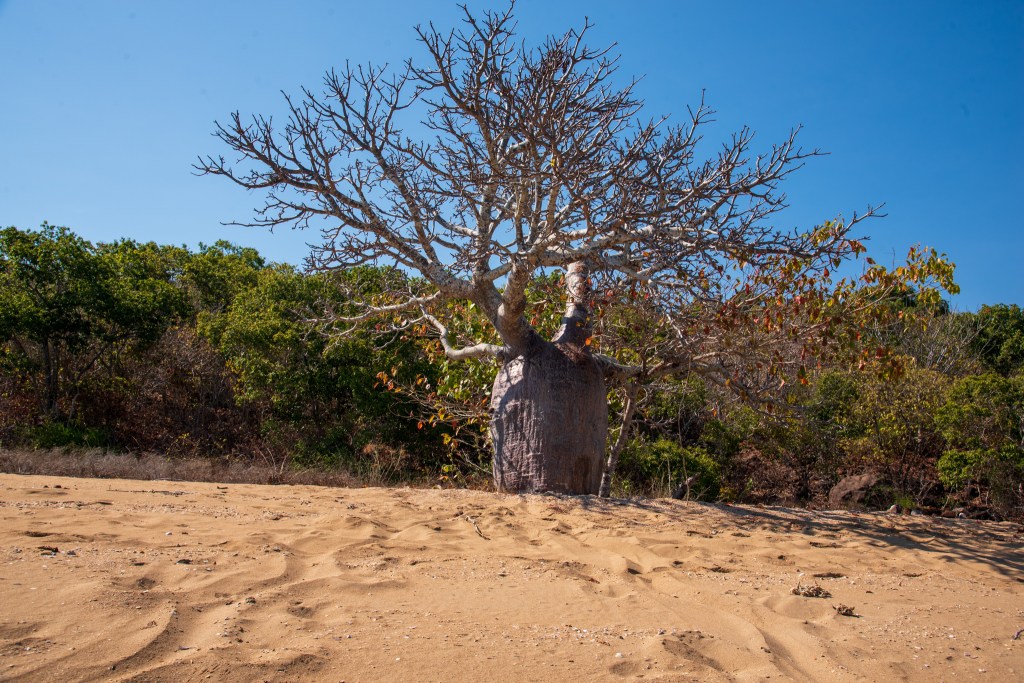
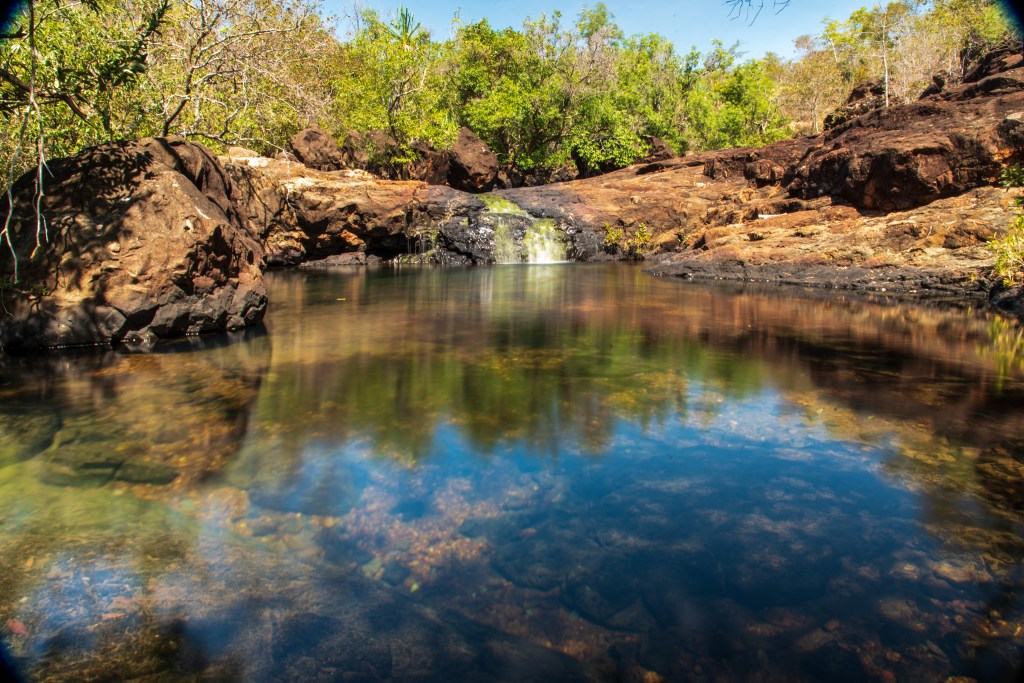
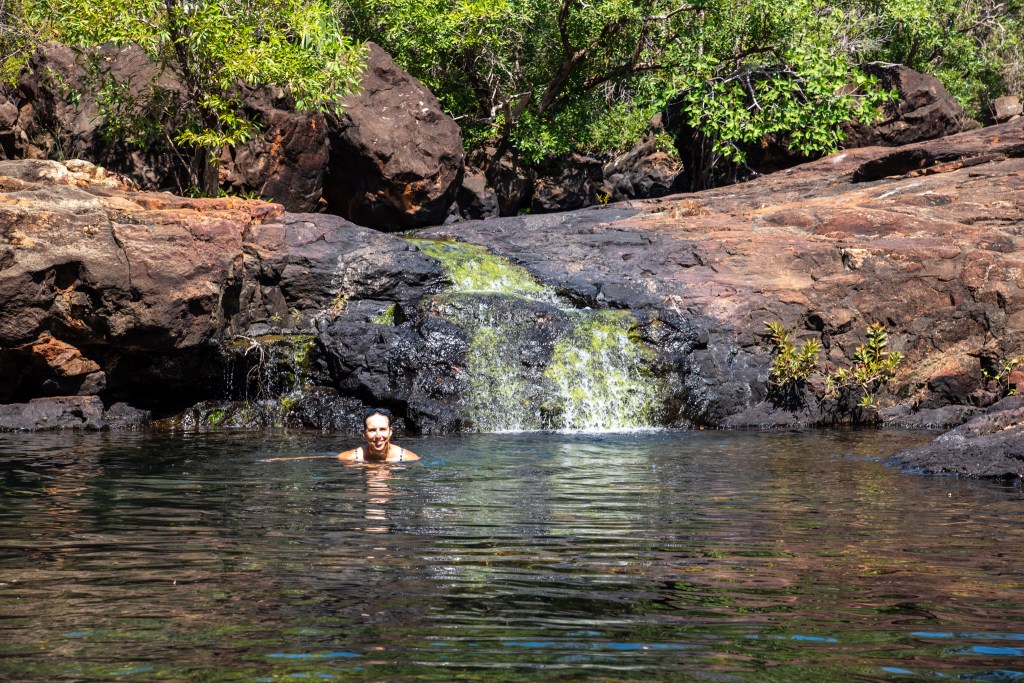
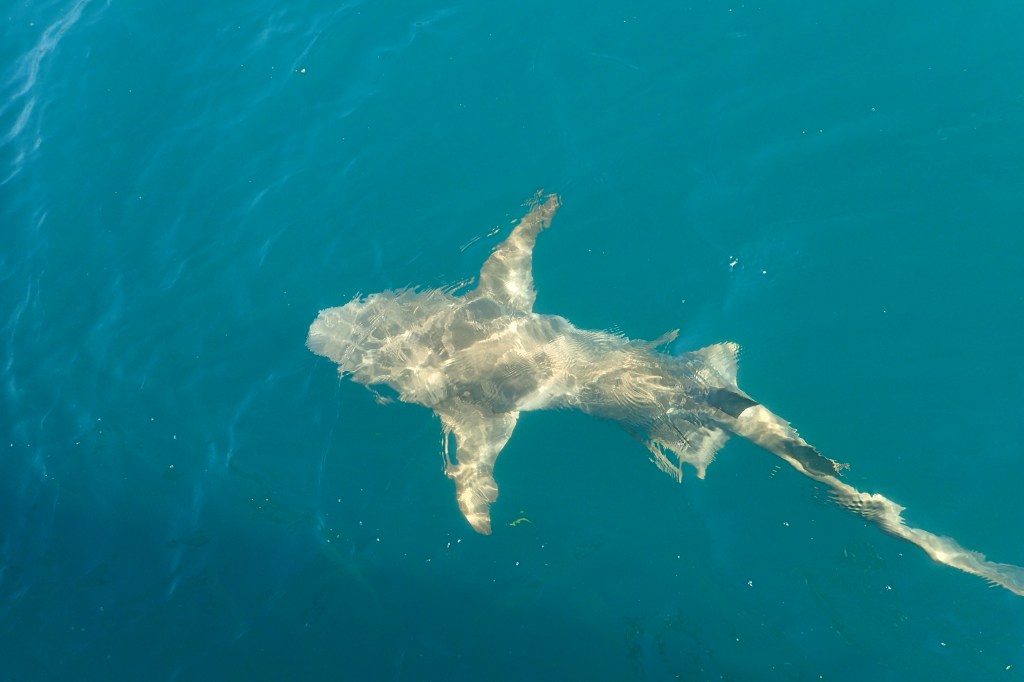
We spent three days in the islands, bouncing around different anchorages as we tried to get out of the ever changing winds and swell. On Malus, West Lewis and Enderby Islands we wandered along the deserted beaches and swam in the crystal clear waters. The water was a pretty turquoise colour and we spotted turtles, manta rays and reef sharks swimming in the shallow waters.
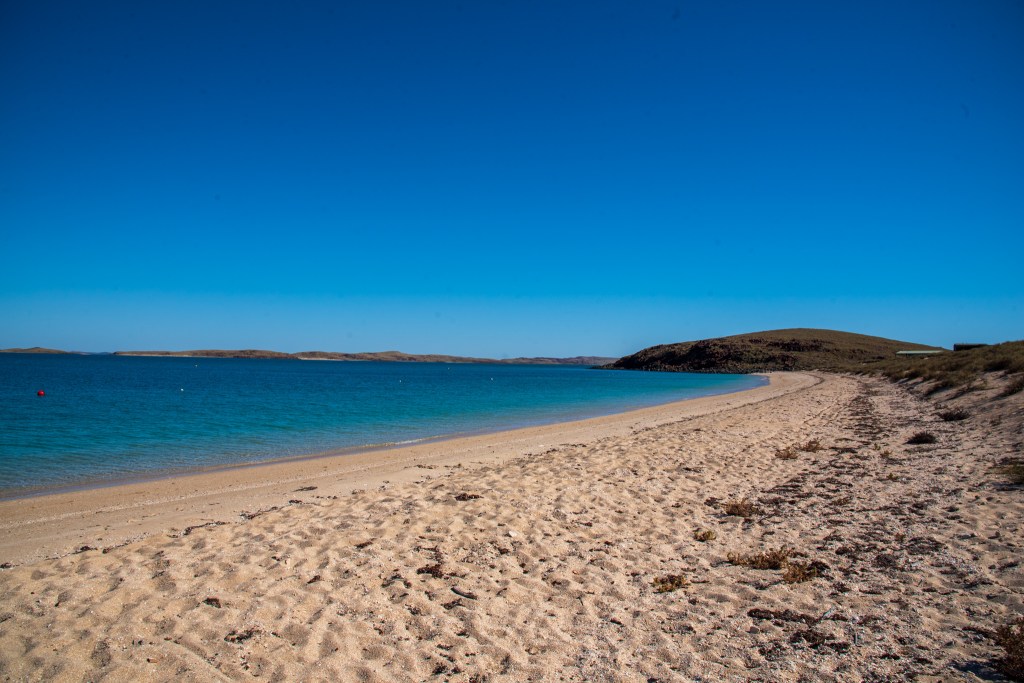
Brian and Sandra joined us at Enderby Island and we made plans to travel out to the Montebello Islands together. At a distance of 60 miles away, it would be a long day of sailing so we were up early and under way at 5 am.
After about three hours of sailing we heard a distress call on the VHF radio. It was from a yacht called Beaujolais, and the Skipper, Karl, had hurt his back and couldn’t get the motor on his yacht started. He was drifting in the open ocean and needed some help. He had contacted Dampier VTS on Channel 16, the hailing radio channel that all boats keep their radios tuned to and requested some help, giving the GPS co-ordinates of his current position.
About a minute later, we heard ‘Cool Change, Cool Change, Cool Change, this is Dampier VTS, Dampier VTS’ broadcast over the radio. They had determined that we were the closest boat to Beaujolais and were wondering if we were able to give him assistance. Our boat has an AIS transponder which tracks our position. We can see other boats on our navigation equipment and they can see us. Marine rescue and other similar organisations can also track our location. We plugged the GPS co-ordinates into our chart plotter and determined that he was indeed only about fifteen miles from us.
After a few calls to and fro, it seemed that what Karl needed was a tow, which our boat would not be able to do. In any case, we couldn’t ignore a boat needing help, so we pulled down our sails, turned the motor on and changed course to head directly for Beaujolais. Perhaps there was something else that we could do, some other assistance that we might be able to give him.
Meanwhile, Sealeaf had heard all of this on Channel 16, and being only an hour or so behind us, jumped on the radio to offer their services of a tow if it was needed. So they also altered course and our two boats made towards the stricken yacht. As we were heading there, Matt made further contact with Karl, and established that it was just the motor that was not working, and that the boat itself was still sailable, but that Karl had hurt his back so severely he was unable to raise the sails by himself.
Matt came up with a plan that if he could be safely transferred onto Beaujolais, then he would sail the boat back towards Dampier for Karl, hopefully to meet a rescue boat along the way, while I followed in Cool Change. This of course, would be dependent on being able to get Matt transferred safely across. Matt and Brian conferred on the radio and agreed that trying this course first may be the safest option, and so Brian agreed to keep heading for Beaujolais and to stand off until we arrived and Matt could assess the conditions.
On arrival, we found Beaujolais rocking dramatically in the big swell. Our hearts sank. This did not look like it was going to be easy. Or safe. Matt chatted to Karl on the radio and determined that there was no way for him to board at the stern as he had been hoping, and that the only access would be via a ladder on the side of the boat. The problem was, with Beaujolais practically stationary in the big swell, the boat was being rocked so far from side to side, that the ladder was being pushed alarmingly into the water. While Matt was confident about his ability to swim in the big swell, he was less confident that he would be able to safely climb up the ladder. It was pretty scary.
It was also deemed too dangerous to lower a tender in swell this big. So when Matt decided that it just wouldn’t be safe for him to swim across and try to climb the ladder, with me privately breathing a huge sigh of relief, it was over to option two. Brian and Sandra agreed that Sealeaf would tow Beaujolais back to Dampier. They set about trying to attach the tow line which was incredibly hard work in the big swell. Finally, after well over half an hour and many, many attempts of Sandra driving Sealeaf slowly past Beaujolais, with Brian directing at the stern, Karl managed to retrieve the tow line and the two boats were attached.
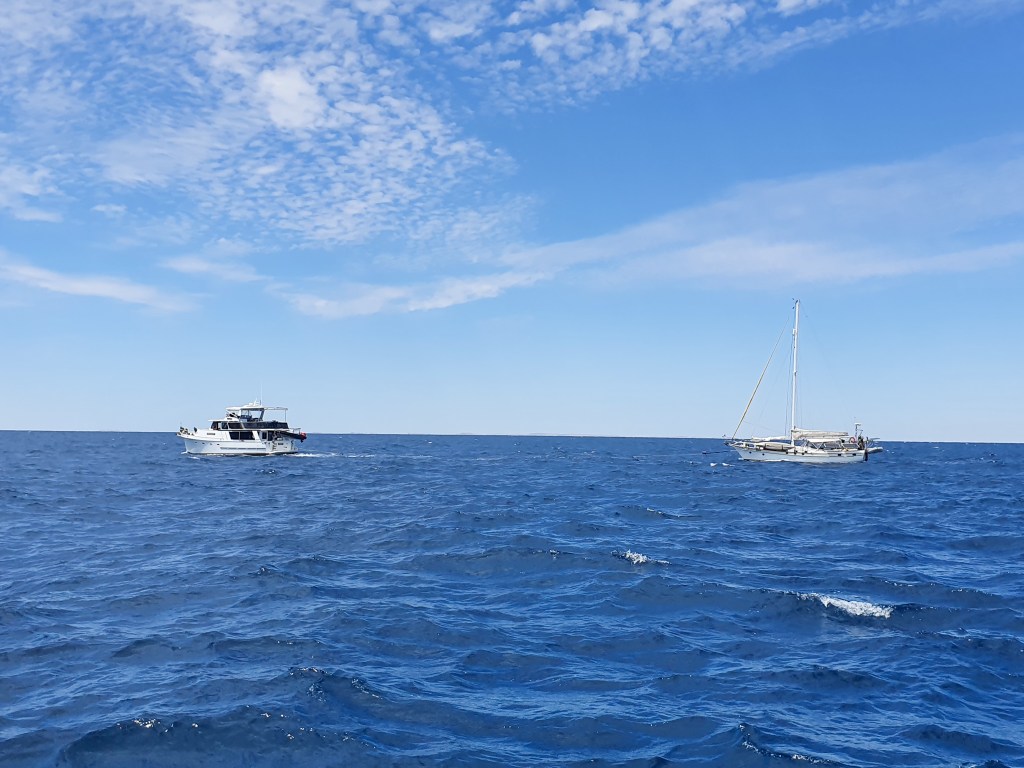
They set off for Dampier and we followed, sailing slowly behind. Sealeaf ended up towing Beaujolais all the back to Hampton Harbour and we went back to Enderby Island to anchor for the night. The Montebellos would have to wait until another day!
Helping one person might not change the whole world, but it could change the world for one person.
Anonymous
 Cool Change